
Ageism Awareness Day has passed, but the work of recognizing and disrupting ageism cannot be confined to a single day.
The observance invited us to name the assumptions, stereotypes, and systems that diminish people because of age: discrimination in employment and healthcare, the erosion of autonomy, invisibility in public life, and the persistent portrayal of later life as a period defined primarily by frailty, dependency, and decline.
That naming matters. But in the days since, I have found myself returning to another question: What does ageism prevent us from seeing?
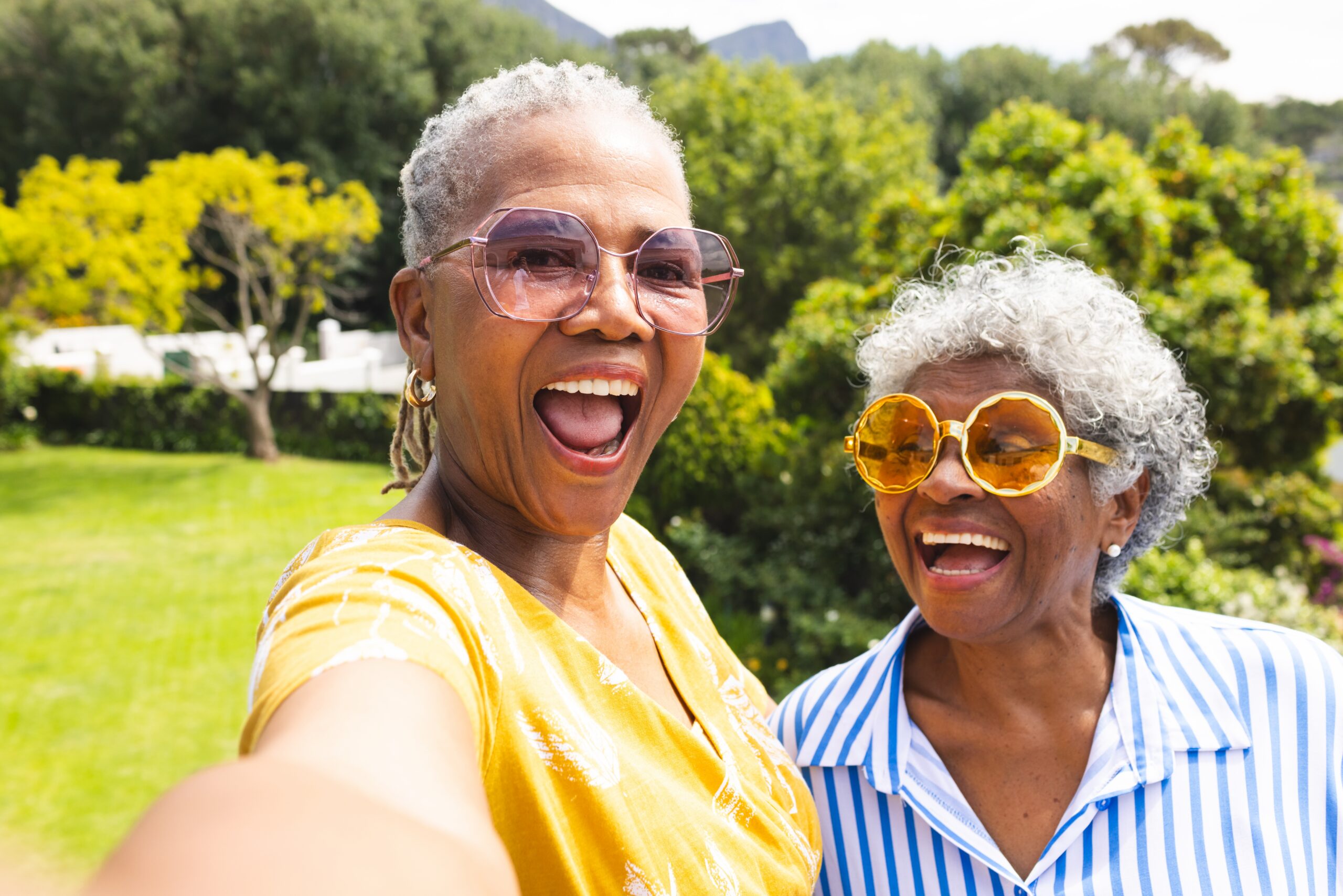
A recent conversation with my 78-year-old sister-friend offered one answer: joy.
Our conversation centered on what joy means, where it comes from and why it matters as we grow older—particularly as Black women.
“Sister-friend” is important here. It describes a relationship that exceeds ordinary friendship without depending on biology. It names the kinship Black women have long created for one another: relationships in which we witness each other’s lives, hold difficult truths, celebrate one another’s becoming, and remind each other who we are when the world tries to make us smaller.
She is 78. I am 61. Between us are 17 years of lived experience. We stand at different places along the life course but close enough to recognize ourselves in each other’s questions.
We did not talk about joy as an instruction to remain positive. We were not interested in the performance of happiness or another version of resilience that applauds Black women for enduring conditions we should never have been required to endure.
We were talking about something deeper: the freedom to feel fully alive in our own lives.
What Ageism Leaves Out
Ageism operates through policies, practices, and institutional decisions, but it also operates through narrative. It teaches us to associate aging primarily with loss: the loss of health, memory, beauty, independence, usefulness, and possibility.
Within this narrow story, older adults become people to be managed, protected, or cared for—not people who still desire, create, contribute, discover, and change.
Narratives about Black aging carry another layer. Black older adults are frequently described through disparities: chronic illness, caregiving burdens, inadequate retirement savings, and unequal access to quality care. These realities matter because they reveal the accumulated consequences of racism, sexism, and economic exclusion across the life course.
But disparities are not the whole of Black life.
Centering joy interrupts the ageist assumption that later life is defined primarily by diminishment. It insists that an older person remains connected to desire, possibility, and a future.
When we tell the story of aging while Black only through inequity, we reduce people to the harms they have experienced. When we celebrate Black elders only for their resilience, we flatten rich and complicated lives into stories of survival.
Survival deserves honor. Our elders endured what was intended to diminish them and built families, communities, institutions, and movements anyway. But survival should not be the outer boundary of what we imagine for Black people in later life.
We should not have to keep proving our strength to earn the right to grow old.
What if our stories showed Black elders not only surviving, but savoring? Not only overcoming, but resting? Not only caring for others, but receiving care? Not only remembering what they endured, but anticipating what might still bring pleasure, discovery, and meaning?
Centering joy interrupts the ageist assumption that later life is defined primarily by diminishment. It insists that an older person remains connected to desire, possibility, and a future.
Where Does the Joy Come From?
My conversation with my sister-friend led me to think about where joy lives as we age.
Joy comes from being known. It is found in the company of someone who remembers earlier versions of us and still makes room for who we are becoming. It comes from not having to explain every cultural reference, soften every truth, or translate every part of ourselves.
Joy comes from connection—from sister-friends, church mothers, cousins, neighbors, and the people who become family because they consistently show up. These relationships can become even more precious as families change, loved ones die, and the circle of people who remember our beginnings grows smaller.
Joy comes from memory: a song that returns us to another time, a recipe prepared without written instructions, a phrase spoken exactly as our mothers said it, or a story that becomes more animated with every telling. Memory allows us to remain in conversation with those who came before us. Through it, joy becomes both inheritance and offering.
Joy comes through the body—in music, movement, laughter, food, touch, beauty, intimacy, and rest. Ageism often treats the aging body as a medical problem or collection of limitations. But a body does not lose its capacity for pleasure because it has aged. A body marked by time is still entitled to comfort, adornment, tenderness, and delight.
Joy also comes from release.
There can be freedom in reaching an age when the need for approval begins to loosen. We become more willing to speak plainly, protect our peace, establish boundaries, and disappoint expectations that were never designed for our flourishing. We may finally give ourselves permission to stop performing competence, strength, or respectability for people who have mistaken our labor for an endlessly renewable resource.
There is joy in deciding that we no longer have to be all things to all people.
And joy comes from possibility—from having something to anticipate. A new friendship. A trip. A book. A project. A love. A calling. A version of ourselves we have not yet met.
Ageism places older people in the past, as though their meaningful experiences have already happened. But aging does not erase the future. Later life remains a place of becoming.
A society committed to equity must ask more than whether older adults are surviving. It must ask whether they possess the resources, recognition, and freedom to flourish.
Joy Does Not Deny Loss
Centering joy does not require us to romanticize aging or deny its difficulties.
By the time many of us reach later life, we have said goodbye to people who knew us before we knew ourselves. We may be living with changing bodies, disrupted plans, and identities reshaped by retirement, illness, or caregiving. Some of us are aging into smaller families. Some are confronting the reality that the people we expected to grow old beside us are no longer here.
Yet grief and joy are not opposites. They can share the same room.
We can miss someone and still laugh. We can mourn what has changed and remain curious about what is emerging. We can carry sorrow without allowing it to become the only language through which our lives are understood.
Black communities have long practiced this emotional complexity. We gather at repasts where grief and laughter occupy the same table. We sing songs that hold sorrow and hope in the same breath. We create celebration in the presence of uncertainty—not because pain is absent, but because pain is never permitted to tell the whole story.
That is not denial. It is a claim to the fullness of life.
Joy Is Also Justice
We often speak about joy as though it were purely personal—a matter of gratitude, disposition, or choice. But while joy is deeply personal, access to its conditions is socially structured.
It is easier to experience ease when housing is safe and affordable. It is easier to sustain relationships when transportation is accessible. It is easier to pursue pleasure when healthcare costs have not consumed one’s income. It is easier to remain connected when neighborhoods include welcoming places to gather and programs reflect one’s culture, history, and identity.
The freedom to rest is shaped by whether a person must continue working to survive. The ability to age in community is shaped by decades of housing policy and neighborhood investment. The opportunity to experience creativity, pleasure, and connection is shaped by whether institutions see older Black adults as whole human beings or merely as collections of needs and risks.
This is why joy is also a matter of justice.
Justice in aging cannot mean only keeping people safe, housed, fed, and medically stable. Those conditions are essential, but they are not the totality of a human life. Justice must also include the freedom to choose, create, connect, celebrate, love, and imagine.
A society committed to equity must ask more than whether older adults are surviving. It must ask whether they possess the resources, recognition, and freedom to flourish.
Who gets to age with ease? Who has time for pleasure? Whose relationships are honored? Whose cultural expressions are present in the places where they receive care? Who is allowed to be vulnerable without being abandoned? Who can look toward the future with anticipation rather than fear?
These are questions about joy, but they are also questions about power.
What Remains After the Day
One gift of sister-friendship is that we help hold open the possibility of joy for one another. We bear witness to what has been lost, but we also notice what remains. We remind each other that we are still here—not simply as evidence of endurance, but as women still capable of surprise, pleasure, purpose, and change.
That is what has stayed with me since Ageism Awareness Day.
Challenging ageism means more than identifying age-based bias. It requires us to expand our imagination of later life.
Can we see older adults as people who still have longings, not only needs? Can we talk about aging bodies without treating them solely as sites of risk? Can we recognize that an older person’s future matters, even when it may be shorter than their past? Can we create policies, programs, and communities concerned not only with safety and longevity, but also with pleasure, belonging, and meaning?
The stories we tell about aging help determine what people believe is available to them. When those stories contain only decline, younger people learn to fear growing older and older people may struggle to see themselves as belonging to the future. When our narratives about Black life contain only suffering and resilience, we leave too little room for softness, rest, desire, and delight.
Joy expands the story.
It reminds us that aging is not only about what time takes. It is also about what time reveals, what it releases us from, what it deepens, and what it still makes possible.
My conversation with my 78-year-old sister-friend did not produce a tidy definition of joy. It offered something more valuable: the recognition that joy lives within us, between us, and in the conditions we create for one another.
It lives in being known. In telling the truth. In protecting our peace. In remembering those who shaped us. In allowing ourselves to want something more. In laughing without apology. In imagining that there is still life ahead worth anticipating.
Ageism Awareness Day may be behind us, but its question must remain with us: Can we build a society in which growing older does not require anyone to surrender their visibility, agency, or claim to joy?
Joy is not a distraction from the realities of aging while Black. It is part of the reality.
It is not a reward for having survived.
It is our inheritance, our practice, and our right.
Patrice L. Dickerson, PhD, is ASA’s Senior Equity Strategy Director, and co-leads the ASA RISE Fellowship program.
Photo credit: Shutterstock/wavebreakmedia