
Excerpt
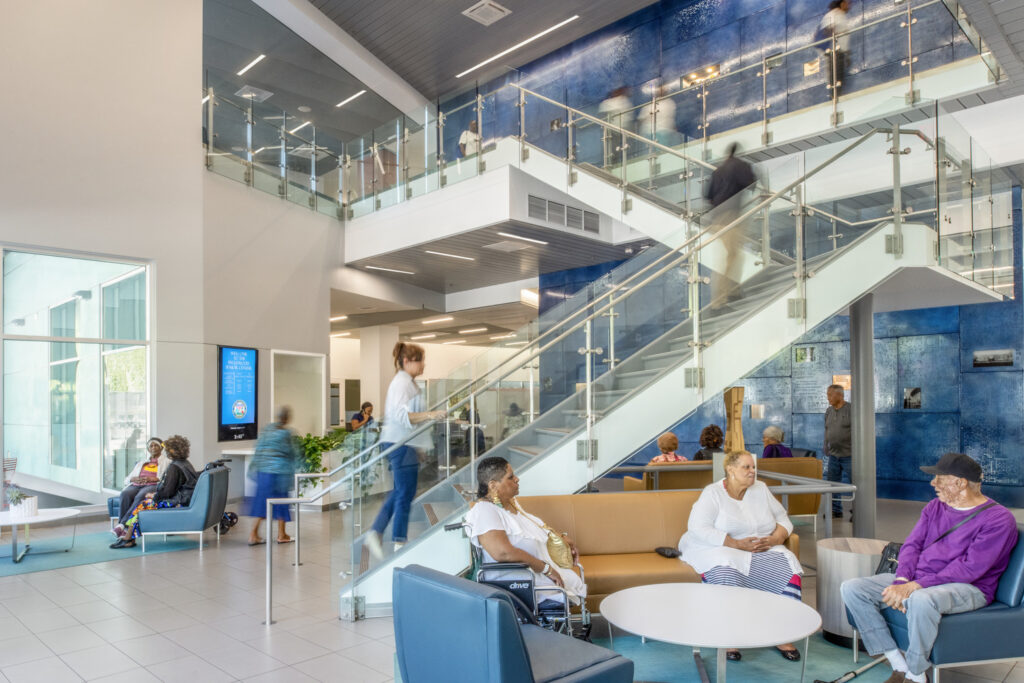
While the government has been working to advance home and community-based services (HCBS) for well over a decade, these services are often fractured, difficult to identify, and sometimes still not affordable to people with lower income. Additionally, many people find it difficult to manage their health care needs, with insufficient insurance, poor communication and transportation, and lack of coordination between different providers being common. Thome Rivertown Neighborhood in Detroit Michigan is an innovative continuing care retirement community/life plan rental community campus with a PACE Program for very low to low-income older adults
Key Words
PACE Program, affordable supportive housing, collaborative urban redevelopment, continuum of care
The U.S. population age 65 and older grew nearly 5 times faster than the total population over the 100 years from 1920 to 2020, according to the 2020 Census, and is currently at roughly 61.2 million (Caplan, 2023). While the vast majority of older individuals live in traditional housing (owned or rented), a National Investment Center for Seniors Housing & Care (NIC) 2026 report indicated that just under 3 million individuals live in community-based residential care—which includes independent (1,000,000), assisted living (965,000), memory care (89,000), and CCRC/Life Plan communities (908,000)—and another 1.3 million reside in nursing homes (NIC, 2026b; National Academies of Sciences, Engineering, and Medicine [NASEM], 2022). This number does not include naturally occurring retirement communities in subsidized, rent restricted, and market rate apartment complexes all over the country. Further, senior living housing development continues to be strong. A separate NIC report indicated there was $5.6 billion in capital investment in independent and assisted living properties in Q4 of 2025 (NIC, 2026a).
Yet the vast majority of this construction targets high-net worth consumers and is not affordable by a significant proportion of older adults. NIC reports the average price per unit was $178,680 (NIC, 2026a). While a majority of states (n = 43) offer nursing home waiver programs for people who qualify as needing nursing level support and rely on Medicaid funding, these tend to be limited to relatively small numbers of individuals and have very long waiting lists (Swartzell et al., 2022).
Section 202 of the Housing and Urban Development program has evolved over its 60-year history, and now primarily pairs low-income housing tax credits with project rental assistance contracts (PRACs) that get converted to Section 8 project-based vouchers to support affordable housing for low-income older adults. In general, operators of government-supported low-income housing are limited in the amounts of staff and support services they can offer. The operational funding is primarily focused on providing shelter, with a much smaller portion devoted to service coordination. Organizations desiring to offer a more robust range of enriched supportive services typically need to engage in agreements with multiple separate agencies, both public and private. These often have different eligibility qualifications and funding limitations, and may have long waiting lists.
While the government has been working to advance home and community-based services (HCBS) for well over a decade, these services are often fractured, difficult to identify, and sometimes still not affordable to people with lower income (NASEM, 2022). Additionally, many people, including seniors and care partners, often find it difficult to manage their health care needs, with insufficient insurance, poor communication and transportation, and lack of coordination between different providers being common (NASEM, 2022).
Individuals enrolled in PACE programs get all their health care needs, and more, through the program. PACE programs operate as both the insurer and the care provider.
PACE Model for Coordinated Care
An alternative health care option that is available to some individuals with lower income is known as PACE: Program of All-inclusive Care for the Elderly. PACE is a capitated benefit authorized by the Balanced Budget Act of 1997 that features a comprehensive service delivery system and integrated Medicare and Medicaid financing for frail, elderly individuals that meet Long Term Care level of care criteria (Michigan Department of Health and Human Services, n.d.). There is a comprehensive assessment that evaluates an individual’s medical conditions, functional limitations, cognitive status, and need for ongoing assistance with activities of daily living. PACE is open to both single (Medicare only) and dually eligible (Medicare and Medicaid) individuals, though single eligible enrollees must purchase Part D (medications) separately.
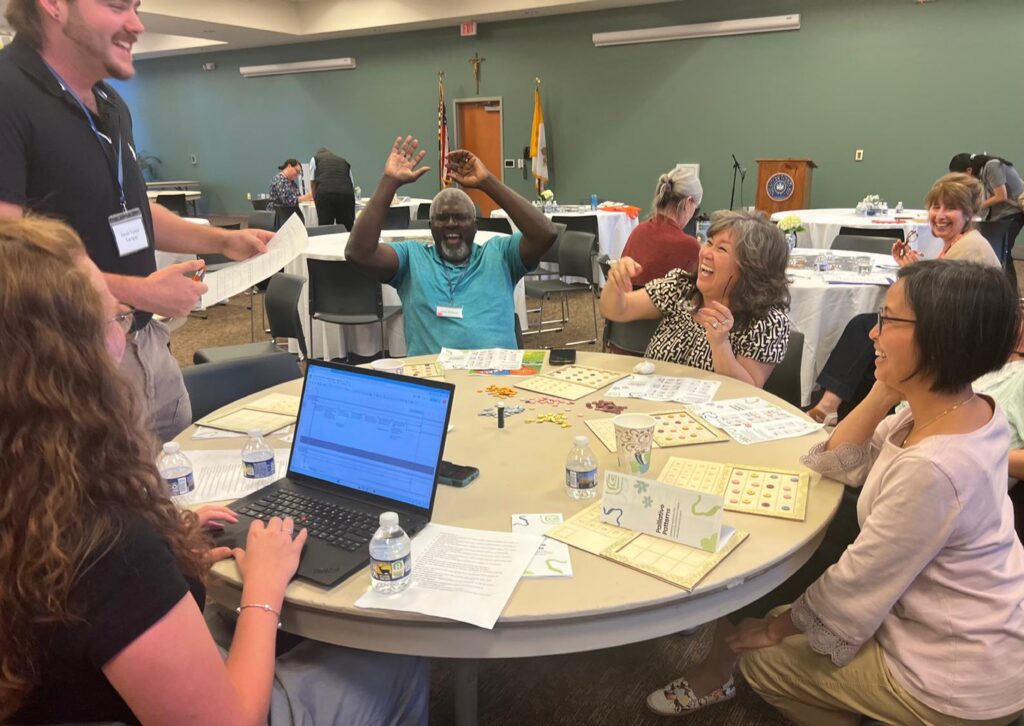
Individuals enrolled in PACE programs get all their healthcare needs, and more, through the program. PACE programs offer a comprehensive array of care and support services to meet the medical, functional, social, emotional, and spiritual needs of each individual. Services include primary care, specialty care, hospitalization, nursing services, home care, palliative care, rehabilitation services (physical, occupational, and speech therapies), behavioral and mental health services, social work, dental care, recreational and life-enrichment programs, spiritual support (optional), and other individualized services. In addition, transportation services are provided to ensure access to medical appointments, therapies, day programs, community resources, and social activities. Nutritional support, care coordination, caregiver support, and assistance with navigating community-based services further contribute to a holistic approach to care. These all-inclusive services are coordinated through an interdisciplinary team (IDT), which works collaboratively with each individual to develop and implement a personalized plan of care that provides for all their needs.
There are a few innovative projects that are seeking to combine both affordable supportive housing with PACE. The Thome Rivertown Neighborhood, which opened in Detroit, Michigan, in 2013 is one such project and is being replicated at four locations in southeast Michigan, which makes it a very interesting case study.
The project is grounded in the long history of continuing care retirement communities (CCRCs) and the work of sponsors, such as the Grey Panthers in Oakland, California, that were developing community centers with affordable housing. The project was deeply influenced by the groundbreaking report “Dying Before Their Time” (Smitherman et al., 2020) and On Lok in San Francisco, California. Ultimately, the Thome Rivertown Neighborhood sought to create a CCRC for very low– to low-income persons to address the lack of integrated health care delivery and safe and secure affordable housing.
In 2009, conceptual conversations began between the United Methodist Retirement Communities (now known as Brio Living Services) and Presbyterian Villages of Michigan (PVM). These conversations were spurred by a request for proposals process that was issued by the Michigan State Housing Development Authority (MSHDA) for the development of pilot projects referred to as affordable assisted living.
At the same time, Henry Ford Health and PVM were discussing expansion of the existing PACE Program that had been serving southeast Michigan since the mid-1990s. Based on the success of On Lok, Henry Ford Health had received approval from The Centers for Medicare and Medicaid Services to develop a demonstration project. Their PACE Program consistently served about 200 individuals at one location through 2012. In February 2012, Henry Ford Health and PVM entered into a joint venture to partner in PACE with the aim of expanding the program and serving more participants. As of 2026 it is serving over 2,500 participants in 10 locations, including Thome Rivertown and now the Center on the Village of Westland, a Thome replication project.
Project Inception
It was decided that Brio, PVM, and Henry Ford Health would jointly pursue the MSHDA call for affordable assisted living programs and the expansion of the PACE Program and co-locate them at one site. This was the genesis for The Thome Rivertown Neighborhood, an innovative continuing care retirement community/life plan rental community campus for low-income older persons in Detroit.
With encouragement from The Community Foundation of Southeast Michigan (CFSEM), Brio, PVM, and Henry Ford Health selected and developed the Thome Rivertown Neighborhood on property located near the Detroit River in the Rivertown neighborhood. An early grant of $2 million, along with an economic impact study, promoted significant additional philanthropic and governmental funding given the number of high-paying jobs that the project supported.
Funding for this first phase was provided from all levels of the government, federal, state, county, and city. Key operating subsidies were provided by MSHDA, the Detroit Housing Commission, and the Detroit Area Agency on Aging (DAAA, Region 1-A). The decision to repurpose dilapidated Park Davis Pharmaceutical buildings and surrounding vacant properties were directly tied to City of Detroit leaders’ plans for a resurgence in development in the Detroit Rivertown Neighborhood.
Subsequent expansions beyond PACE and the affordable assisted living (independent living with supportive services) at the Thome Rivertown Neighborhood included HUD 202 independent living apartments, and the Harry and Jeanette Weinberg Green Houses. With the exception of five apartments in the affordable assisted living area, all residents’ rent is capped at 30% of an individual’s income through PRAC payments, project-based Section 8 vouchers, and tenant vouchers.
Project Components
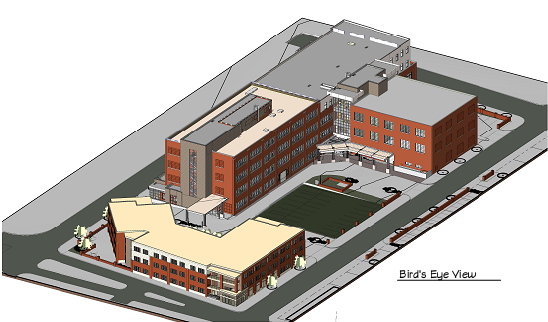
The Affordable Assisted Living portion of the project includes 80 one-bedroom apartments (on three floors) for individuals age 55 and older, and who have a documented need for nursing home eligibility receiving supportive services. These individuals are enrolled as participants in the PACE program or are recipients of the Michigan Medicaid Waiver Program (MI Choice; provided through the DAAA) to access support services. More than 60% of the residents are PACE participants, given the long waiting list to join MI Choice.
Apartments are between 459 and 665 square feet and include a full kitchen and full-size washer and dryer. Other spaces include dining, a library, and community gathering spaces. A part of the Affordable Assisted Living condo unit is leased to Morrison Dining, which provides meals to the Thome Rivertown Neighborhood PACE participants and residents, as well as to the other nine PACE Centers. A Henry Ford Health pharmacy previously leased space. The development of this part of the project was financed through an investment in 9% Low Income Housing Tax Credits by the National Affordable Housing Trust, MSHDA, Wayne County, and City HOME “soft” loans, sponsor loans derived from philanthropic donations, and deferred developer fees. The rental subsidies consist of MSHDA and Detroit Housing Commission Section 8 vouchers.
One might reasonably ask why, if it costs less and has better outcomes, there are not more projects like this.
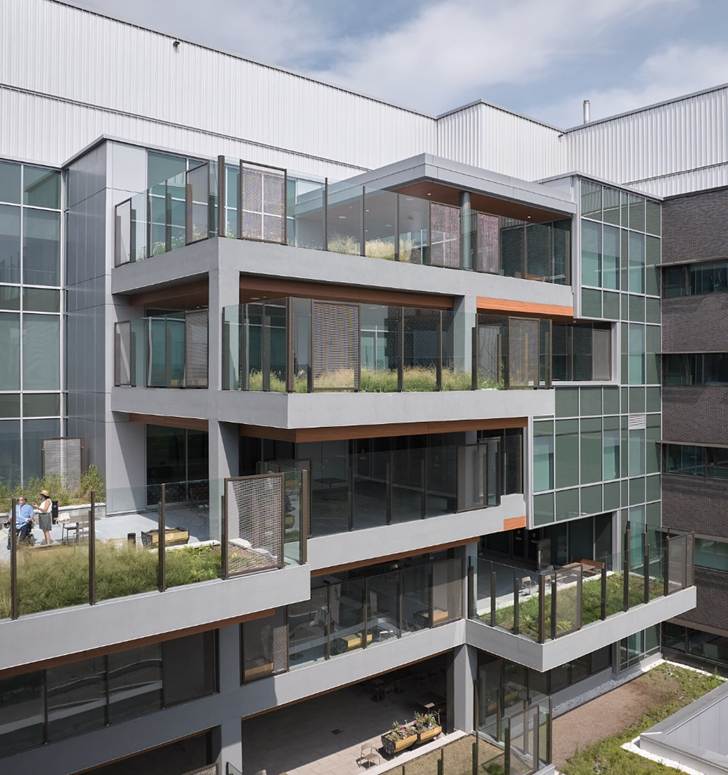
The HUD-supported Section 202 financed housing has 50 one-bedroom apartments (on three floors), with an average size of 540 square feet for individuals age 62 and older. This was one of the last 202 grants provided to fund the entire development. Several of these residents are enrolled in the PACE program. All of the apartments provide subsidized rents via a HUD PRAC wherein the residents paying 30% of their adjusted monthly income. This building has a large common area for shared activities, wellness room, community room, and rooftop garden overlooking the Detroit River. The program supports one HUD 202 Service Coordinator. The development was financed with a HUD 202 grant and sponsor loans derived from philanthropic donations. There are 350 persons on the waiting list.
The Harry and Jeanette Weinberg Green Houses at Thome Rivertown Neighborhood, the Home for the Aged portion of the campus, is licensed and similar to what many other states refer to as assisted living. This building accommodates 21 individuals (on two floors) who are eligible for licensed nursing facility care. The building was designed to meet nursing home facility regulations to ensure access to Medicaid funding in the long term. The homes were built following the Green House model. Each resident has their own private bedroom with bathroom that includes a barrier-free shower. Ten or 11 residents then share common areas including a kitchen, dining room, living room, and an outdoor balcony. Through a Use Agreement between PVM and PACE, all of the residents are PACE participants, and most spend part or all of each day on the ground floor in the attached PACE program. Above the Green Houses is a rooftop pavilion that provides another space for residents of Thome Rivertown and neighborhood organizations to gather for refreshments and views of Rivertown. The Green Houses were financed with a loan from a Community Development Financing Institution, Capital Impact Partner (CIP) and philanthropic support. After five years the CIP loans were refinanced as part of a larger PVM Tax Exempt Bond financing.
The PACE program resides in a 28,000-square-foot space on the first floor and supports up to 300 PACE participants. There are four neighborhoods, one of which supports those participants living with dementia. Amenities include a medical clinic, physical and occupational therapy, dental suite, private bathing areas, dining/social rooms, covered bus drop offs, and access to outdoor spaces. In addition, participants in the PACE program can choose between several different social spaces that provide opportunities for daily engagement in a range of activities as well as meals. The development was financed with intermediate term commercial lending and philanthropic support (see Table 1).
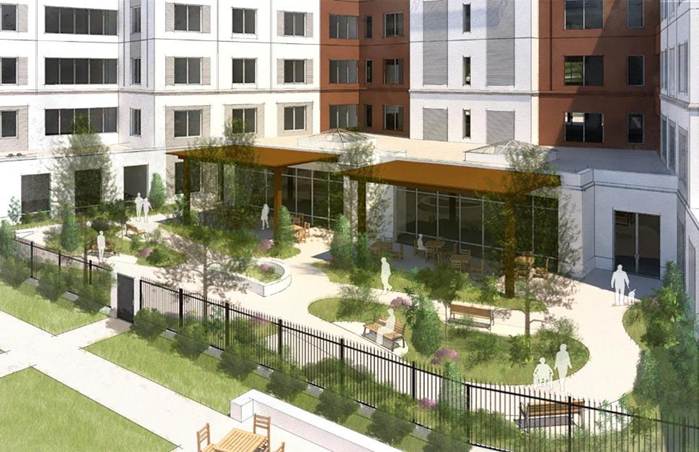
There are plans for continued development. One project is a vacant space that was set aside for a café/coffee shop to serve the general community neighborhood. This initiative is still under investigation to allow for a financially sustainable operation. PVM also acquired adjacent vacant parcels that could be used in the future for the development of additional senior housing (possibly middle-income market rate), as well as the expansion of on-site parking for the campus. There is also interest in collaborating with local schools and community arts programs for more intergenerational activities.
Table 1
Ownership and Management of the Campus Components
| Component | Ownership | Management |
| Independent living with supportive services (affordable assisted living) | Brio and PVM (are co-general partners of a limited partnership) | Brio |
| Independent living (202) | PVM and Brio (are co-sponsors and partners) | PVM |
| Weinberg Green Houses | PVM, who executed a use agreement with PACE to use apartments exclusively for PACE participants | PVM, with PACE responsible for participant care |
| PACE Center | PACE SEMI (a joint venture partnership between Henry Ford Health and PVM) leases from PVM | PACE SEMI |
| Condo association, consisting of five units in the affordable assisted living building | PVM and Brio (have representatives on the Association Board) | PVM |
Discussion
The number of people aged 65 and older grew by 34% to 57.8 million in the period from 2012 to 2022, compared with a growth of just 2% for people younger than 65 (Caplan, 2023). Projections are that the number of older adults will increase to 88.8 million by 2060 (Administration for Community Living, 2024). As Meunier and colleagues (2016) stated, “Caring for frail older adults is a significant healthcare concern as the frailest 10% of the population account for over 70% of healthcare expenditures” (p. 596). The most recent report from the Medicare Trustees is that the Hospital Insurance program (Part A) is expected to become insolvent in 2033 (Correa & Socker, 2026). People enrolled in Medicare Advantage programs cost the Medicare system more than traditional Medicare enrollees. PACE Programs, on the other hand, cost the system considerably less and are associated with more positive outcomes, including, lower skilled home health visits, fewer hospitalizations, fewer nursing home admissions, higher contact with primary care, longer survival rates, an increased number of days in the community, better health, better quality of life, access to transportation, greater satisfaction with overall care arrangements, and better functional status (Hirth et al., 2009).
The combination of the rising cost of housing and the shortage of home healthcare workers are other critical factors impacting many older adults. As individuals become increasingly frail with greater number of functional and/or cognitive changes, staying at home becomes more challenging. As mentioned at the beginning of this article, while there is robust growth in the senior residential housing market, the vast majority is targeting individuals of higher socio-economic status. There is a dearth of affordable, safe, supportive housing for low-income individuals other than nursing homes, which are both expensive and not where most people want to live.
The Thome Rivertown Neighborhood advances an integrated solution to many of the challenges facing older adults with low to moderate income, one that actually saves the healthcare system significant dollars and improves outcomes. It is not the only project in the country that has combined a PACE program with affordable housing but is one of only a handful of such projects. A resident, “J,” describes it this way:
This project required working with multiple programs within federal, state, county and city governments, each of which has its own program requirements.
I used to live in a group home next to a building for former convicts who were sex offenders. My husband at the time was going to PACE, so I was familiar with it. I was jealous of the lunches he got. … We told them we wanted to move out of where we were, and they came and inspected the place and interviewed us, and their bus came and moved us to the apartment here and it was so much better. It’s on the 4th floor and has a view of the walkway to the Riverwalk, so I see lots of people walking in the summer time. The apartments is 2 rooms, it’s good size…bigger than the apartment I had when I lived in San Francisco. It’s very comfortable. The cabinets are a bit too high for me to reach them, but that’s my only complaint. You know I’m 90 yrs old and I have bad knees and I don’t like walking much, so I don’t go outside much…It’s just really very comfortable here. I’m so glad I have it. It has a perfect handicap shower. It’s just right, and I like watching people using the Riverwalk. And I want to mention that I have an aide who comes once a week to help change the sheets and clean the kitchen, since I can’t stand for very long. So the kitchen is cleaner.
Conclusion
One might reasonably ask why, if it costs less and has better outcomes, there are not more projects like this. The answer is complex, almost as complex as the development process was. The number of organizational partnerships on both the operational and capital funding sides was substantial. This project required working with multiple programs within federal, state, county, and city governments, each of which has its own program requirements. The number of different funders who ultimately made the project a reality was also substantial, and again, some had their own program requirements that had to be met. Identifying the lead people to spearhead different parts of the projects was a critical step to its success. And when there wasn’t the right champion, often that part of the project didn’t happen (or hasn’t happened yet) such as the intergenerational programming with local schools or the café/activity center. The leaders had to be creative, persuasive, flexible, and committed to the ultimate vision to make this a reality.
There are also ongoing efforts to make this more widely accessible to other communities. In 2024 Presbyterian Villages of Michigan Foundation was awarded a grant from Enterprise Community Partners to undertake a case study analysis of the Thome Rivertown Neighborhood in Detroit, Michigan, as one of the most successful housing-with-LTSS-services initiatives in the U.S. for low-income older adults. The project will assess impacts, identify insights, and tap into broader expertise to curate a generalizable continuum of care model—inclusive of light-touch services, workforce housing, moderate and skilled care—that can be embedded in comfortable, accessible housing and implemented in any community in the U.S. This model, called Connected Communities, has a dedicated website to disseminate the findings, lessons learned, and playbook from Thome Rivertown Neighborhood, together with recommendations for how others wishing to initiate similar projects may wish to proceed. The Connected Communities website is broadly designed to be educational, and features information on many aspects of LTSS improvement. The tools will focus on four areas: design, financing, governance, and performance measurement. Broadly, the goal is to build momentum and give people all over the country enough information to understand how they can take action to create a Connected Community similar to Thome Rivertown in their area.
Margaret Calkins, PhD, is Board Chair and Senior Researcher at the IDEAS Institute in Cleveland Heights, Ohio. She can be reached at mcalkins@IDEASInstitute.org.
Roger L. Myers, BS, MPA, is President and CEO of Presbyterian Villages of Michigan in Southfield, Michigan. He can be reached at rmyers@pvm.org.
Brian W. Carnaghi, BS, MPA, is retired Senior Vice President of Presbyterian Villages of Michigan in Southfield, Michigan, and can be reached at bcarnaghi@PVM.org.
References
Administration for Community Living. (2024, May). 2023 Profile of older Americans. U.S. Department of Health and Human Services. https://acl.gov/sites/default/files/Profile%20of%20OA/ACL_ProfileOlderAmericans2023_508.pdf
Caplan, Z. (2023, May 25). U.S. older population grew from 2010 to 2020 at fastest rate since 1880 to 1890. U.S. Department of Commerce, Census Bureau. https://www.census.gov/library/stories/2023/05/2020-census-united-states-older-population-grew.html
Correa, C & Socker, E. (2026, June 10) Beyond insolvency: The bigger picture of Medicare’s 2026 financial outlook. Center on Health Insurance Reforms. https://medicare.chir.georgetown.edu/beyond-insolvency-the-bigger-picture-of-medicares-2026-financial-outlook/
Hirth, V., Baskins, J., & Dever-Bumba, M. (2009). Program of All-Inclusive Care (PACE): Past, present, and future. Journal of the American Medical Directors Association, 10(3), 155–160. https://doi.org/10.1016/j.jamda.2008.12.002
Michigan Department of Health and Human Services. (n.d.). Program of All-Inclusive Care for the Elderly (PACE). https://www.michigan.gov/mdhhs/assistance-programs/healthcare/seniors/program-of-all-inclusive-care-for-the-elderly-pace
National Academies of Sciences, Engineering, and Medicine. (2022). The national imperative to improve nursing home quality: Honoring our commitment to residents, families, and staff. The National Academies Press. https://doi.org/10.17226/26526
National Investment Center for Seniors Housing & Care. (2026a). NIC MAP: 1Q26 market fundamentals. https://info.nicmap.com/rs/016-QJL-848/images/1Q26-NIC-MAP-Market-Fundamentals.pdf
National Investment Center for Seniors Housing & Care. (2026b). Senior housing & care at a glance. https://www.nic.org/resources/senior-housing-care-at-a-glance/
Smitherman, H., Kallenbach, L., & Arahna, A. (2020). Dying before their time III: 19 year-(1999-2017) comparative analysis of excess mortality in Detroit. Detroit Area Agency on Aging. https://www.detroitseniorsolution.org/app/uploads/2024/07/Dying-Before-Their-Time-III-Report.pdf
Swartzell, K. L., Fulton, J. S., & Crowder, S. J. (2022) State-level Medicaid 1915(c) home and community-based services waiver support for caregivers. Nursing Outlook; 70(5), 749–757. https://doi.org/ 10.1016/j.outlook.2022.06.005.