
Study finds most employers have advanced only a few age-specific efforts.

A Validated Taxonomy of Age-Inclusive Management Strategies
read more
Study finds most employers have advanced only a few age-specific efforts.

Expanding MPAs supports work, economic opportunity, and the continuing contributions of older adults.

The changing nature of the workplace presents challenges and opportunities for older workers and employers.

Employers must balance and recognize strengths of employees’ general and firm-specific experiences.

How employers measure up on seven key elements of age-friendliness amid the multigenerational workforce.

Supporting an aging workforce is not about preparing people to leave; it is about preparing organizations to evolve.

A Reverse Mentorship Program at Land O’Lakes helps employees connect across generations.
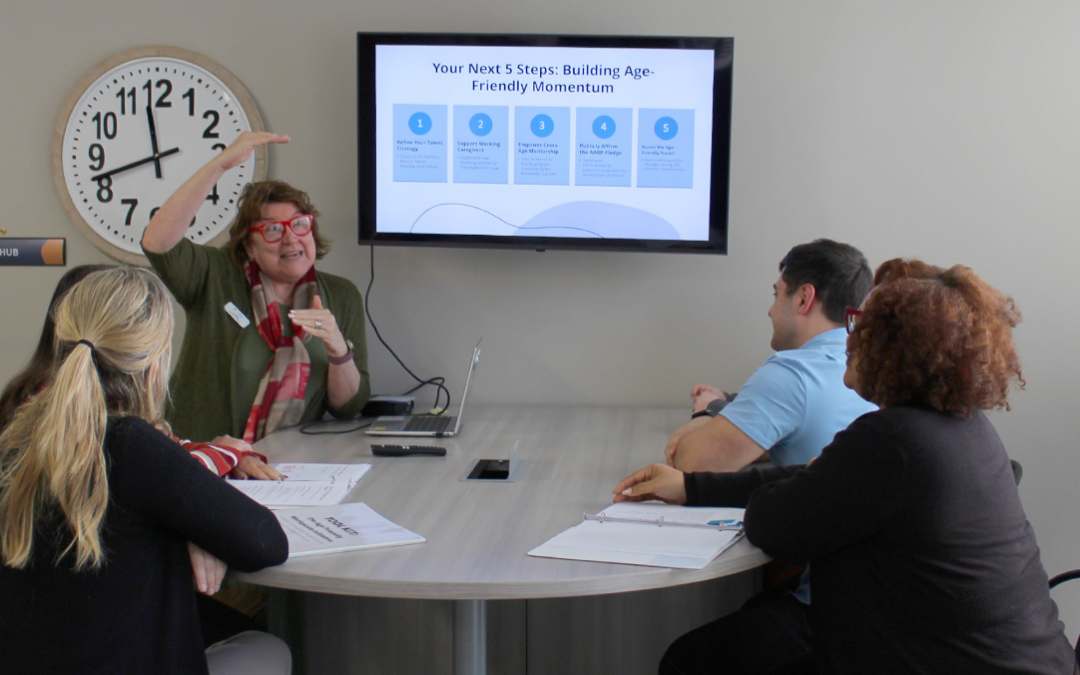
Purpose‑centered employment strengthens workforce longevity, advances equity, and assists older adults.

The workforce is aging, talent shortages persist, and traditional staffing models no longer reflect reality—all a strategic advantage for those organizations willing to adapt.

Older workers continue to be treated as an afterthought in workforce strategy.

Research shows promise aligning technology, training, and the realities of work across the life course.

Training, supportive services, and stronger policies can help turn disruption into opportunity for older workers.

Advice and best practices for future projects.

Medical debt is a consumer finance issue and also disability rights and housing stability issues.

The Telehealth Intervention Programs for Seniors helps older adults stay healthier at home.

Six recommendations to consider for MPAs.

Insights from a National Collaborative Research Project on Aging, Caregiving, and Cultural Identity.

Idaho Caregiver Alliance brings together community organizations, healthcare providers, researchers and others to support caregivers.

An Age-Just Society replaces voluntary frameworks with enforceable rights.

Thadd’s Place in rural Oregon provides an intergenerational model of grief support.