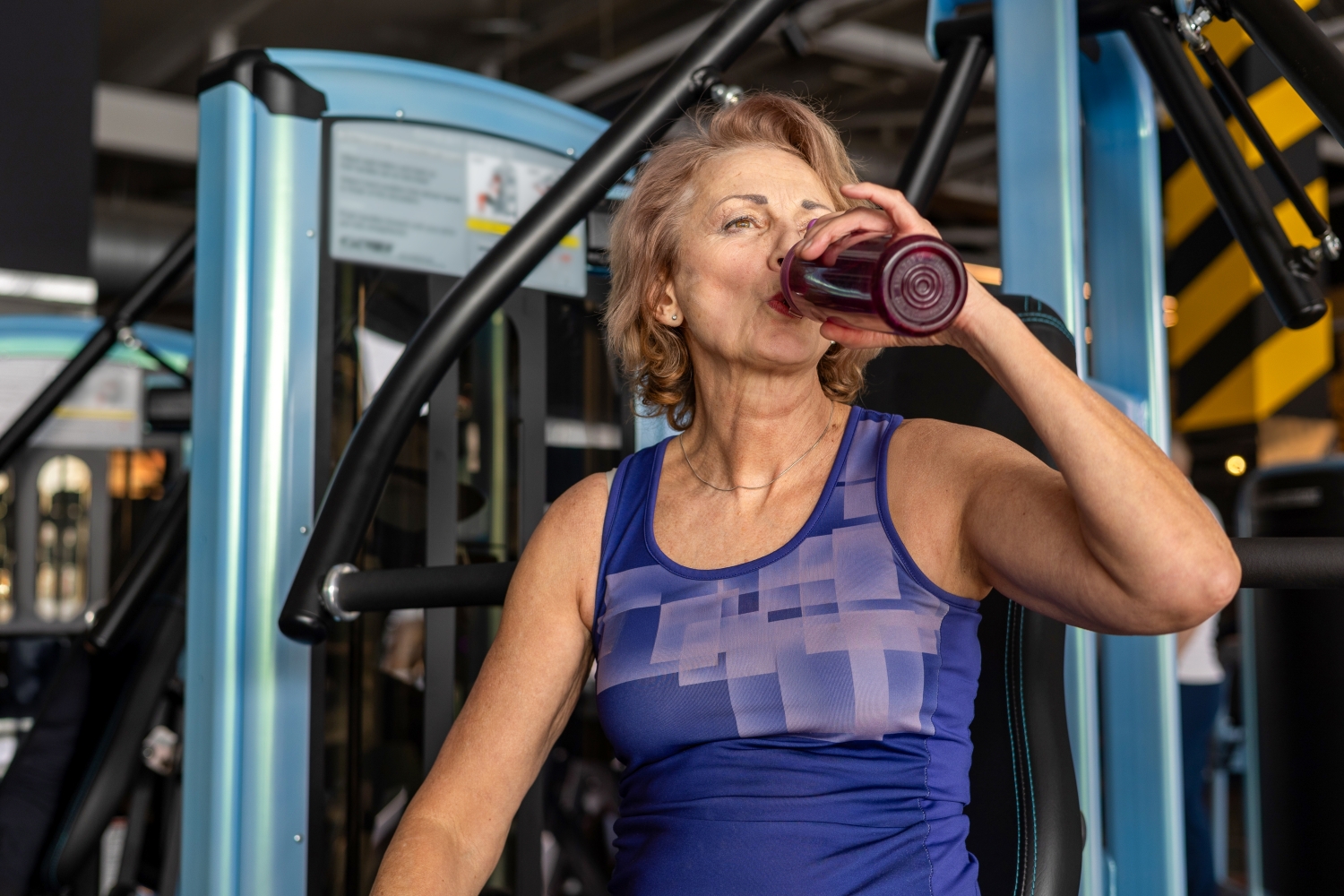

Vitality is often synonymous with physical or mental vigor. Did you know it can also be a defining characteristic for healthy aging? In this post we explore what is known about the different dimensions of vitality, how they are measured, and important supports for vitality—including nutrition—to promote healthy aging.
Vitality and the Intrinsic Capacity Framework
More than a decade ago, the World Health Organization (WHO) released its first World Report on Ageing and Health and introduced a new framework for healthy aging centering functional ability. The WHO describes functional ability as an individual’s intrinsic capacity, relevant environmental characteristics, and the interactions between these two factors. Critically, this model shifted attention away from disease‑centered outcomes toward prevention and preserving physical and mental function across the life course.
The WHO World Report established five domains of the intrinsic capacity framework: cognition, psychological well-being, sensory function, locomotor function, and vitality. Among these, vitality has emerged as the most integrative and biologically comprehensive domain, because it is shaped by energy and metabolism, neuromuscular function, and immune and stress-response mechanisms.
Vitality has been hypothesized to approximate an individual’s biological age, as opposed to chronological age. Indeed, vitality exists on a continuum across the life course, distinguishing it from frailty, which reflects accumulated deficits. Declines in vitality capacity may in fact precede overt frailty, offering a window for preventive interventions.
Vitality Dimensions and Measurement
Measuring vitality can help identify appropriate preventive interventions and supports. In studies examining how vitality relates to functional difficulties in Activities of Daily Living (ADL) and Instrumental Activities of Daily Living (IADL), vitality has been assessed using measures of:
- Nutrition status
- Handgrip strength
- A composite of biomarkers linked to inflammation and mitochondrial function (including CRP [C-reactive protein, IL‑6 [interleukin-6], TNFR1 [tumor necrosis factor receptor 1], MCP‑1 [monocyte chemoattractant protein-1], GDF‑15 [growth/differentiation factor-15]).
These three measures capture different dimensions of vitality. For example, nutrition status is broadly associated with multiple intrinsic capacity (IC) domains and is indispensable to IC domains’ clinical and biological relevance. Handgrip strength correlates most closely with locomotor and psychological capacity. Inflammatory biomarkers have shown alignment with cognitive and locomotor performance. This distribution supports the idea that vitality acts upstream, shaping other capacities rather than directly impacting functional impairment.
WHO emphasizes that nutrition must be central to vitality assessment, as undernutrition is prevalent, reversible, and strongly associated with functional decline. Routine screening for reduced appetite and/or unintentional weight loss, using tools such as the Malnutrition Screening Tool (MST), is recommended as a simple and scalable entry point in primary care for detecting early declines in vitality.
| Vitality Is Fundamental to Quality Community Healthcare · Vitality is meaningful and measurable. Simple markers like appetite loss and weight change capture substantial physiological variation across intrinsic capacity domains and point to decreased vitality. · Monitoring vitality supports prevention. Detecting early decline enables targeted interventions to slow or reverse functional losses and promote healthy aging. · Integration of vitality screening into routine care is feasible. Many vitality measures are low-cost, scalable, and suitable for community-based and primary care settings. · Nutrition and physical activity interventions can be most effective when recommended and implemented as soon as low vitality is identified. |
Nutrition Interventions to Support and Promote Vitality
The most effective strategies to maintain vitality are adopting healthy lifestyle behaviors, including regular physical activity and maintaining a high-quality diet with adequate protein. Optimizing the quality of protein at each meal is also important to help guard against age-related muscle loss.
In older adults who are malnourished or at risk of malnutrition, evidence consistently shows that specialized oral nutritional supplements (ONS), particularly when combined with nutrition education and counseling, support improvements in nutrition indicators, help maintain or increase body weight and muscle mass, and contribute to sustained functional, psychological benefits and overall vitality. Importantly, better nutrition was the strongest driver of frailty improvement observed in a large cohort of malnourished/at-risk outpatients. In that study, older adults whose nutrition status improved were far more likely to show meaningful gains in reduced frailty, highlighting the close connection between adequate nutrition, muscle health, and physical function.
Consistent with this growing body of evidence, the WHO Integrated Care for Older People (ICOPE) framework recommends personalized care plans that incorporate multimodal exercise, dietary advice, and appropriate use of ONS to help older adults maintain intrinsic capacity, preserve independence, and remain in their communities longer.
Focusing on vitality capacity represents a transformative shift in healthy aging—from reactive, disease‑oriented care to proactive, function‑focused health management. By refining and standardizing its measurement and early intervention, vitality can serve as a practical and actionable platform to support healthy aging across the life course. Considering this, vitality capacity could be conceptualized as a “vital sign” for primary care, enabling proactive identification and interventions for individuals at risk of functional decline.
Daniel Martinez is senior medical manager for Abbott Nutrition International in Argentina-Chile, and
Oscar Hincapie, MD, is area medical director for Abbott Nutrition International–Latin America Countries.
Photo credit: Shutterstock/Mishchenko Svitlana