

Abstract
This article explores Colorado’s effort to redesign its postsecondary education and workforce system in response to Executive Order 2025–006, envisioning reforms centering demographic data, longer working lives, and nonlinear careers. Traditional three-stage models of learning, work, and retirement no longer reflect modern life. By embedding lifelong learning, flexible work structures, phased retirement, and recognition of prior experience, Colorado can stabilize workforce participation, reduce disparities, attract new jobs, and expand opportunity across the lifespan. What follows is one vision, where education and employment systems adapt to our ever-changing communities, creating a more equitable, skilled, and age-inclusive economy.
Key Words
workforce development, postsecondary education, mid-career, late-career, aging, demography, population trends, systems change
In May 2025, Colorado Governor Jared Polis issued Executive Order 2025–006 calling for a fundamental reimagining of how the state connects education, training, and employment (State of Colorado, Office of the Governor, 2025). The subsequent convenings and work make a clear case—Colorado’s economy is strong, but its talent system is misaligned with reality (Exec. Order No. D-2025-006., 2025). Too many workers are underemployed. Too many employers cannot find people with the skills they need. And too many Coloradans fall out of learning and opportunity long before their working lives are over.
Incremental reforms have not produced a coherent system. Instead, they leave fragmented pathways and a workforce infrastructure misaligned with modern lives. In an era defined by rapid technological change, federal uncertainty, and shifting demographics, Colorado needs something fundamentally different: a transformational system designed for long, complex, and diverse lives. Not adherence to a linear three-stage model neatly characterized by learning, working, and retiring.
This opportunity invites a values question as much as a policy one:
“What would it look like to build a postsecondary model grounded in demographic data and the reality of longer lives and nonlinear careers—where individuals move between learning, work, and caregiving, and institutions are designed to support those transitions at every stage of life?”
This is not a hypothetical scenario or a challenge on the horizon. It is the reality that Colorado, and the rest of the country, must design for now.
From Fragmentation to Continuity
Historically, Coloradans are expected to front-load education, move quickly into full-time work, and remain continuously attached to the labor market or risk permanent setbacks. The modern world requires a new reality.
In the reimagined system, learning and work form a continuous loop. A Coloradan no longer experiences education as something they “return to” after falling behind. Instead, education is woven into working life, caregiving life, and later-life transitions. A true realization of lifelong learning.
‘A 60-year-old nurse shifts into teaching and preceptor opportunities without losing income or status.’
A 46-year-old displaced coal-plant technician does not start over. She stacks targeted credentials aligned to current labor demand and helps build a new solar farm. A 60-year-old nurse shifts into teaching and preceptor opportunities without losing income or status. A 50-year-old caregiver stepping back into the workforce does so through paid, supported reentry.
This continuity is not incidental. It reflects a workforce system deliberately aligned with the composition of Colorado’s changing labor force. Intentional use of demographic data informs legislative action and guides decision-making at every step of the process—from ideation to strategic planning to program implementation. This reimagined continuity transforms not only the pathways of learners but the functioning of the workforce and the economy.
A New World of Learning and Work
For learners, it is truly transformational. Higher education no longer signals “this is for the young.” Campuses and training centers reflect the communities they serve. Institutions assume people have jobs, families, and needs that change across the lifespan. Existing skills and experience are recognized, valued, and credited rather than requiring learners to start from scratch upon reentry.
Credentials feel useful because they truly are. They are built in partnership with employers, refreshed as skills evolve, and designed to hold value whether someone studies for 3 months or 3 years. No one is told they are too late to benefit and no one feels out of place for participating.
For workers, careers are no longer linear. People can slow down, change direction, or step away to care for family without permanently harming their income or career prospects. Jobs are designed to offer flexibility without sacrificing stability. Experience is valued and intergenerational teams are seen as a strength, not a box to check.
‘Public investments are directed toward sustaining employment, skills, and economic security over our lives.’
For employers, the impact is equally transformational. Talent pipelines expand. New industries and businesses target Colorado for relocation due to our talent strategy and highly trained workforce. Retention increases due to flexibility and overall job satisfaction. Knowledge transfer and mentorship become intentional. Businesses stop competing over a shrinking pool of young workers and instead gain access to a multigenerational workforce supported by the state’s education and training infrastructure.
And for the state itself, workforce participation stabilizes across age groups as retirement becomes a phased transition rather than an abrupt exit. Racial and economic disparities narrow because barriers are addressed across the lifespan. Public investments are directed toward sustaining employment, skills, and economic security over our lives, rather than primarily responding after disruption or separation occurs.
At its core, this transformation is rooted in a set of shared values:
- Longevity is a strength, not a liability.
- Every stage of life is a stage for contribution.
- Equity requires policies that reflect how people actually live.
- Opportunity expands across the lifespan, never limited by age.
Demographic projections do not compete with priorities like AI disruption or skills alignment—they are the operating conditions in which policy reforms succeed or fail. They tell us who the workforce is, where they are, how long people will need to remain economically engaged, and what kinds of support make participation possible.
When our demographic reality is treated as an evidence base, policy becomes more targeted and more effective.
Designing the Future of Work
In this future, a Coloradan’s age no longer predicts access to opportunity. Careers ebb and flow without becoming detours or dead ends. Education keeps pace with both technological change and human longevity. Work adapts to life, not the other way around.
This is the potential embedded in Colorado’s effort to reform its postsecondary education and workforce system: not simply a new department or organizational structure, but a new understanding of how societies—and economies—thrive when they are designed for long lives and dynamic careers.
The question before us is not whether this future is possible, but whether we are willing to design our systems to achieve it.
Jarett Hughes, MA, is president and CEO of Leverage Colorado in Denver. He may be contacted at jhughes@leverageco.org.
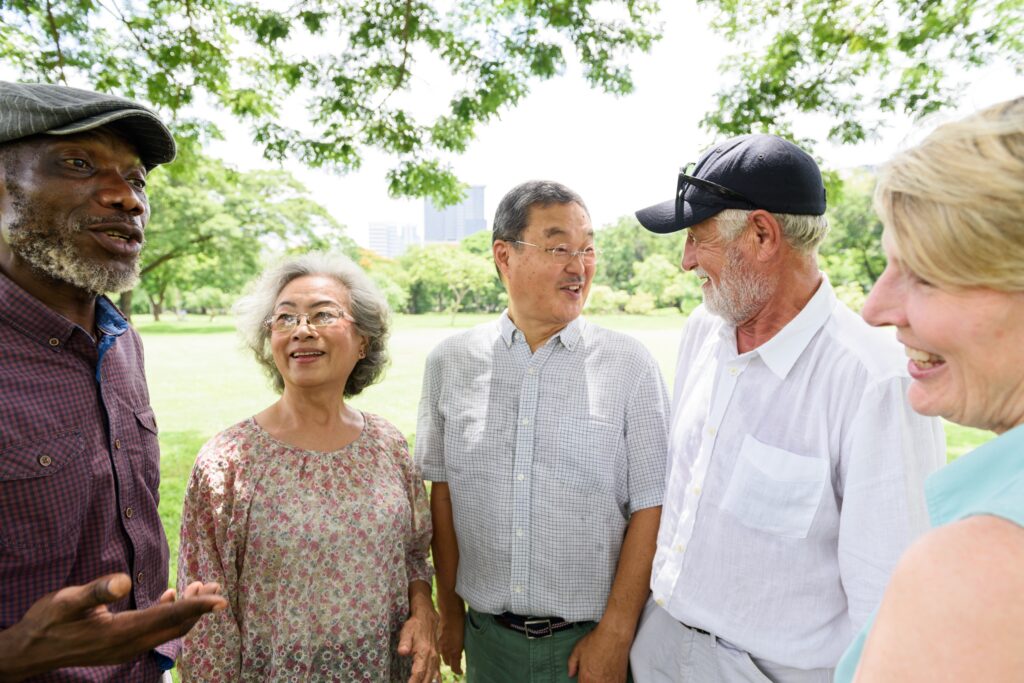
Photo credit: Shutterstock/ fizkes
References
Colorado Office of the Governor. (2025). Reimagining the future of the postsecondary talent development system in Colorado: Final report in response to Executive Order D-2025-006. https://drive.google.com/file/d/1sRVt05ccscR65zAyUPniOdvRkoYFIxVy/view?usp=sharing
Exec. Order No. D-2025-006. (2025). Colorado. https://spl.cde.state.co.us/artemis/goserials/go4312internet/go43122025006internet.pdf