

Abstract
With age comes experience. This article focuses on two types of experience that older workers embody, general and firm-specific. General experience accumulates through time in the workforce across all employers while firm-specific experience accumulates through time spent with the current employer. If employers could know the value of each type to them, they could tune management practices affecting older workers to capture that value, but most employers lack the ability to discern the value of each type. The article provides straightforward diagnostic questions that any employer can use to assess the value of experience and set practices accordingly.
Key Words
Older workers, general experience, firm-specific experience, employers
Employers often do not know when it is in their best business interests to retain or hire older workers. Age and work sit at the intersection of complicated considerations. The average age of labor forces in most countries is rising, in part due to lower population growth rates of younger cohorts, increased longevity, and many in the older cohorts working later in life, making older workers a growing share of the available local labor supply. But employers often are reluctant to engage with older workers for a variety of reasons, some of which reflect age-based stereotypes (Weiss & Weiss, 2025) and some of which are rooted in cost realities. In general, costs increase with employee age in the form of higher pay, higher healthcare premiums, and higher retirement contributions (Clark & Ritter, 2020). Costs, however, are only one part of the business case. Value created is another, and employers usually lack information about the value created by older, experienced workers. This article examines the value of experience and offers steps that employers can follow to assess the value of workers’ experience in their organizations.
Timing Exits from the Workforce
Older workers’ needs and preferences for continuing employment vary greatly. Some seek to exit (retire from) the workforce early, perhaps to pursue avocations or charitable pursuits, while others may seek to work well beyond what some regard as a “typical” age to stop working. Sometimes older workers’ needs and preferences are well aligned with the interests of their employers. A slow- or no-growth organization, for example, may be happy to have its older workers depart earlier rather than later so that opportunities are created for younger, mid-career employees to advance into those vacated positions. Another organization may want to retain its older workers well beyond typical retirement ages and that may nicely fit with the preferences of many of their current older employees. Practices to keep older workers in the fold include phased retirement, flexible work arrangements, reductions in required work hours, and providing training programs that encourage intentions to keep working (Li et al., 2023). There are also many circumstances in which the interests of the business are not well aligned with those of their older employees. As a result, the timing of exits from the workforce can be highly disadvantageous to both employer and employee. Table 1 illustrates potential scenarios of alignment and misalignment between individual and employer preferences.
Table 1: The Timing of Exits from the Workforce
| Early exits | On-time exits | Later exits | |
| Business needs | A low-growth organization welcomes early exits to create opportunities for others. | Well-designed benefit plans such as 401(k)s and pensions can facilitate alignment of employee and employer needs. | Employers seek to defer exits through innovative work practices that retain older employees. |
| Employee needs, preferences, intentions | Non-work interests and goals often come to the fore with age. | Employees may value extended employment due to household circumstances, social needs, and personal reasons. |
Older employees, we can assume, know their needs and interests. The dark spot is on the employers’ side. That is, employers typically do not know the right timing of exits from their perspective. They find it difficult to discern the value, great or small, delivered by older workers. Lacking this knowledge, employers may struggle to set practices and policies that best meet their interests regarding employing older workers. One key to knowing the value of older workers is to distinguish between age and experience.
Age and Two Types of Experience
Employers often see older workers and think “age” when they should be thinking “experience.” Age and work experience go together, of course, but with age come two types of experience relevant to all employers: general and firm-specific. General work experience is indicated by the sum of years in the workforce across all of one’s employers. The more years a person spends in the workforce, the greater their accumulation of work-relevant know-how, capabilities, and norms. For simplicity’s sake, the amount of general work experience usually is indicated by the age of an employee. In contrast, firm-specific experience is about time spent with one’s current employer. Its value comes from things like mastering the proprietary processes and intellectual capital of an organization; internalizing its culture; building familiarity with its customers, clients, and patients; and securing memberships in networks of relationships unique to each enterprise. Firm-specific experience is indicated by the number of years of service to the current employer (i.e., employee tenure).
One key to knowing the value of older workers is to distinguish between age and experience.
There is a considerable amount of research on age and work. Much of that research focuses on employee age rather than trying to parse out the importance of the two types of experience that may correlate with age. And, frankly, the research literature is quite conflicted. In psychological research on age, early studies reflected a “decline model” in which decrements associated with aging were emphasized, such as declines in how fast information is processed. Findings from more recent psychological research have been more nuanced. For example, studies have shown that while the speed with which our brains process information declines with age, the stock of knowledge we hold grows, and social skills like perceptiveness of emotional cues tend to increase with age.
Recent research has also suggested that cognitive decline is more modest than previously thought, especially when the effects of Alzheimer’s disease are accounted for (see Charles & Carstensen, 2010). While much of the early psychological research on aging focused on contexts outside the workplace, the rising interest in age and work has led to considerable research focused specifically on the workplace. Like the earlier work, this field of study evolved over time from an initial position that losses in job performance necessarily come with aging to a more nuanced view. That is, aging is a detriment to job performance in certain situations (e.g., physically demanding jobs) but by and large the age–work performance relationship, as viewed through the lens of psychological research, is essentially zero, whether we are referring to workers in general or CEOs (Ng & Feldman, 2008; Wang et al., 2016).
Research in economics differs, however. There, at the individual level of analysis, the dominant view is that individual job performance declines with age, generally beginning in the mid-forties to early fifties. Economics research at more aggregate levels of analysis, such as at the enterprise level, paints a different picture, with some research reporting a positive association between firm productivity and average employee age and some research reporting no or a negative relationship. Research on age and performance in both psychology and economics has been reviewed by Guzzo et al. (2022).
We do not seek to reconcile conflicting findings regarding age and performance. Rather, we reframe the discussion around the value of experience that comes with age, specifically the relative value to an organization of general and firm-specific experience. A critical but difficult question to answer is “What type of experience creates greater value to the employer?” The way an employer answers that question will influence many practices that affect older workers. Will the organization hire them? Will it implement practices to retain them or, conversely, do little to stop their exits? Will it invest in aging workers through training and development activities? Will retirement-related programs be changed to accelerate or slow the departure of older workers?
Fortunately, general (age) and firm-specific (tenure) experience can be separated and assessed for their relative value. Sometimes that assessment can be made with a high degree of quantification and precision, as shown below. More often—especially for smaller employers and in organizations where it is hard to isolate employees’ impact on business success—estimating the value of the two types of experience is a judgment call. That judgment call can be made in an informed and disciplined way by answering the small set of diagnostic questions presented below, which apply to organizations of all sizes and industries. Whether a quantitative or qualitative approach is taken to assessing the business value of the two types of experience to an enterprise, important points to keep in mind are that (1) each type can have low, moderate, or high value; and (2) what is true for one employer is not necessarily true for another, even in the same industry or location. Business, operational, and cultural contexts matter.
Quantitatively Assessing the Value of Experience
The differential effects of age and tenure are easily masked because the two variables are highly correlated. As employees accumulate tenure with their employer, they get older. But age and tenure do not necessarily move in lockstep because the age profile of new hires can vary considerably between employers or across units within an organization. Different combinations of age and tenure in organizations and units make it possible to disentangle the effects of each variable using controlled statistical analyses. This approach is exemplified in a study by Guzzo et al (2022). The authors synthesized results from 23 different organizations that statistically examined the impact of workforce age and tenure along with multiple other workforce factors on various measures of financial, operational, and customer-related performance (e.g., customer retention and growth). In each of the organizational studies, business performance was measured over extended periods at the business unit level (e.g., branches, offices, stores, factories). Together the studies comprised observations on nearly 1.5 million employee-years at work. Most importantly, each of the studies accounted for the influence of other factors such as location and pay influencing business performance, making it possible to isolate the effects of workforce age and tenure.
Assessing the relative value of firm-specific experience is critical, and older workers usually have the most of it.
The meta-analysis of these studies found that while there is ample variability in the effects of both age and tenure on business performance, overall, higher employee tenure in business units positively contributed to financial and operational performance, all else being equal. Age, on the other hand, was neutral in effect. Figure 1 shows the effect of age on the distribution of performance across units in the 23 organizations in the study, with and without accounting for employee tenure. That is, once one accounts for tenure within units, the entire age-performance distribution shifts to the left, to near zero, indicating that higher performance that appears related to age is the result of higher tenure.
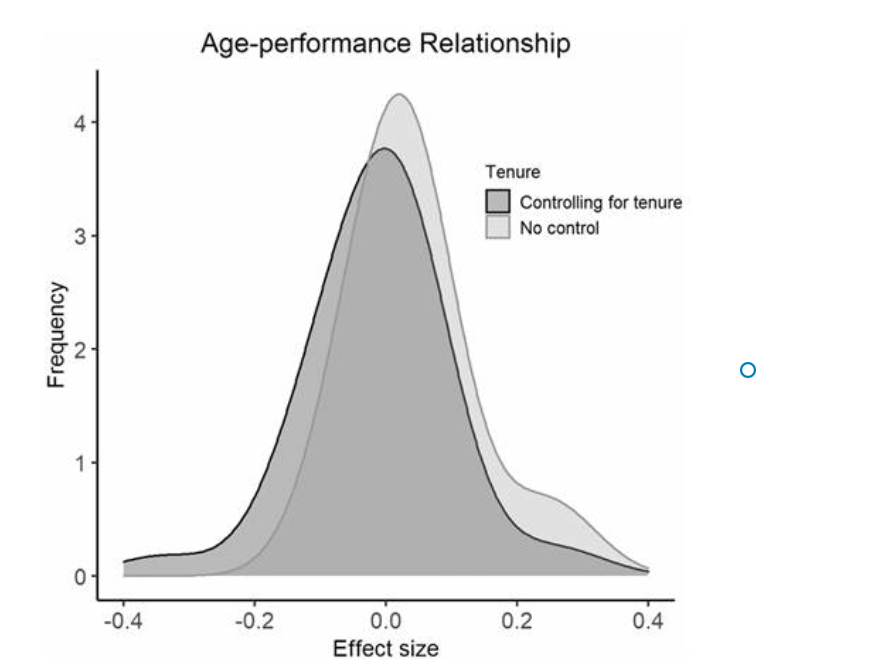
Figure 1: The Age-Performance Relationship After Accounting for Tenure with the Employer
Five Practical Questions to Qualitatively Evaluate the Value of Experience
While quantitative evaluations are compelling, qualitative approaches can be equally valuable and often are more practical. We offer five key questions, taken from Guzzo and Nalbantian (2025), to guide a qualitative assessment for your own organization.
Question 1: What workforce characteristics and behaviors are most critical to the success of the business and how are they changing (if at all)?
The value of the kinds of experience older workers bring should be assessed in the context of broader workforce requirements. Modern workforce planning carefully considers the mix of capabilities, knowledge, experience, and behaviors required to achieve business objectives, not just headcounts. In the best of circumstances, decisions about the management of older workers follow from a process that identifies and prioritizes these business requirements, staying alert to developments that signal potential changes in the value of the different types of experience to the employer.
A case in point is that of “TechnoCo,” a major technology company. Historically, the company was all about innovating, producing, and selling standardized products. But changing market and business conditions prompted them to shift towards greater service orientation and greater product customization. To support this change, the organization needed different kinds of people in their workforce, those good at coordinating across business lines. Hiring seasoned workers who had performed successfully in such roles elsewhere was the key. In other words, the business needed more general and less firm-specific experience. Measures of job applicants’ prior work experience and hiring source became important elements of job candidate reviews.
Question 2: Is the organization experiencing any serious talent shortages and, if so, among what jobs or types of employees?
Talent shortages can cripple businesses. Stemming the loss of older, experienced workers can pre-empt talent shortages that pose a business risk, and employers have a variety of tactics—for example, flexible work hours, part-time work, incentives to delay retirement—at hand to increase the retention of such workers.
As an example, a professional services company, ProfessionalCo, was concerned about a potential shortage of senior client managers and technical experts during a period of business growth. Such talent was important to sustain strong customer relationships and exploit synergies across business lines that served their clients. Many of these senior leaders and managers still enjoyed the coverage of a defined benefit retirement plan which, along with the substantial run-up of company stock values in their defined contribution and other savings and investment plans, provided strong incentives to retire “on time.” Company leaders determined it would be useful to experiment with modifications to their retirement strategy, offering a form of phased retirement, built on early partial access to retirement earnings and the embrace of flexible work arrangements. Recognizing the productive value of tenure in this part of their workforce became an important driver of their overall workforce strategy. Retirement rates, take-up of phased retirement, and flexible working were measures used to track the effectiveness of their approach.
Question 3: Does length of service and experience in the organization contribute significantly to business performance?
The importance of addressing this question cannot be overstated. Assessing the relative value of firm-specific experience is critical, and older workers usually have the most of it. A lot rides on the ability of an organization to reasonably assess the relative value of firm-specific experience. Indeed, such an assessment is essential to determining one of the key pillars of any workforce strategy, achieving the right balance between “buying” and “building” the workforce from within. Qualitative assessments require careful review of the role of firm-specific experience informed by the expertise of those closest to operations, informed, when possible, by metrics related to the performance of highly tenured individuals and work units.
A regional bank, FinanceCo, undertook such an assessment as they moved to implement a growth strategy focused on expanding service mix and increasing reliance on technology to deliver services. An analysis of the people factors influencing branch-level performance indicated that the single largest performance driver was the average tenure of employees in front-line jobs. This quantitative finding aligned with qualitative assessments of the value of the bank’s customer-centric operations. But this realization raised a red flag for management: In focusing on bringing in the new kinds of talent—and paying top dollar for them—needed to deliver new services through new technologies, the bank was inadvertently undermining their incumbent population, diminishing the value of longer service to employees, the very employees who were creating the most value. As a result, they were starting to lose their top performing, tenured staff. The lesson learned: However important it was to acquire new talent, it was essential to protect firm-specific experience in the company by continuing to value it financially and otherwise.
When it comes to older workers, the key question is not about age per se, but about the value of the specific types of experience that come with age.
Question 4: To what extent does the organization provide flexible work arrangements (FWA) for employees, such as part-time employment, flex time, job sharing, or remote or hybrid working?
Understanding the value of firm-specific experience is one thing. Being able to secure that experience among older workers is another, often requiring a more open attitude towards alternative ways of working, including the use of FWA. In the wake of the COVID-19 pandemic, employers became much more familiar with FWA than before. The spotlight has been on remote work, but other types of FWA like part-time status, flex time, and job sharing may be even more important in helping to extend the employment of older workers who carry the right kind of firm-specific experience. FWAs can have hazards, however. For example, part-time employees tend to be paid less and are less likely to be promoted and more likely to turn over. It’s possible that this pattern reflects managerial biases towards those on FWA, biases that can be very detrimental to those who may favor part-time work, such as older employees. Practitioners of FWA need to monitor who is working under these arrangements and what happens to them at work.
Question 5: Is the rate of retirement too low, too high, or just right?
Retirement rates influence the composition of an organization’s workforce both directly though the loss of those retiring and indirectly through their effects on the others in the organization, such as opportunities to “move up” or stall. Recognizing these connections helps an organization determine if retirement rates are aligned with business requirements.
A slow-growing consumer products company, ConsumerCo, discovered this reality when confronted by the unintended consequences of their decision to freeze and ultimately eliminate their traditional defined benefits pension in favor of a defined contribution plan. Over time, the reduction in incentives to retire led to a significant slowdown in retirement. This, combined with low business growth, created a devastating conflict with the company’s culture of rapid promotions and long service, creating bottlenecks and diminished talent movement across all career levels. This in turn led to a significant spike in turnover among up-and-coming talent who felt they had nowhere to go. By tracking measures of retirement rates, voluntary turnover, overall talent “velocity”—that is, rates of movement among positions within the organization—the organization was able to understand both the causes of and solutions to their serious talent loss.
Conclusion
When it comes to older workers, the key question is not about age per se, but about the value of the specific types of experience that come with age. General and firm-specific experience are fundamentally different in nature and contribute differentially to business performance. Essential lessons drawn from both research and practice are a caution against generalizing about the value of the two types of experience and not confusing age with experience. Employers have much to gain by carefully assessing the relative value of general and firm-specific experience within their own organizations and tailoring their hiring, retention and management of older workers’ experience to capture that value. Answering the five questions is a good place to start.
Richard A. Guzzo, Ph.D. (Administrative Sciences) is Co-President and Co-Founder of the Workforce Sciences Institute in Laurel, Maryland and can be reached at rick.guzzo@outlook.com.
Haig R. Nalbantian, M.A., M.Phil (Economics), is Co-President and Co-Founder of the Workforce Sciences Institute in Jupiter, Florida. For over 25 years, he was a senior partner at Mercer, where he originated and helped lead its Workforce Strategy and Analytics Group. He can be reached at haig.nalbantian@yahoo.com.
Photo credit: Shutterstock/Zamrznuti tonovi
References
Charles, S., & Carstensen, L. L. (2010). Social and emotional aging. Annual Review of Psychology, 61, 383–409. doi.org/10.1146/annurev. psych.093008.100448
Clark, R. L. & Ritter, B. M. (2020). How are employers responding to an aging workforce? [Working paper no. 26633]. National Bureau of Economic Research. doi: 10.3386/w26633
Guzzo, R. A., Nalbantian, H. R. & Anderson, N. L. (2022). Age, experience, and business performance: A meta analysis of work unit-level effects. Work, Aging and Retirement, 8, 208–223. doi.org/10.1093/workar/waab039
Guzzo, R. A. & Nalbantian, H. R. (2025). Understanding and enhancing the workforce impact of retirement plans. Society of Actuaries. https://www.soa.org/resources/research-reports/2025/workforce-impact-retirement-plans/
Li, Y., Turek, K., Henkens, K. & Wang, M. (2023). Retaining retirement-eligible older workers through participation in training: The joint implications of individual growth need and organizational climate. Journal of Applied Psychology, 128(6), 954–976. doi: 10.1037/ap10001065
Ng, T. W., & Feldman, D. C. (2008). The relationship of age to ten dimensions of job performance. Journal of Applied Psychology, 93(2), 392. doi: 10.1037/0021-9010.93.2.392
Wang, G., Holmes, R. M., Jr, Oh, I. S., & Zhu, W. (2016). Do CEOs matter to firm strategic actions and firm performance? A meta analytic investigation based on upper echelons theory. Personnel Psychology, 69(4), 775–862. doi: 10.1111/peps.12140
Weiss, M. & Weiss, D. (2025). When the young feel old and the old feel young: Age-differential effects of subjective age bias on employee voice behavior. Journal of Applied Psychology, 111(4), 514–533. doi: 10.1037/apl0001333