
Editor’s Note: The John A. Hartford Foundation is collaborating with ASA RISE to advance equity through a series of blog posts in support of the development and dissemination of equity-related, partnership-based thought leadership through ASA’s Generations platform. This article is a Q&A with leaders from the Diverse Elders Coalition (DEC). Founded in 2010, DEC advocates for policies and programs that improve aging in our communities as racially and ethnically diverse people; American Indians and Alaska Natives; and lesbian, gay, bisexual and/or transgender (LGBTQ+) people.
What do we know about the experiences and needs of family caregivers from diverse communities?
Ocean: One of the clearest things from the DEC’s research is that there’s no single caregiving experience across diverse communities. Culture, language, income, geography, race, immigration experience, sexual orientation, gender identity, and family structure all shape what caregiving looks like, but caregivers face many of the same pressures.
In DEC’s 2019 national survey of caregivers from diverse communities, 43% of caregivers said they were the only person helping the person they cared for, 35% were paying for care-related expenses out of pocket, and 26% said caregiving made them more isolated. They are carrying significant responsibility with limited formal support—half reported using only one or fewer supportive services from formal institutions.
I think the larger takeaway is that diverse caregivers are incredibly committed to the people they care for, but that commitment should not be mistaken for having enough support.
What are some of the barriers that can make it harder for family caregivers to access services and support?
Didier: A major priority for the DEC has been to tailor services and supports to cultural and linguistic needs, because these are among the biggest barriers our communities face in accessing support. Another barrier is the lack of self-identification as a caregiver. In culturally diverse communities, people often see caregiving as a family obligation rather than seeing themselves as formal caregivers, and as a result are unaware of what supports might be available to them.
Ocean: That issue of caregiver identification can also be tied to language. In some languages, there’s not even a word for “caregiver.” Someone might see a flyer about caregiver services but not recognize that those services are intended for them.
In our 2025 literature review, we found that Hispanic and Latino caregivers often lacked linguistically tailored home- and community-based services, and caregivers with limited English proficiency experienced greater psychological distress.
In culturally diverse communities, people often see caregiving as a family obligation rather than seeing themselves as formal caregivers, and as a result are unaware of what supports might be available to them.
Geography is another barrier, especially for American Indian and Alaska Native caregivers. In one study included in our literature review, more than half of caregivers reported traveling over an hour for caregiving-related services, while 38% reported receiving no state or tribal assistance despite being eligible.
Historical discrimination has led to distrust of institutions. Services also may not recognize the ways different communities provide care, including cultural values such as filial piety, respect for elders, or familismo.
Sometimes when we talk about communities not using services, I think the better question is, are those services designed in a way where our people can access, trust, understand, and see themselves in them?
Didier: Another group facing significant financial strain is sandwich caregivers, who are juggling work while caring for both their parents and their own children. This disproportionately affects women of color.
Ocean: There are also racial disparities in financial support between generations. One study found that Black Americans were more likely to financially support their aging family members, while non-Hispanic white adults were more likely to receive financial support from their parents. These differences can exacerbate financial strain for caregivers in diverse communities.
DEC developed the Caring for Those Who Care training curriculum for health, social service, and aging professionals. What is the training designed to help professionals understand and do differently when working with family caregivers?
Ocean: The training started from the idea that culturally responsive caregiver support requires more than knowing a few facts about different communities; it requires actually changing your practice based on those facts.
We want professionals to ask rather than assume. Who is providing care? What language does the family prefer? Who does the person consider family, especially for LGBTQ+ older adults? Is the caregiver experiencing financial strain, isolation or burnout? Are our services culturally and linguistically accessible? And are we connecting families with organizations they already know and trust?
That’s what the curriculum is designed for: helping organizations identify what they can change in their practices. Cultural competence should change what an organization does, not simply what its staff knows.
On a practical note, I’ll add that the training is now offered through SAGECare, a training platform of SAGE, a DEC member organization.
What policy changes are needed to better support caregivers and address disparities in access to support?
Didier: Through Ocean’s work on our updated literature review, we developed a caregiving policy toolkit with federal and state recommendations that we’ve shared widely with policymakers.
One relatively easy change would be requiring health systems to record caregivers during patient intake to better understand who caregivers are and how to support them.
The DEC supports the Alleviating Barriers for Caregivers Act, which would require federal agencies to evaluate how they administer caregiver programs to cut red tape and make it easier for caregivers to navigate programs and access services. We also support the Credit for Caring Act, which would create a $5,000 tax credit for working family caregivers. Both bills have bipartisan support in the House and Senate.
We advocate for expanding paid family and medical leave to include chosen family caregivers, broadening the definition of family beyond blood relatives, especially for LGBTQ+ older people who may be separated from their blood relatives or rely on chosen family for support. Regulations under the Older Americans Act have been updated to broaden the definition of family, and we’d like to see that written into law as well.
We’ve also been fighting for a national paid leave program for years. The U.S. is still the only industrialized nation in the world that does not guarantee paid leave. There continues to be progress at the state level, but the goal is a uniform national program.
Ocean: Other priorities include expanding Medicaid and home- and community-based services, funding for interpretation and translation, multilingual resources, culturally responsive mental health supports, and training delivered through trusted community organizations.
We also can’t separate family caregiving policy from the direct care workforce. Our literature review found that many direct care workers of color provide paid care at work and unpaid care at home while facing low wages, limited benefits and burnout.
What role do community-based organizations (CBOs) play in supporting family caregivers, and how can health care organizations partner with them more effectively?
Ocean: CBOs are the bridge between formal health care systems and the communities we are trying to reach. They have something health care systems can’t manufacture overnight, which is trust. They understand the language, history, culture, and family expectations of the communities they serve.
Emerging leaders, especially those from underrepresented communities, know their communities and are often caregivers themselves. They have ideas and know what’s needed, but they don’t have the connections or funding to get to the next phase.
For many diverse older adults and family caregivers, the CBO isn’t the side door into the health care system—it’s the front door, where they go first and staff refer them to formal health care systems. Partnership, to me, means bringing communities in earlier, compensating them for their expertise, and designing programs together with health care systems. CBOs need to be recognized as formal partners, not just places to send referrals.
Sharing information appropriately is another thing. It’s difficult with HIPAA, but there needs to be a way to share information with each other and make CBOs part of care navigation and follow-up.
Ocean, you were an ASA RISE fellow. What support do emerging leaders in aging need to advance equity for older adults and caregivers?
Ocean: I think emerging leaders need more than just professional development. Mentorship is extremely important, but they also need relationships with people who can help them navigate the aging field, funding to do research or develop programs, and meaningful opportunities to lead in the work they do.
Emerging leaders, especially those from underrepresented communities, know their communities and are often caregivers themselves. They have ideas and know what’s needed, but they don’t have the connections or funding to get to the next phase. We need to invest in them and trust them to develop programs that meet their communities’ needs.
Didier Trinh is the Director of Policy and Advocacy at the Diverse Elders Coalition. He has two decades of federal policy and advocacy experience in the nation’s capital, having launched his career on Capitol Hill and building it in the nonprofit sector on both domestic and international issues, including coalition management.
Ocean Le is the Programs and Communications Manager at the Diverse Elders Coalition. As a first-generation student of two immigrant parents, Le has experienced the linguistic and cultural challenges that many diverse older adults face today. He hopes to combine his knowledge and experience to help change public perception on aging.
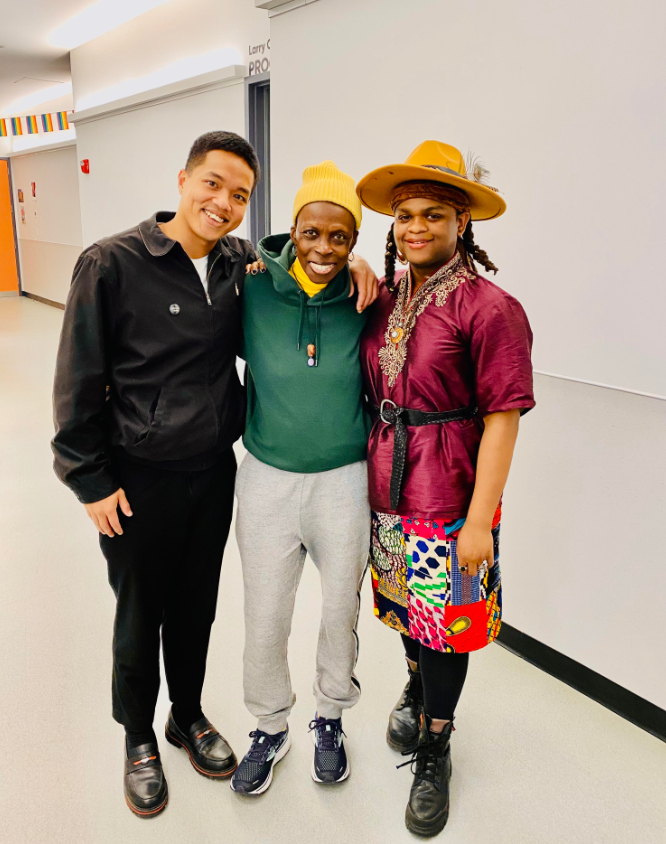
Ocean Le, left, at an event DEC hosted with older adults and caregivers at SAGE Center Brooklyn at Stonewall House. (Courtesy DEC)
Photo credit: Courtesy DEC/Nate Smallwood