

Editor’s note: ASA President and CEO Leanne Clark-Shirley recently wrote a letter to ASA members and newsletter subscribers. Here is a reprint of that letter.
Dear ASA Community,
For 72 years now, ASA has convened the builders of a society necessary for good, long lives on our own terms. But how we’ve convened has evolved to meet what each moment in time called for. In 2026, what we’ve heard from our Community is this: a desire for more regular points of connection, for stronger ties with each other as you grapple with big questions and disruptions, and a way to find the people with the knowledge you’re looking for, while being more easily found by those who need what you have to offer.
This community is not short on knowledge. It’s full of people who are solving different pieces of the same challenges. What we need is a standing place for that expertise to be gathered, sharpened together, and shared back to others who are looking for it.
This community is not short on knowledge. It’s full of people who are solving different pieces of the same challenges.
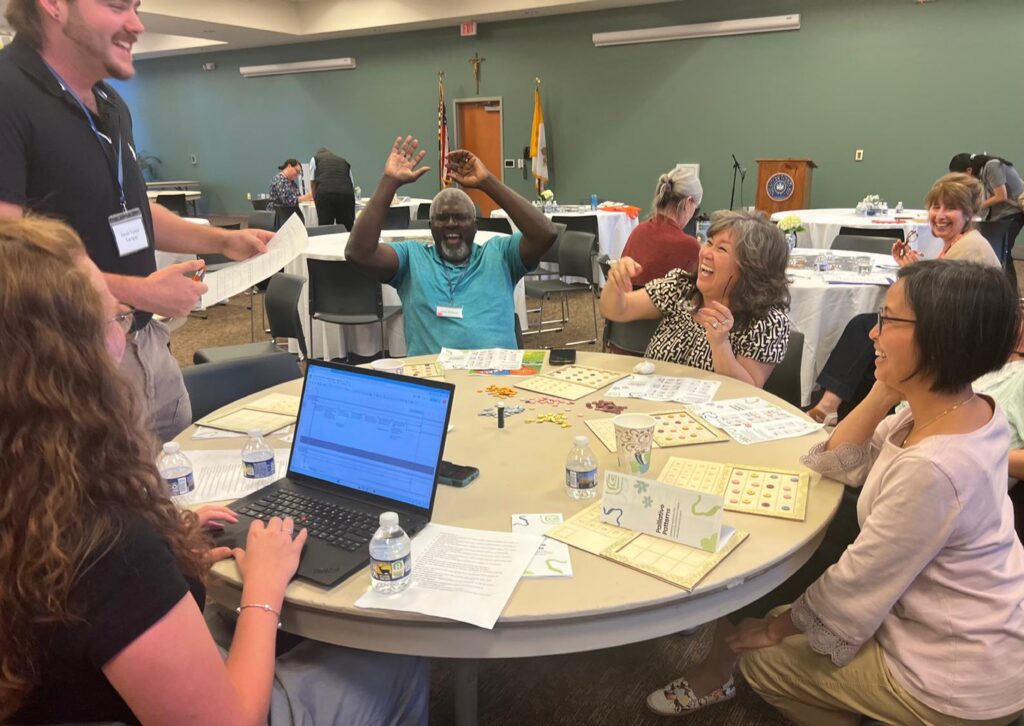
I’m excited to announce the next evolution in how ASA supports your collective endeavors: ASA Community Groups. These are ASA-facilitated groups formed around a specific question, meeting on a regular rhythm throughout the year. Some groups will gather for ongoing discussion, others will take shape around a project, with something concrete to build together. In every case, ASA provides the facilitation, the structure, and the follow-through, so members can give their attention to the exchange itself—bringing what they know, learning from who else is in the room, and leaving with something sharper than what they walked in with.
Six Groups Forming
The first six groups are forming:
- Housing Equity, on what equitable housing looks like across sectors and geographies.
- Growing the Careforce, on the models and pathways building the care workforce.
- The Adoption Gap, on what happens between a tool existing and a tool reaching people.
- AI and Aging, on how these arriving technologies should serve this field.
- Aging with HIV/AIDS, on the evolving care models and community needs of people aging with HIV.
- Mental Health and Aging, on the psychological dimensions of longevity and the care that supports them. More will form over the coming year, and the topics will come from you.
Sign-ups open by the end of this month for ASA members—watch your inbox for more details and how to be part of ASA Community Groups.
What I’m most excited about is that these groups will generate ideas, themes, and wisdom that can be shared with our wider ASA community. That may happen in Generations, at our On Aging 2027 conference, and in virtual gatherings as well. A group like this, thinking carefully together, can strengthen the work of thousands.
A group like this, thinking carefully together, can strengthen the work of thousands.
This idea grew through months of conversations with members, advisory councils, and organizational partners, whose experience shaped what these groups are and how they will run. Their care for this community is woven through everything you will see, and their role in what comes next remains essential.
We’d LIke to Hear from You
If you’ve connected with ASA through our programs or events and Community Groups resonate with you, we invite you to consider joining our membership community and taking part in this new way of convening.
At ASA, we believe in relentlessly building a society in which every generation is connected, every sector is coordinated, and every barrier to a good, long life is dissolved. ASA Community Groups are one way we can all collectively take action toward that big dream.
So, what one question would you bring into an ASA Community Group? Let me know at CEO@asaging.org. What forms next will come from what you say.
Leanne Clark-Shirley is President and CEO of the American Society on Aging.
Photo credit: Shutterstock/Oscar_M_Sanchez