

Editor’s note: ASA President and CEO Leanne Clark-Shirley recently wrote a letter to ASA members and newsletter subscribers. Here is a reprint of that letter.
I’ve heard from over a hundred of you in the past month as you’ve answered questions like: what is one thing everyone should know about aging? And, what would progress toward a longevity-ready society look like?
You’ve identified specific sectors that should be working together to end ageism, like medical societies and the aging network; you’ve pointed out substantial progress in building connected ecosystems like the age-friendly health system movement while noting the need to keep pulling in municipal structures like libraries and schools; and you’ve observed that all too often, people “discover” careers in aging by happenstance instead of with intentional purpose. And on top of that, so many of you have written in detail about your organization’s mission or a major initiative you’re taking on — it’s been such a great way to get to know more of you and your work on a deeper level.
One thing keeps coming to my mind: for every note I’ve received describing your work, I know there are countless families and businesses looking for the solutions you already have but have no idea where to find you.
When I step back and consider all of this together, one thing keeps coming to my mind: for every note I’ve received describing your work, I know there are countless families and businesses looking for the solutions you already have but have no idea where to find you. Sometimes we talk about this problem as fragmentation, and it’s a difficult problem to solve. And it also speaks to how we continue to view aging in the larger society, which is to say, either not at all until a crisis finds us, or as someone else’s job to worry about.
This then leads me to consider the concepts of belonging and community, which are foundational values of ASA. I continue seeing evidence of a strong sense of belonging within the ASA Community. But we don’t yet have this outside of aging. I’m wondering what if building that same sense of belonging across other communities is the antidote to fragmentation?
This is what I see as the work of ASA. Building and maintaining connections between the expertise inside this community and the public that doesn’t yet know how to look for it. Helping translate the knowledge and resources that already exist into spaces and formats that can reach outside our community. Actively seeking out the unlikely partners who are ready to be pulled in with the right kind of invitation. Working collaboratively to make the discovery of aging more by design and less by accident. All this work must be done with equity, belonging, and community at the heart. And we’re excited to do it.
My hope is that these groups become another place where belonging takes shape, where coordination feels possible, and where the expertise across this community becomes even more visible and accessible.
And in that spirit of building stronger bridges, yesterday we launched ASA Community Groups, the next evolution in how we support your work and your voice within the aging field. These groups are open to ASA members and centered on the real issues, challenges, and opportunities you’re navigating every day. Each one is facilitated by ASA staff and meets on a regular cadence, with thoughtful structure so you can focus on the exchange itself: the insights, the questions, the sense-making, the connections. If you’re not yet an ASA member and this kind of space resonates with you, I’d love for you to consider joining us. My hope is that these groups become another place where belonging takes shape, where coordination feels possible, and where the expertise across this community becomes even more visible and accessible.
In the meantime, I now ask you what bridges are you building in real time, or thinking about building? Let me know! Submit your thoughts to CEO@asaging.org. I’ll keep reading.
Leanne Clark-Shirley is President and CEO of the American Society on Aging.
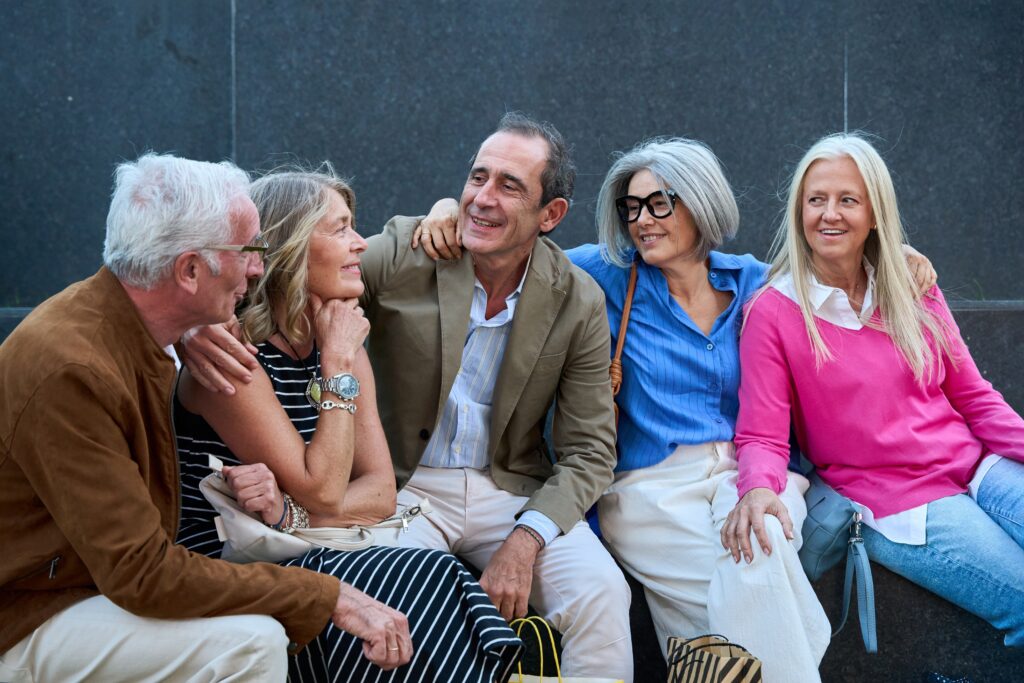
Photo credit: Shutterstock/BOY-ANTHONY