
As a 23-year-old who dreams of a better system for aging in America, I was eager to spend several weeks in Japan last summer, garnering a first-hand view of aging innovation in action.
On the last day of my trip, I stepped into Junseien, a nursing home care center in Kanagawa, a 2-hour train-ride from Tokyo. Upon walking into the community, I was moved to tears. There, I was met with 30 of Junseien’s community members and staff, smiling big, waving American flags, and welcoming me into their home. A small AI-robo dog zoomed around us, offering comfort and companionship to the older adults. The architectural concept behind Junseien, “protect the community, by the community,” was clear to me from the moment I stepped into the building.
Japan is notorious for being the “oldest” country in the world, with more than 30% of its citizens ages 65 and older. During my recent visit, I saw the impressive outputs that have come from these changing demographics: a country that treats aging not as a crisis to manage, but as a catalyst for innovation.
As America’s population rapidly ages, policymakers, clinicians and social support services will require novel approaches—and Japan shows that the future of aging lies in four key lessons:
- Independence-centered care;
- Affordable care;
- Intergenerational integration;
- Technology as a tool for good, rooted in dignity.
Lesson 1: Care should be designed to maintain independence as individuals age, not as an embrace of decline.
I had the privilege of touring the creative AOICare, a novel dementia care community, with Tadasuke Kato, its founder. Stepping into the building, I was immediately taken aback by the doors’ wide-open access, allowing for easy in-and-out of the older adult residents, staff, and local community members. All individuals in the community had a dementia diagnosis, yet that did not hinder them from continuing activities they always loved: cooking with an open flame, cleaning up the community, decorating their space, and walking outside to greet the school children as they came home from school. The nurses and support staff showed me their meticulous care plans, which were updated weekly, to ensure consistent, person-centered care.
AOICare emphasized fostering an intergenerational community.
There were many moments during my trip when I became emotional, not just because of the hospitality of everyone I encountered, but due to the clear contrast of the care in Japan from my experience in the United States. When supporting my grandmother’s journey with dementia, I was exposed to the reality of the American system of care for those facing memory decline: buildings with multi-layered locks, hindering exposure to the outdoor community, and a complete stripping of autonomy.
In Japan, AOICare’s model does not exist in isolation. It serves as one example of Japan’s larger approach to older populations—ensuring that independence and autonomy remain top of mind for older adults and those with chronic needs.
In the United States, person-centered care should be more than a buzzword. Our policies should allow for continued autonomy as individuals age, and payment models should reward outcomes that center independence.
Lesson 2: Adapting to an older demographic does not mean amplified age siloes, but rather opportunities for meaningful multigenerational engagement.
AOICare amazed me in another way, with its significant emphasis on fostering an intergenerational community. The direct-care workforce brought their babies and young toddlers to work, who then ran around engaging with the community’s residents, while residents provided a low-cost option for childcare. Young school children and teenagers frequented the community, roaming in and out of the center to offer friendship and share stories from their days.
Nearby, Nobishiro House in Fujishawa City was one of many multigenerational housing models that co-housed younger and older adults. University-age residents pay reduced rent, in return for checking in on their older-adult roommates. Not to mention, each month the community hosts multigenerational tea parties.
In an increasingly age-segregated world, Japan has largely adopted their models of care, and housing, to embrace the benefits of multigenerational engagement, for younger and older Japanese citizens.
These multigenerational housing models are akin to multigenerational housing pilots like Nesterly, which originated in Boston, and Joey, offering lower-cost options for housing for students. Not only do multigenerational housing models have the power to address housing affordability and care challenges, but they also bridge generational divides and combat ageism through meaningful exposure and friendship-building.
Lesson 3: Technology should be used to enhance dignity and independence.
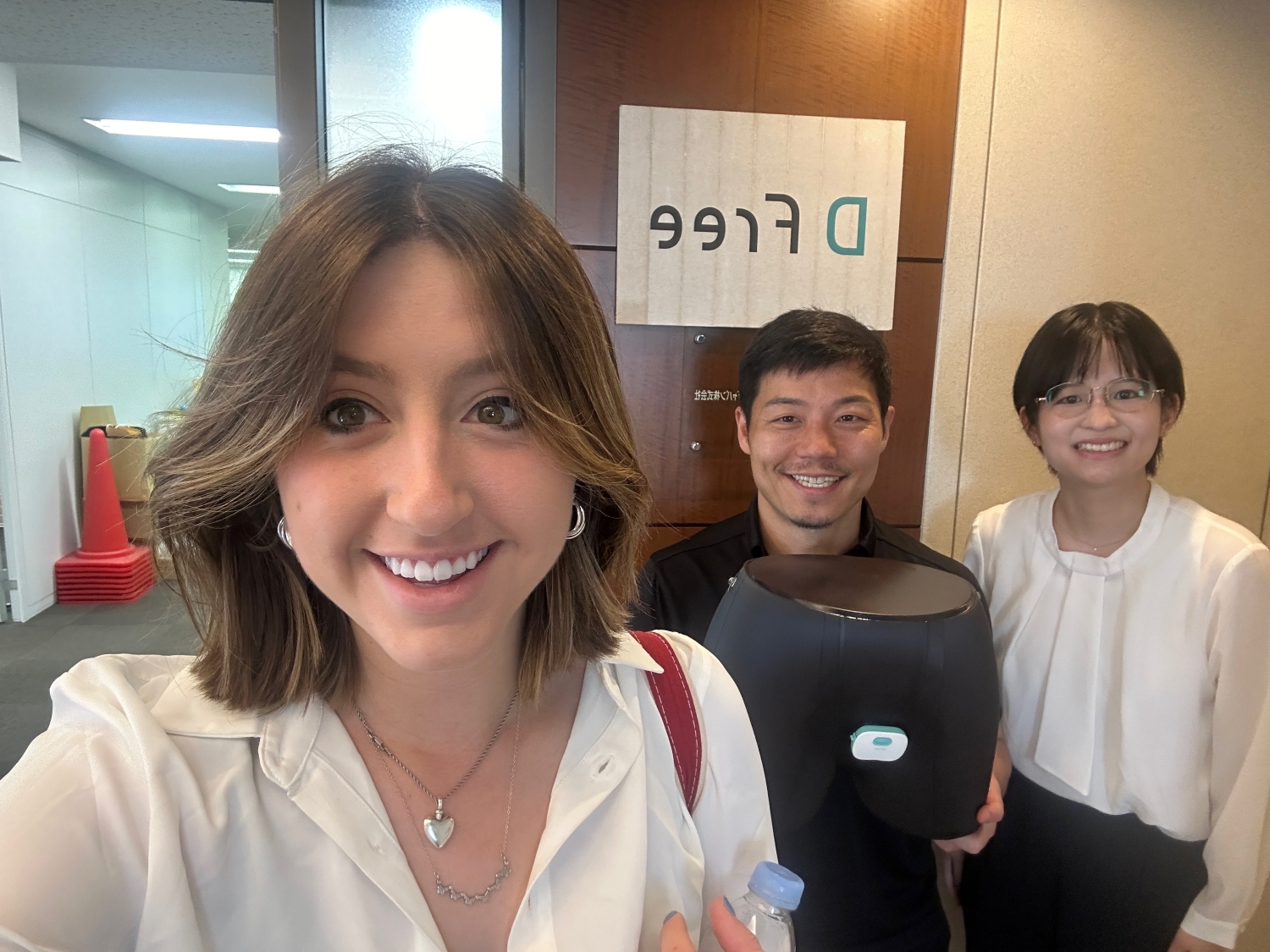
On my first day in Japan, I met with the founder of Dfree, Atsushi Nakanishi, who built an innovative product to address incontinence. During my conversation with Nakanishi, he shared that his primary mission for creating Dfree was to ensure that older adults continue to feel confident to go out in public, free from the stigma of incontinence or the worry of having to stay near a restroom. This is innovation in its most meaningful form, technology rooted in dignity, designed to allow older adults in Japan to continue to live fuller, more connected lives.
‘Launched in 2000, Japan has a mandatory, public long-term-care insurance program.’
In the residential communities I visited, caregivers used technology-equipped beds that detected changes in residents’ movement and vital signs, alerting staff to potential concerns, while allowing individuals to go about their day without constant intervention.
The current buzz in the United States about AI and technological solutions offers a promising path for using technology to improve elder care. But as we continue to innovate, it is important to center the ideals of dignity and independence.
Lesson 4: Care should not only be available to those who are wealthy.
In Tokyo, I sat down for a conversation with Japan’s Administrative Vice Minister of Health, Labour and Welfare, Kazuhito Ihara. I was excited to meet Ihara, as he was one of the key architects of Japan’s long-term services and support program. Launched in 2000, Japan has a mandatory, public long-term-care insurance program, requiring individuals ages 40 and older to pay into the system, and allowing any individual older than age 65 to access benefits based on the level of care needed.
In the United States, older adults in need of long-term care support who don’t have the money to cover a long-term care facility (averaging $10,000 per month), must spend-down to qualify for Medicaid LTSS. As the conversation around long-term-care financing programs resurfaces, with Washington State introducing the first-ever state-based insurance program, and federal proposals like the WISH Act emerging, it is critical to make clear that high-quality care should be readily available to all who need it, not just to those who can afford it.
In the United States, aging is often associated with decline, burden, and workforce challenges. Japan’s approach to caring for a large older demographic suggests a fresh way of looking at things: aging can, and should, be an impetus for innovation and person-centered design.
By 2030, all Baby Boomers in the United States will be ages 65 and older. With only four short years to meet that mark, will America policymakers choose to innovate and adapt, or will we wait until we reach a care and workforce crisis?
Arielle Galinsky is the CEO and Co-Founder of The Legacy Project, a national nonprofit that connects college students and older adults in their communities for mutual storytelling, uplifting and documenting life stories. Galinsky is an MPP/JD candidate at the Harvard Kennedy School and Yale Law School and committed to advancing aging policy reform at state and national levels.
Photo: Arielle Galinsky after spending the day with CarePro nurse Yuki Takata conducting home visits.
Photo credit: Courtesy Arielle Galinsky