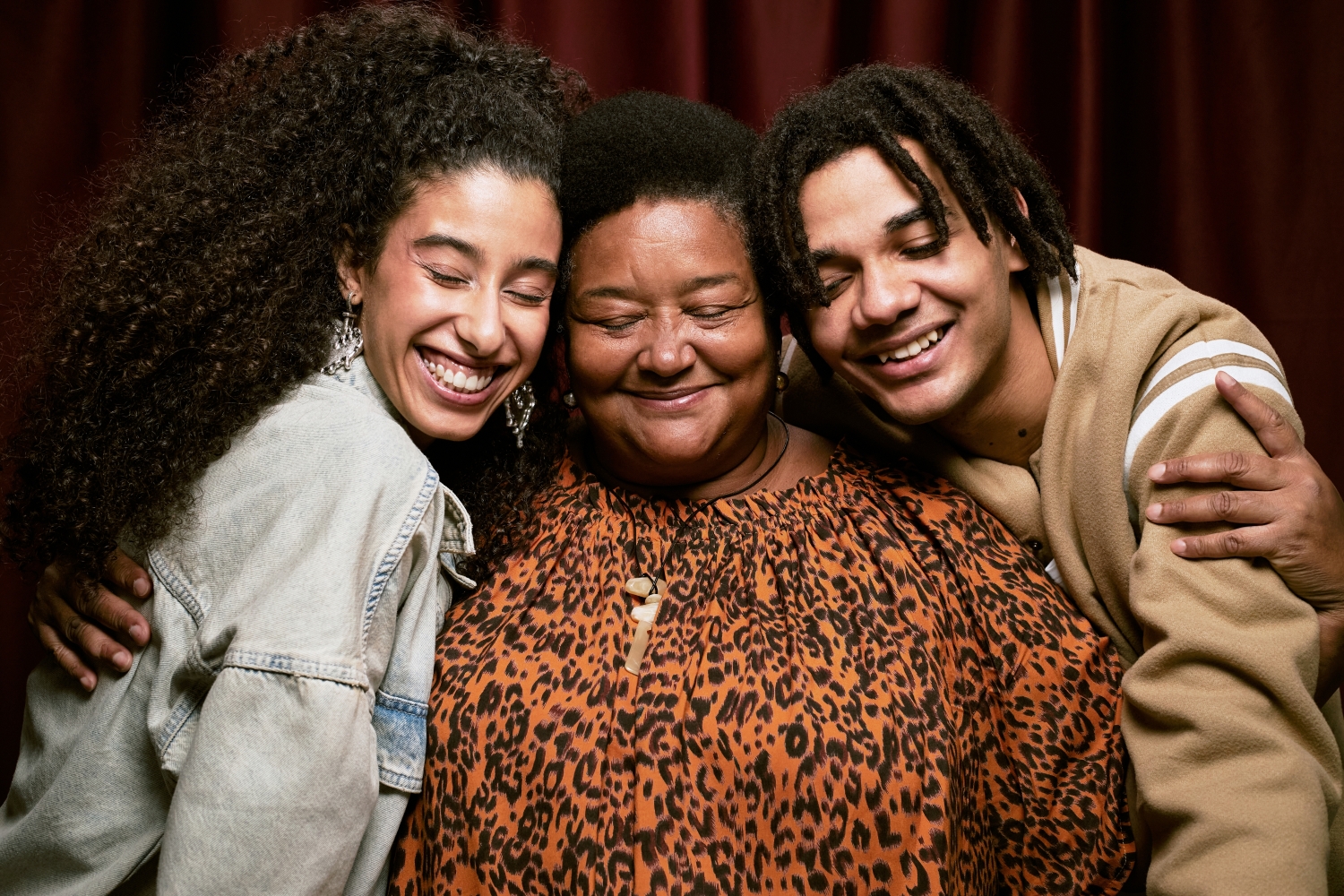

Historically, families and extended networks played a significant role in nurturing, educating, and supporting individuals across all stages of life. For decades, Generations United has championed the opportunity to intentionally reconnect generations by reimagining how institutions, programs and communities engage people of all ages. While schools, workplaces, housing and care settings have often been organized by age, intergenerational approaches offer a way to bring together people of different ages, backgrounds, abilities and cultures. By encouraging these connections, communities can strengthen social bonds, reduce isolation, and enhance the well-being of both younger and older people.
Intergenerational programs increase cooperation, interaction, and exchange between people of different generations, allowing them to share their talents and resources and support each other in relationships that benefit both the individuals and their community.
We can trace the roots of intentional intergenerational programs back to the 1960s and the War on Poverty. The first well-documented program, the federally sponsored Foster Grandparent Program, began in 1965. Low-income older adults were recruited to work with young children with special or exceptional needs. These volunteers received a stipend and healthcare coverage in exchange for their service. The program was thought to help address a new concern, that of the growing isolation of older adults and the increasing separation between the ages. Today, the Foster Grandparent Program continues to engage adults ages 55 and older to support children as part of AmeriCorps Seniors across the United States.
Evolution and Growth
Over the past 60 years, intergenerational programs have expanded into nearly every type of setting, engaging people of all ages and backgrounds. These programs operated in schools, senior centers, voluntary organizations, recreation centers, skilled nursing and assisted living facilities, retirement communities, parks, congregations and other sites across urban, suburban and rural areas in the United States and around the world.
Early efforts often followed a one-directional model, where one generation served the other— older adults acted as tutors or mentors, or children and youth provided friendly visits or technology assistance to older adults. Over time, these initiatives evolved toward more reciprocal approaches emphasizing mutual benefit and relationships across generations.
“Generations United is a celebration. The creation of Generations United marks the recognition that America’s generations have never been closer, and at the same time, have never needed one another as much as they do today.”
—Jack Ossofsky, then Executive Director of the National Council on Aging, speaking at Generations United’s founding on Aug. 5, 1986
During these formative years, the field of intergenerational practice expanded in scope, shaped in part by leadership from the aging sector. Intergenerational centers at universities served as incubators for new program models, training, research, and evaluation. Shared-site initiatives took shape, connecting childcare centers with retirement communities, intentionally designed to promote daily interaction across generations.
The establishment of the Journal of Intergenerational Relationships contributed to building evidence on the effectiveness of intergenerational programming. Efforts to scale intergenerational work from singular programs to the whole community emerged, including purpose-built communities where children, families and older adults live side-by-side and the Communities for All Ages framework, which brings together organizations and residents of all ages to address community issues.
The Backbone of the Field: Generations United
Generations United (GU) was founded during this expansive time. In 1986, the National Council on Aging and the Child Welfare League of America formed GU in response to dangerous rhetoric in policy debates that pitted children against older adults. The two leaders believed a country rich in resources should not have to choose between its young and old. Within two years, the Children’s Defense Fund and AARP joined them, and over the next 10 years, GU grew to a coalition of more than a hundred members.
In 1997, Generations United became an independent organization, working to improve the lives of children, youth and older adults through intergenerational collaboration, public policy and programs that benefit all. That same year, we began our work on behalf of grandparents and other relatives raising children—a natural outgrowth of our intergenerational mission.
Generations United is the leading voice advancing the interconnectedness of generations in policy and practice. We recognize and promote high-quality programs, serve as a clearinghouse for information, and champion local initiatives across the country and around the world. Guided by our founding principles and shaped by collaboration with lived experts and partner organizations, we advance policies and solutions that support children, youth, families and older adults.
As a national convener and thought leader, we host a global conference and webinars, produce toolkits, how-to guides, and briefs, provide technical assistance, and connect professionals through learning networks. We also maintain a growing database of intergenerational programs and oversee a certification process that promotes and recognizes high-quality programs and practices. You can learn more about several recipients of our highest designation—Program of Distinction—in the other articles in this issue on DOROT, Link Generations, All Seasons Preschool, and The Legacy Project.
Through these efforts, we help scale intergenerational solutions that strengthen relationships across the life span and improve outcomes for children, youth, older adults and the communities they share.
Intergenerational Programs Today
Today, hundreds and most likely thousands of intergenerational programs operate in communities across the United States. GU’s intergenerational program database lists more than 800 programs, with 115 currently recognized through our Intergenerational Program Certification process for high-quality standards.
These programs intentionally connect younger and older people across a wide range of areas, including education and literacy, mentoring and leadership development, technology and digital skills, arts and creative engagement, shared housing or community living, health and wellness, storytelling and cultural exchange, volunteerism and community service, and other specialized initiatives addressing issues such as ageism or diversity.
Intergenerational programs draw upon the unique strengths of each generation. These programs have proven particularly effective because they meet numerous needs of older adults, children, youth, young adults, families and communities. GU’s Making the Case for Intergenerational Programs examined the body of research on intergenerational programs and outlined the many benefits for everyone.
Opportunities for the Future
Few strategies hold as much promise for strengthening communities as intergenerational connection. Interest in building relationships across age groups remains high. A national opinion poll commissioned by Generations United found that two in three adults wanted to spend more time with people outside their own age group, and more than three in four wished there were more opportunities for people of different generations to come together.
‘Intergenerational connection is not a nice-to-have, but a necessary part of a healthy, resilient society.’
Similarly, a report by CoGenerate found that people of all ages want to work across generations to help others and improve the world around them. This widespread desire underscores an important opportunity: finding a way to move intergenerational work from the margins into the mainstream of community life.
High-profile reports have added urgency to this work. In 2021, the World Health Organization launched its Global Campaign to Combat Ageism, identifying intergenerational contact as one of three key strategies to reduce ageism. The report noted that “intergenerational contact interventions are among the most effective interventions to reduce ageism against older people, and they also show promise for reducing ageism against younger people.”
And In 2023, the U.S. Surgeon General’s report on the epidemic of isolation and loneliness highlighted the critical role of social connection in improving health and well-being.
These findings reinforce what generations of practitioners have long observed: intergenerational connection is not a nice-to-have, but a necessary part of a healthy, resilient society.
Our next chapter lies in moving from programs to practice. Many intergenerational initiatives began as pilots or short-term projects, but building on decades of leadership, research, and collaboration, Generations United is guiding the movement forward—advocating for policies, driving high-quality practices, and providing tools and networks that integrate intergenerational approaches into everyday life. The opportunity now is to embed these approaches into the systems that shape daily life, including schools, workplaces, healthcare, housing, and broader community planning. When intergenerational connection is intentional and sustained, it has the power to transform not only individual lives but entire communities.
Taken together, decades of practice, research, and lived experience point to a simple truth: connection matters. When relationships across generations are intentional and sustained, they don’t just address immediate needs—they help prevent deeper challenges over time.
At Generations United, we call this prevention through connection: strengthening relationships across the life span so individuals and communities are better supported. The opportunity before us is to make this the norm rather than the exception—moving beyond isolated programs and embedding intergenerational approaches into the systems that shape daily life. Doing so positions intergenerational connection not as an add-on, but as essential infrastructure for equity, well-being and a healthy, resilient society.
Kristen M. Kiefer, MPP, is executive director and Sheri Steinig, MSW, is director, Strategic Initiatives & Communications at Generations United, in Washington, DC.
Photo credit: Shutterstock/SeventyFour