
Link Generations is a nonprofit organization that educates middle and high school students about aging by connecting them with older adults in interactive conversations that benefit both age groups. Over the past 10 years, the organization has reached more than 2,000 young people and 900 older adults who consistently report how much they learn from being together.
I was inspired to start Link Generations by my background growing up in a multigenerational household. My grandmother had lived with us since our grandfather died several years prior, and stepped in when our family suffered the unexpected loss of our father at age 43. My two brothers, sister and I were ages 11–16.
I had always admired my grandmother and learned so much from her wisdom. I felt (and hoped!) that she gained something, too, from having a renewed sense of purpose in later life, helping her daughter, my mother, raise four teens.
Growing up with my grandmother and her eight brothers and sisters visiting inspired me to study aging and pursue degrees in life-span development focusing on gerontology. I had no idea what gerontology was until well into my post-college years when my academic training exposed me to extended life expectancies and the growth of the older population as a huge demographic shift.
During grad school I learned that adolescence and older adulthood share developmental milestones such as changes in one’s physical body, sense of identity, and level of dependence upon others. Connecting these two age groups makes sense developmentally, but there were few intergenerational programs specifically targeting adolescence.
Early intergenerational programs brought young children into nursing homes to entertain residents and trained older adults to tutor elementary school children. Drawing on my childhood and graduate training, I was committed to instead bring teens and older adults together to help one another adjust to life’s challenges.
‘I used to think young people were scary. Now I see that they are not.’
When I was raising my children, school and youth groups would take elementary-age children into nursing homes to visit the older adults. The children seemed to gain a sense that old people were bedridden and hospitalized. I felt this perpetuated aging stereotypes, rather than exposing young people to the wisdom and life stories waiting to be discovered via interactive conversations.
Link Generations brings these aspects together: exposing teens to gerontology to promote positive views of aging and connecting them with older adults to facilitate conversations and social connections in which all participants feel comfortable sharing stories and learning with each other. By bringing together people of all ages in meaningful conversations, we address the ageism that leads to negative views toward older and younger populations and decrease the social isolation that leads to loneliness and chronic public health problems.
How It Works: Education About Aging
Link Generations programs begin with an education session for middle- and high-school volunteers that reviews stereotypes of aging and normal changes that occur with aging. We include a sensory simulation exercise that gives the younger people an opportunity to feel what it’s like to have conversations with reduced hearing. This training helps young people learn best practices for communicating compassionately and patiently with older adults who can exhibit normal changes that occur with aging, like hearing loss.
After the exercise, teens have remarked that they had no idea that their grandparents’ “aloof or grouchy” disposition might be from removing themselves from social interactions because they couldn’t hear what was being said. And students consistently tell us that the experience motivates them to be more patient and attentive to other people, especially older people.
One lesson we learned along the way was the importance of not only exposing youth to attitudes and stereotypes about aging but also helping older adults explore attitudes and stereotypes they might hold about young people. We have added orientation sessions for older adults in advance of the intergenerational sessions to help them feel comfortable and prepared for conversations with teens. One older adult said, “I used to think young people were scary. Now I see that they are not.” Some examples of salient topics covered are use of gender pronouns and sensitivity to depression and anxiety.
Applying What We Learn
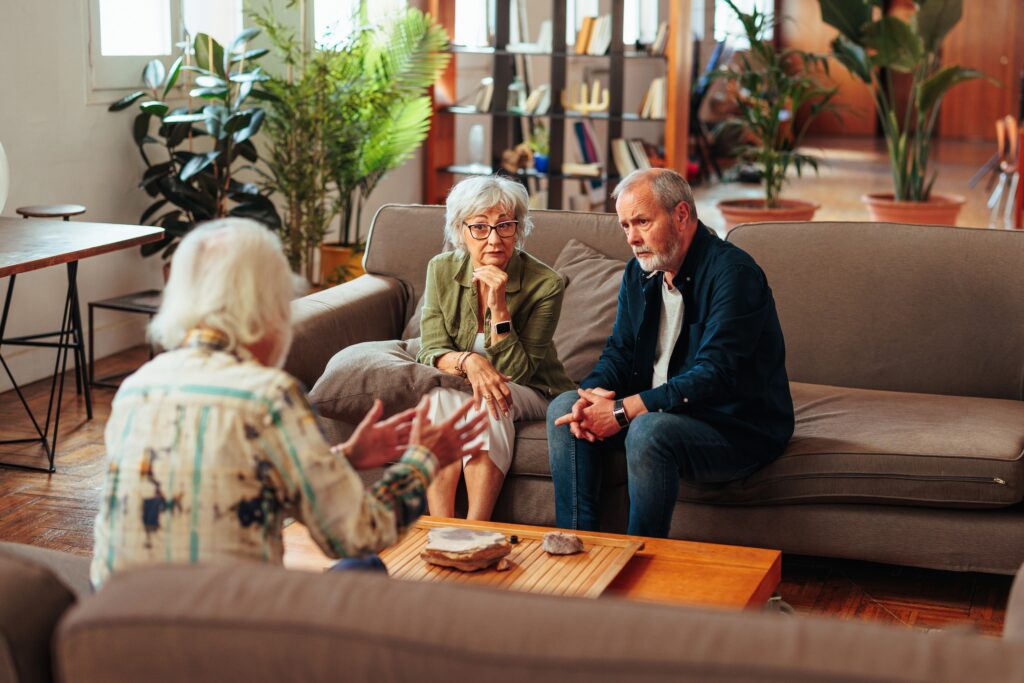
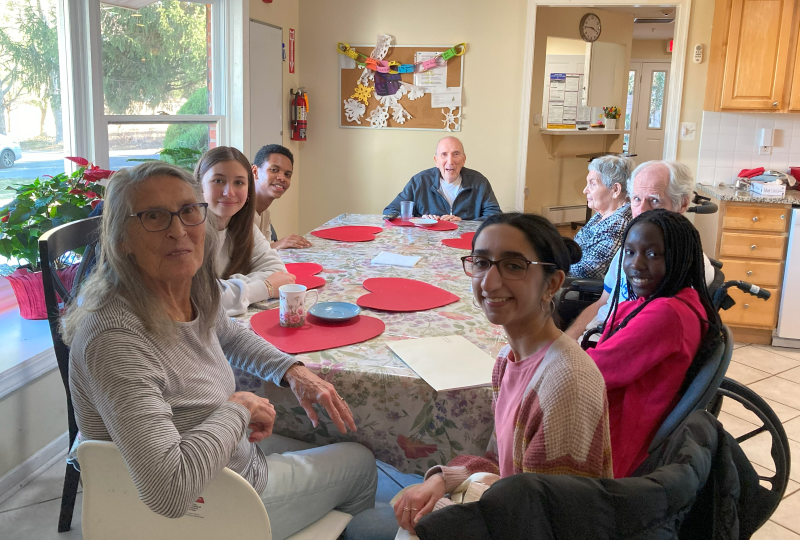
Link Generations programs are all designed to bring young and older adults together in small group conversations with themes that facilitate interactive discussions. Whether at small round tables in person or breakout rooms on Zoom, topics are paired with hands-on activities and questions to facilitate conversations and provide structure that helps participants feel comfortable in this social setting. Tested themes are getting to know you, music through the ages, board games, gratitude, resilience, technology, and intergenerational graphic novel book clubs.
Lessons Teens Learn
Young people say they hear about history from people who have lived through it; gain wisdom about patience, compassion and resilience; and improve their social skills. Quotes from youth participants illustrate these outcomes:
“I loved today’s program. I think it is important to get outside my comfort zone and I did that today. It was so much fun hearing the residents’ stories and learning about their history.”
‘Link Generations made me realize the ways in which I may have been taking [my grandparents] for granted.’
“I am very close to my grandparents, but do not always take the time to reach out to them. Participating with Link Generations made me realize the ways in which I may have been taking this for granted. Since participating, I have taken the time to either call or text my grandparents weekly, so they are able to feel more connected to me and me to them.”
“Participating with Link Generations has helped me feel more engaged with my community.”
Elders Find Purpose and Positivity
Older adults learn about today’s youth, feel a greater sense of purpose, and report having a more positive view about the future. Their quotes show the meaning of the interactions to them:
“I love coming here. Talking to the teens makes me feel young again.”
“Having come full circle through all phases of life, I now look forward to beginning again.”
“Being with young people makes me feel more positive about the future.”
“I love this group. I feel like I learn so much more from the young people than I have to teach them.”
“The program is about sharing experiences of different ages and from different cultures. That’s how people learn to understand each other. We need that, especially today.”
As one of the 94-year-old participants said, “This program works. It may not always work the way you think it will, but it works.”
Lori N. Marks, PhD, is founder and executive director of Link Generations in Bethesda, Md.
Photo caption: Link Generations high school student volunteers and residents at Brookeville House Assisted Living discover mutual interests and commonalities during interactive conversations.
Photo credit: Lori N. Marks