

Abstract
This article proposes an equity-centered approach to salutogenic design in environments for older adults. While salutogenesis offers a useful framework for understanding how design can support health through manageability, comprehensibility, and meaningfulness, these conditions are not experienced equally. They are shaped by culture, income, language, access, and broader systems of power. By reframing sense of coherence as a socially produced and unevenly distributed resource, this paper argues that the built environment should be understood not simply as a setting for care, but as part of the system that shapes how care is experienced.
Key Words
Salutogenesis, salutogenic design, healthy aging, sense of coherence, health equity, built environment, community health, aging in place
For decades, the built environment has been shaped by a largely pathogenic mindset, one that prioritizes risk reduction, safety, and operational efficiency. These priorities have led to safer buildings, but they have not necessarily led to healthier people. Increasingly, research demonstrates that environments influence stress, cognition, emotional regulation, and overall well-being, making it difficult to argue that architecture is merely a passive backdrop to care and daily life (Evans, 2003; Ulrich et al., 2008). Instead, space functions as a silent intervention, shaping how individuals cope, adapt, and interact with the world around them.
Much of this disconnect can be traced back to how we are conditioned to think about health. In both medicine and design, the dominant thinking has historically been pathogenic—focused on identifying problems, treating disease once it appears, and avoiding harm. This approach is so embedded in practice that it often goes unnoticed. It shapes how we define success, how we measure outcomes, and how we design environments. This mindset has become so ubiquitous that it is often invisible.
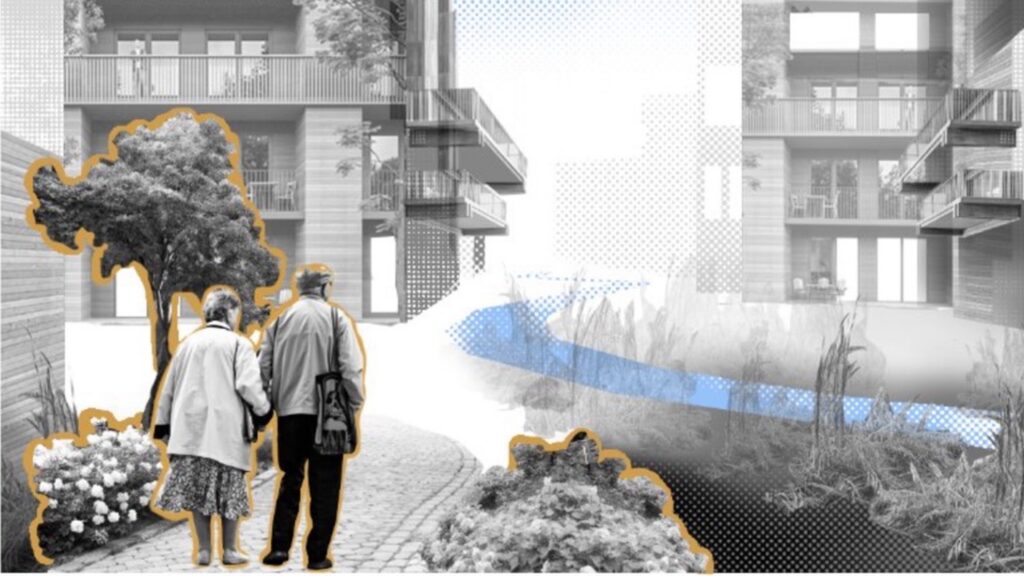
Salutogenic thinking offers a fundamentally different perspective. Rooted in the work of Aaron Antonovsky, salutogenesis reframes health not as the absence of illness, but as the presence of conditions that allow people to cope, adapt, and stay well over time (Antonovsky, 1979, 1987). Within the built environment, this approach focuses on creating environments that support clarity, access, and connection in everyday experience.
Central to salutogenic theory, sense of coherence describes a person’s ability to navigate life’s challenges in a way that feels manageable, understandable, and meaningful.
Rather than seeking to avoid illness, salutogenesis offers a shift in perspective and seeks to actively support health. It asks: How can we create conditions that allow people to feel capable, oriented, connected, and resilient over time? This shift is subtle but significant, moving from minimizing risk to strengthening health. Because identifying risk and preventing harm are deeply embedded in health care and design practice, pathogenic thinking often remains the default, while salutogenic thinking requires a more intentional shift.
This disconnect is especially visible in health care and environments designed for older adults, where individuals are already navigating complex and often fragmented systems. The built environment plays a critical role in shaping how people understand and experience care. Yet many of the places designed to support aging populations continue to prioritize efficiency and compliance over lived experience, often falling short of addressing the full complexity of individual and community needs.
However, even as the salutogenic framework gains traction in design practice, it is often applied as if these experiences are universal. They are not. The conditions that shape an individual’s ability to navigate, understand, and find meaning in a space are not evenly distributed. They are shaped by cultural identity, income, language, and access to resources, all of which influence whether environments feel intuitive and supportive or confusing and inaccessible (Braveman & Gottlieb, 2014).
This paper builds on salutogenic thinking by taking a more critical lens. Rather than examining only how environments can support health, it poses the following question: Whose health is supported, under what conditions, and at what cost?
Salutogenic Theory
Traditional salutogenic theory focuses on strengthening an individual’s sense of coherence, the ability to perceive life as manageable, comprehensible, and meaningful (Antonovsky, 1987). More recent research continues to demonstrate the relevance of sense of coherence for older adults, linking higher levels of manageability and meaningfulness with improved quality of life and well-being (Tan et al., 2021). While this framework provides a powerful foundation, it does not fully account for the conditions that shape who has access to these resources in the first place. Sense of coherence is not just an individual attribute; it is influenced by the systems, environments, and constraints people navigate every day.
Shifting from an individual understanding of salutogenesis to one that recognizes the sense of coherence as a socially produced and unevenly distributed resource allows the built environment to become more than a place where care is delivered; it becomes part of the system that either supports or constrains people’s ability to cope, navigate, and participate. An equity-centered approach to salutogenesis reframes design as a means of addressing these differences more directly, with the goal of creating environments that support health in ways that are more consistent and equitable.
To better understand how the built environment can support (or limit) health in this way, it is useful to look more closely at the concept of sense of coherence. Central to salutogenic theory, sense of coherence describes a person’s ability to navigate life’s challenges in a way that feels manageable, understandable, and meaningful (Antonovsky, 1987; Eriksson, 2022). Rather than remaining abstract ideas, these attributes—manageability, comprehensibility, and meaningfulness—can be translated into the spatial and experiential qualities of everyday environments. When viewed through an equity-centered lens, these three dimensions offer a practical way to examine how design decisions shape an individual’s ability to cope, adapt, and participate. They shift the focus from what environments provide in theory to how they are actually experienced in practice, across different contexts and communities.
Manageability
Manageability refers to the extent to which individuals feel that their basic needs are supported and that they have access to the resources required to navigate daily life (Antonovsky, 1987). Within the built environment, this is often expressed through comfort, safety, accessibility, and the functional performance of space. In health care and environments designed for older adults, significant effort is typically placed on optimizing these factors, ensuring that systems are efficient, environments are code-compliant, and care delivery is streamlined. As a result, manageability is often the dimension of sense of coherence that design addresses most directly.
However, an equity-centered approach to salutogenesis reveals that the presence of resources does not necessarily translate into meaningful access. A space may be technically accessible and operationally efficient yet still leave some people unable to engage with it due to financial, social, or systemic barriers. In this sense, manageability is not defined solely by what is provided, but by who is able to use it, and under what conditions (Braveman & Gottlieb, 2014).
Affordability, geography, and access all shape whether individuals can meaningfully engage with care. Environments that depend on private transportation, digital interfaces, or specialized services may unintentionally exclude individuals who lack the resources or literacy to navigate them. For many, fragmented services, long travel distances, limited public transit, and a lack of local resources transform routine care into a significant logistical burden.
From an equity-centered perspective, designing for manageability requires expanding the definition of support. It is not enough to provide resources; environments must be designed to ensure that those resources are reachable, understandable, and reliable across a range of lived conditions. This includes considerations such as decentralized access points, redundancy of services, and the integration of care into everyday community settings.
Importantly, manageability is closely tied to the concept of control, a foundational aspect of human health and well-being (Ulrich et al., 2008). When individuals feel that they can navigate their environment with autonomy and access support when needed, they are better equipped to cope with stress and maintain resilience over time. Conversely, environments that limit control can contribute to feelings of helplessness and disengagement.
Designing for manageability is not simply about making environments work efficiently. It is about creating conditions in which people can realistically access, understand, and rely on the resources around them. When approached through an equity-centered lens, manageability becomes a question of fairness as much as function.
Comprehensibility
Comprehensibility refers to the extent to which individuals can make sense of their environment and how easily they can understand what is happening, where they are, and what is expected of them. In healthcare and environments designed for older adults, this is often addressed through legible spatial organization, recognizable landmarks, and communication cues that help people understand where they are and what happens next. These interventions aim to reduce cognitive load, allowing individuals to navigate complex systems with greater confidence and less stress (Ulrich et al., 2008).
However, an equity-centered approach to salutogenesis challenges the assumption that clarity is universal. What feels intuitive or predictable is not inherent to a space; it is shaped by prior experience, cultural context, language, and familiarity with dominant social norms. In this way, cognitive load is not simply an individual burden, but a condition that is socially produced (Evans, 2003).
For example, environments that rely heavily on written signage may disadvantage individuals whose primary language is not English or whose communication and information needs are not supported through written language alone. Similarly, spatial layouts that reflect culturally specific expectations, such as assumptions about privacy, authority, or circulation, may feel confusing or disorienting to those from different backgrounds. What is designed as “simple” can, in practice, become exclusionary when it is standardized to a narrow user group.
At the same time, efforts to make environments more predictable can unintentionally lead to oversimplification or standardization, stripping spaces of the cultural cues and distinctiveness that help people feel oriented and grounded. Clarity should not come at the expense of identity.
From an equity-centered perspective, designing for comprehensibility requires expanding the definition of clarity. It means considering multiple modes of communication (visual, spatial, and experiential) and ensuring that environments are navigable for people with diverse cognitive, cultural, and linguistic backgrounds. It also requires recognizing that complexity often lies not within the individual, but within the systems they are navigating. Environments that support understanding are those that reduce unnecessary friction, anticipate differences in experience, and provide multiple pathways for people to make sense of their surroundings.
When comprehensibility is designed in this way, it does more than improve wayfinding. It reduces stress, builds confidence, and supports individuals’ ability to engage with care and community on their own terms. Clarity becomes not just a functional goal, but an essential component of dignity and inclusion.
Meaningfulness
Meaningfulness is often described as the most complex and least tangible component of sense of coherence (Antonovsky, 1987), yet it is also arguably the most powerful. It shapes whether individuals feel a sense of belonging, identity, purpose, and connection within their environment. These are factors that directly influence an individual’s ability to engage, cope, and heal over time. In healthcare settings especially, meaningfulness is frequently disrupted. Environments designed for efficiency and control can unintentionally isolate individuals from the relationships, routines, and roles that give their lives meaning (Ulrich et al., 2008).
When meaningfulness is treated as an aesthetic or experiential layer, it becomes optional. When it is understood as a core component of health, it becomes essential.
Traditional design approaches to enhancing meaningfulness in healthcare settings have often included interventions that support connection, restoration, and personal identity. These range from incorporating biophilic elements and access to nature, which have long been associated with improved recovery and well-being in healthcare settings (Ulrich, 1984), to providing shared spaces and opportunities for personalization (Kellert et al., 2008). While these interventions are valuable, they may stop short of addressing a more fundamental question: Whose sense of meaning is being supported?
An equity-centered approach to salutogenesis reframes meaningfulness by recognizing that identity, purpose, and belonging are not universal experiences. They are shaped by cultural context, social structures, and lived experience (Braveman & Gottlieb, 2014). Built environments can affirm identity or erase it, and reinforce connection or deepen isolation. Spaces designed around dominant cultural norms may unintentionally exclude individuals whose expectations of care, family structure, or community differ from those assumptions. Likewise, environments that prioritize independence above all else may conflict with more collectivist understandings of care, where interdependence, family presence, and shared responsibility are central to meaning.
Beyond cultural affirmation, meaningfulness is also tied to agency and role continuity. Older adults are often positioned as passive recipients of care, particularly within institutional settings. Environments that support participation, by creating opportunities for contribution, continuity of daily routines, and intergenerational connection, can reinforce a sense of purpose and dignity.
This distinction is critical. When meaningfulness is treated as an aesthetic or experiential layer, it becomes optional. When it is understood as a core component of health, it becomes essential. Designing for meaningfulness requires more than the inclusion of features; it requires a deliberate effort to recognize and support diverse identities, relationships, and ways of living. It asks designers and decision-makers to consider not only how environments function, but how they sustain connection, reinforce dignity, and allow individuals to remain active participants in their own lives.
The Tension of Designing for Many Forms of Meaning
This raises a fundamental tension. If meaningfulness is shaped by culture, identity, and lived experience, how can any single environment truly meet the needs of everyone who encounters it? One response is to default toward neutrality—designing spaces that are intentionally general or “universal” in an effort to avoid cultural bias. However, this approach often results in environments that are stripped of specificity and, in doing so, privilege a particular kind of sameness. What is framed as neutral can itself become a form of cultural bias.
Rather than attempting to resolve this tension completely, an equity-centered approach requires acknowledging it. Designing for meaningfulness is not about creating a singular solution that works for all people. It is about understanding the different layers through which meaning is formed and considering how environments can support a broader range of experiences.
Meaning can be understood across multiple, overlapping levels. At a personal level, it is shaped by individual memory, relationships, and lived experience. At a cultural level, it reflects shared values, identities, and ways of understanding the world. At a more universal level, it relates to deeply rooted human patterns such as experiences of transition, shelter, connection to nature, and the rhythms of daily life.
For designers, this introduces an important shift. Meaning is not something that can be prescribed through form alone. It emerges through the interaction between people and their environment, influenced by what individuals bring with them as much as what the environment provides.
There remains a broader gap in practice between how environments are designed and how they are actually experienced. Design decisions are often made in terms of form, layout, and aesthetics, while lived experience is shaped by interaction, perception, and behavior over time. People experience buildings through movement, use, and engagement. The act of moving through a doorway, transitioning between spaces, or interacting with materials can shape how a place is understood, felt, and experienced.
Translating these concepts into practice requires moving from abstract health determinants to tangible design decisions. Strategies such as enabling agency and meaningful choice, managing sensory load, designing transitions and thresholds, balancing visibility and refuge, and supporting access to nature and social connection all play a role in shaping the lived experience of a space. When viewed through an equity-centered lens, these design levers must be evaluated not only for their intended outcomes, but for how they are experienced across different populations. The goal is not simply to optimize environments, but to ensure that their benefits are accessible, inclusive, and responsive to a diversity of needs.
Applied Vignette
Consider a composite outpatient care environment designed to support older adults. Many of these adults are managing multiple chronic conditions while also navigating the responsibilities of daily life and, in some cases, caring for others. In a typical design approach, the primary focus is on consolidating services, optimizing patient flow, and improving operational efficiency. Care is organized around clinical specialties, and success is measured by how smoothly individuals move through appointments and how effectively services are delivered.
From an operational perspective, this approach performs well. From the perspective of the individuals navigating it, however, the experience can be fragmented and demanding. Older adults may be required to manage multiple appointments across different providers, interpret complex and often unfamiliar medical information, and coordinate logistics such as transportation and scheduling. Caregivers frequently absorb much of this burden, acting as translators, navigators, and coordinators within a system that was not designed with their experience in mind. While the environment may function as intended, it does not necessarily feel manageable, comprehensible, or meaningful in practice.
Applying an equity-centered salutogenic lens shifts how these challenges are understood. Rather than focusing exclusively on the performance of individual clinical spaces, the design process begins by considering the experience of care as a whole: how people move through and make sense of it, and how they sustain their connection to it over time. Navigation becomes less about signage and more about continuity. Access is reconsidered not only in terms of code compliance, but in relation to proximity, flexibility, and the realities of people’s daily lives. The environment is understood not as a series of disconnected encounters, but as part of a larger system that extends into the community.
This shift in framing leads to different spatial and operational priorities. Care pathways are reorganized to reduce fragmentation and minimize unnecessary transitions. Frequently used services are placed where they are easiest to access, reducing the effort required to engage with care. Spaces that support waiting, gathering, and transition are designed intentionally, offering opportunities for orientation, connection, and respite rather than serving as residual or purely functional zones. Community-facing elements are integrated to maintain a stronger link between care and everyday life, helping individuals remain connected to the places, routines, and relationships that support well-being.
The built environment becomes more than a place where care is delivered; it becomes part of the system that either supports or constrains people’s ability to cope, navigate, and participate.
The outcome is not simply a more efficient building, but an environment that better supports people’s ability to cope with the demands placed on them. For older adults, this can mean clearer pathways through care, reduced cognitive and logistical burden, and a stronger sense of control. For caregivers, it can mean less reliance on personal coordination and more support from the system itself. More broadly, it reflects a shift from designing for isolated moments of care to designing for continuity, access, and participation over time.
In this way, the value of the built environment is measured not only by how well it performs operationally, but by how effectively it supports a more coherent, connected experience of care. This example illustrates how design decisions that prioritize manageability, comprehensibility, and meaningfulness when understood through an equity-centered lens can fundamentally reshape how care is experienced.
Call to Action
It is important to acknowledge the limits of what design can achieve. Environments do not determine experience in a fixed or universal way. Rather, they offer a set of possibilities, or affordances, that people interpret and use differently based on their own needs and expectations. Designing for diverse populations does not mean fully resolving these differences, nor is it possible to design in a way that perfectly reflects every culture or identity.
Instead, the value lies in awareness. By recognizing the role the built environment plays in shaping experience, and by understanding the range of ways that experience can differ, designers can make more intentional decisions about what environments offer, whom they support, and where gaps may remain.
Designing for coherence cannot be achieved through architecture alone. It requires alignment across planning, policy, and financing. More importantly, it requires a fundamental shift in how sense of coherence is understood, not as an individual attribute, but as a condition that is produced or constrained by broader social systems. Factors such as income, race, culture, and access to decision-making power influence whether individuals are able to experience environments as manageable, comprehensible, and meaningful. Recognizing this expands the role of design from shaping spaces to shaping systems.
For those working in aging services, public health, and community development, an equity-centered salutogenic approach offers a practical and scalable framework for action. It positions the built environment not as a passive container, but as everyday health infrastructure, one that directly influences dignity, trust, participation, and long-term resilience. This shift has implications for how we invest resources as a society. Funding models, zoning regulations, procurement processes, and evaluation metrics must evolve to prioritize environments that support safety and accessibility, cognitive health, social connection, and meaningful engagement across diverse populations.
Conclusion
The built environment is not neutral. It shapes how people experience aging in profound and unequal ways. By designing and planning for manageability, comprehensibility, and meaningfulness under real-world constraints, communities have the opportunity to better support aging with dignity, connection, and purpose. An equity-centered approach to salutogenesis offers a path forward that integrates design, systems thinking, and social responsibility to create environments that truly enable people to thrive.
Rachel DeSanto, MDS, WELL AP, CLGB, is a Senior Consultant with Blue Cottage of CannonDesign. Her work focuses on the intersection of health, design, and human experience. She is based in Roanoke, Virginia and can be reached at rdesanto@bluecottage.com.
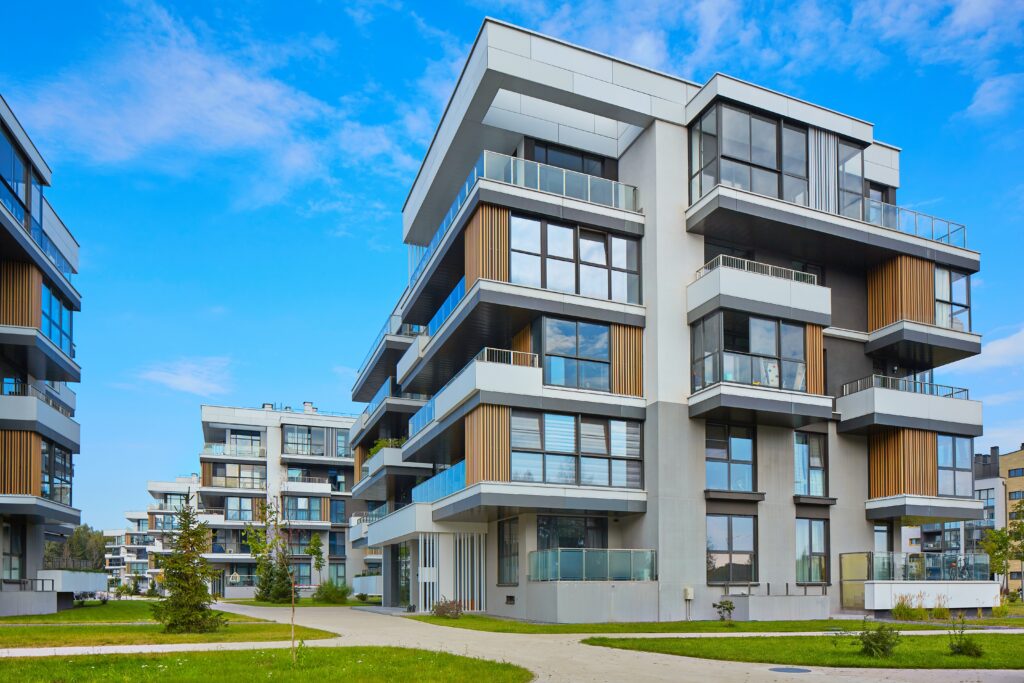
Photo credit: Shutterstock/Daniel Hoz
References
Antonovsky, A. (1979). Health, stress, and coping. Jossey-Bass.
Antonovsky, A. (1987). Unraveling the mystery of health: How people manage stress and stay well (1st ed.). Jossey-Bass.
Braveman, P., & Gottlieb, L. (2014). The social determinants of health: It’s time to consider the causes of the causes. Public Health Reports, 129(Suppl. 2), 19–31. https://doi.org/10.1177/00333549141291S206
Eriksson, M. (2022). The sense of coherence: The concept and its relationship to health. In M. B. Mittelmark, G. F. Bauer, L. Vaandrager, J. M. Pelikan, S. Sagy, M. Eriksson, B. Lindström, & C. Meier Magistretti (Eds.), The handbook of salutogenesis (pp. 61–68). Springer International Publishing. https://doi.org/10.1007/978-3-030-79515-3_9
Evans, G. W. (2003). The built environment and mental health. Journal of Urban Health, 80(4), 536–555. https://doi.org/10.1093/jurban/jtg063
Kellert, S. R., Heerwagen, J. H., & Mador, M. L. (2008). Biophilic design: The theory, science and practice of bringing buildings to life. Wiley.
Tan, J. Y., Tam, W. S. W., Goh, H. S., Ow, C. C., & Wu, X. V. (2021). Impact of sense of coherence, resilience and loneliness on quality of life amongst older adults in long-term care: A correlational study using the salutogenic model. Journal of Advanced Nursing, 77(11), 4471–4489. https://doi.org/10.1111/jan.14940
Ulrich, R. S. (1984). View through a window may influence recovery from surgery. Science, 224(4647), 420–421. https://doi.org/10.1126/science.6143402
Ulrich, R. S., Zimring, C., Zhu, X., DuBose, J., Seo, H.-B., Choi, Y.-S., Quan, X., & Joseph, A. (2008). A review of the research literature on evidence-based healthcare design. HERD: Health Environments Research & Design Journal, 1(3), 61–125. https://doi.org/10.1177/193758670800100306