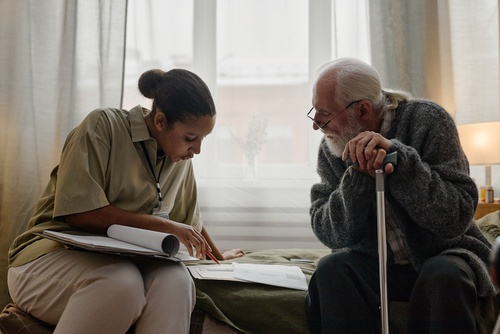
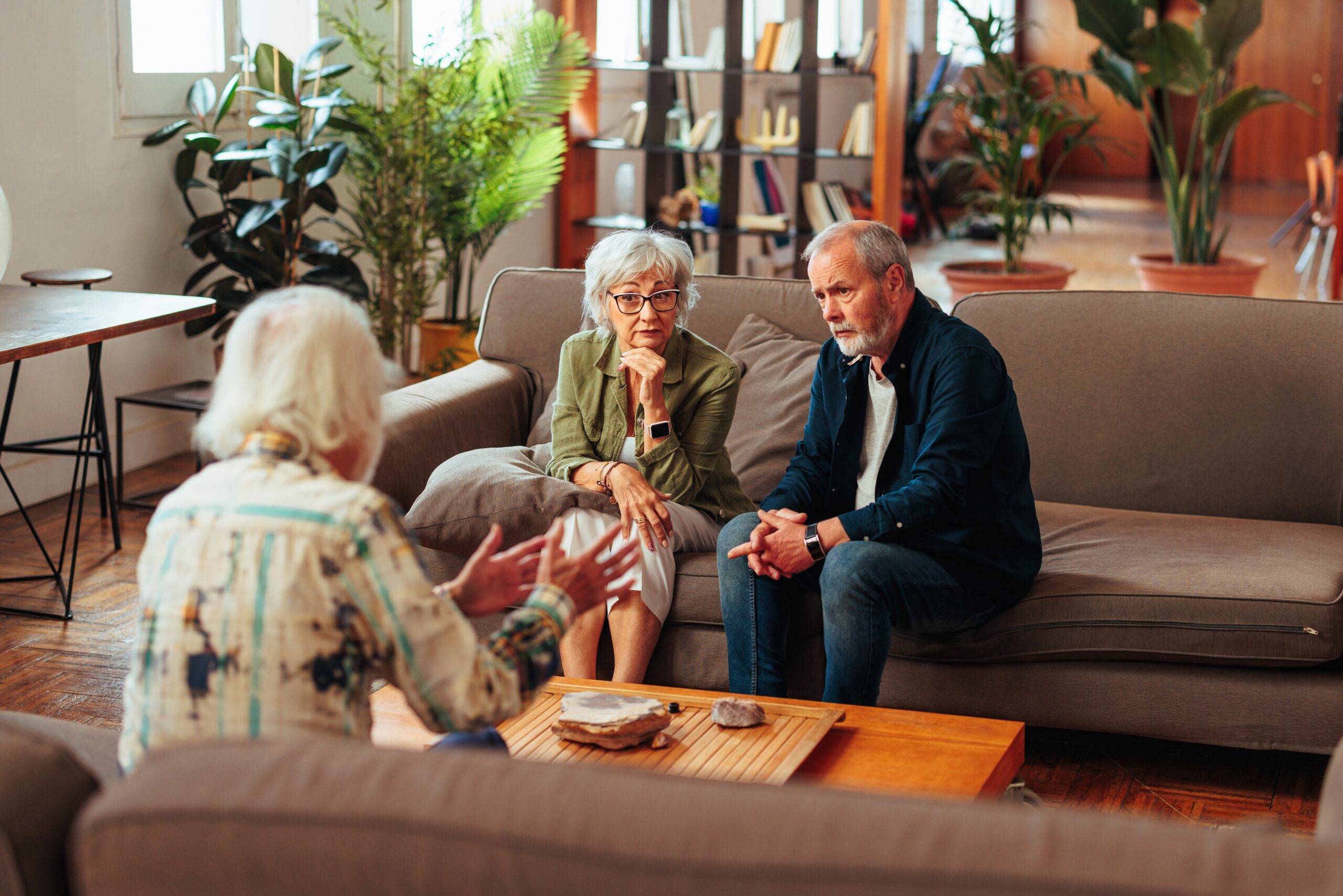

Older Americans use counseling at a fraction of the rate of younger adults. In 2024, 7.5% of adults 65 to 74 and 5% of those 75 and older received it, compared with 20.2% of adults in their 20s. Counseling researcher Lee Ann Rawlins Williams, writing in The Conversation, argues that the shortfall is not mainly about cost or transportation. Older adults and the profession that serves them still frame later life around illness, death, and bereavement, and miss the questions of identity, purpose, and relationship that fill most of a long life. I agree with her diagnosis. I want to press on a question it leaves open: most of the people doing this work have never been old, and a training seminar may not close that gap.
A Workforce That Barely Exists
Start with who is available. Reporting in Generations found that only about 3% of psychology doctoral programs offer dedicated geropsychology training, and that there are roughly 112 board-certified geropsychologists in the country. On current trends, the field will have by 2030 only 27% of the psychiatrists, 9% of the social workers, and 5% of the psychologists needed with specialized training in working with older adults. The American Psychological Association’s guidelines for practice with older adults describe good practice well. The profession never built the pipeline to deliver it.
I do not think the fix is simply hiring older counselors.
So, the gap is filled by clinicians with little specific preparation, working from general training and instinct. That matters because the research suggests the problem is not only missing knowledge. A 2025 scoping review of therapist ageism found that clinicians’ own aging anxiety and internalized stereotypes shape how they read an older client, sometimes toward under-treating real distress, sometimes toward pathologizing a reasonable response to loss. A 2022 study in Clinical Gerontologist tied health bias to that aging anxiety rather than to simple ignorance. A knowledge gap can be fixed with a lecture. A clinician’s discomfort with their own future is not something a single course was designed to touch.
A 2021 clinical review of implicit bias toward older patients makes the mechanism concrete. Clinicians can absorb the assumption that depression or withdrawal is simply what aging looks like and treat suicidal ideation as background noise. The review’s own example is a clinician who had attended a bias seminar, tried to catch herself, and still nearly missed it. The seminar was not badly designed. Implicit bias does not announce itself for correction.
Age is Not a Credential
This is where I part ways with the easy version of my own argument. I do not think the fix is simply hiring older counselors. A 2025 study in Clinical Psychology & Psychotherapy found that matching clients and therapists by age and gender produced weaker, less consistent effects than intuition predicts. An older counselor can just as easily project a settled peace with retirement, or with a shrinking driver’s license, onto a client for whom the same loss feels entirely different. Everyone carries some version of the culture’s decline narrative, the assumption, which Margaret Morganroth Gullette has challenged for decades, that aging is loss rather than accumulation. I have spent 40 years in rooms with people older than the client who were every bit as blind to what the client needed. Age is not a credential. It is not nothing, either.
What the evidence supports looks more like a stance. In 1998, Melanie Tervalon and Jann Murray-García argued that cultural competence was the wrong goal for clinical training, because competence implies an endpoint a practitioner can finish and check off. They proposed cultural humility instead: lifelong self-examination, treating the client as the expert on their own experience, and accountability for power imbalances the clinician does not fully see. Built for cross-cultural care, the idea maps closely onto aging. The clinicians the research flags are not failing because no one told them older adults deserve better. A semester of gerontology was asked to do the work of an ongoing discipline.
Gerontological literacy should be built the way the field eventually built trauma-informed care: as baseline training every clinician carries, not a specialty tracks a handful opt into.
Lived experience still adds something training cannot manufacture, though it is not sufficient alone. Research on older adult peer support specialists in integrated mental health programs finds that they bring age-related credibility and shared reference points that younger clinical staff cannot. A peer specialist and a younger, highly trained clinician each catch what the other structurally cannot. The field has been organizing its workforce around the wrong axis, training versus no training. The real design question is how to pair a disposition of ongoing self-examination with sustained, direct exposure to the full range of old age, in clinicians who are not yet old themselves.
Making It Baseline
That points to something specific. Gerontological literacy should be built the way the field eventually built trauma-informed care: as baseline training every clinician carries, not a specialty tracks a handful opt into. Programs could require supervised hours in settings where aging is visible outside of crisis, such as senior centers, home-based care, and hospice, not only nursing facilities. Then a counselor’s picture of an older client would not be drawn solely from those who reach a clinic waiting room already in trouble.
I am 78. I have spent much of the last decade watching institutions, publishing, policy, and clinical training among them, decide what older people’s experience is worth without asking what it is. Counseling is one of the few professional relationships built entirely on taking someone’s interior life seriously on its own terms. That obligation includes an honest accounting of who is doing the listening, and what qualifies them to hear it.
James A. Lomastro, PhD, is a retired nonprofit healthcare administrator, a CARF International surveyor, and an advocacy associate with Dignity Alliance Massachusetts. He lives in Conway, Massachusetts.
Photo credit: Shutterstock/BBernard