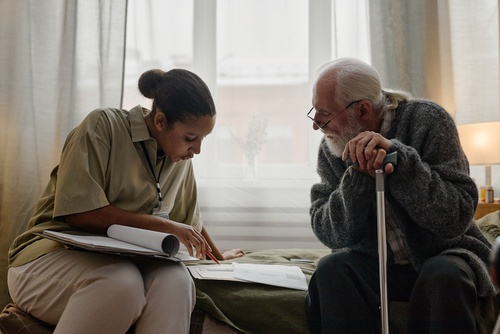
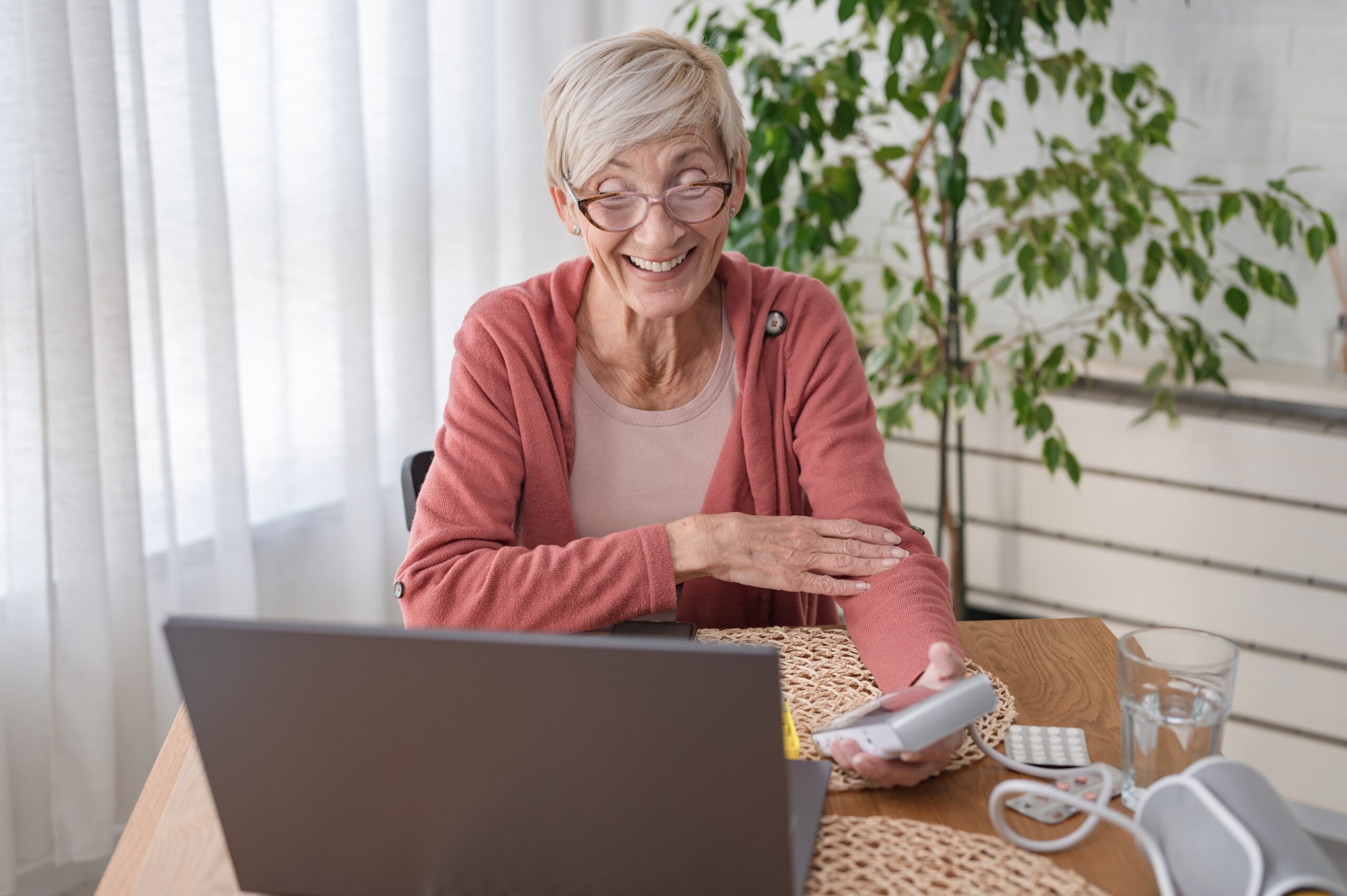

Every week, thousands of older adults check their blood pressure, talk through how they’re feeling, and catch potential health issues before they become emergencies—all without leaving their homes. Telehealth Intervention Programs for Seniors (TIPS) makes that possible.
On this 14th anniversary of TIPS, it is appropriate to pay tribute to this innovative and impactful program. TIPS is a telehealth program, bringing weekly health check-ins in a community setting, tracking vital signs, checking in on how people feel, and connecting older adults to services that keep them stable and supported.
How it all began
TIPS didn’t start as a big idea. It started with a simple question: can technology help older adults stay healthier at home, before small issues become crises? Two pivotal factors went into the creation of TIPS. The first was the vision of Mae Carpenter. For 50 years, Carpenter has served with unique distinction as the Commissioner of the Westchester County Department of Senior Programs and Services. She’s always looking around the corner for what else is needed by older adults. Carpenter also created the Westchester Public Private Partnership for Aging Services. Through that work, she partnered with the aging network to develop TIPS, recognizing the growing role of technology in the lives of older adults and the potential to improve their health.
TIPS focuses on high health-risk, low-income older adults, groups who are often overlooked in access to and provision of healthcare services.
The second was the initial funding provided by the foresighted Harry and Jeannette Weinberg Foundation. Their goal was for TIPS to empower older adults to be active partners in their health. This early investment, plus the leadership of Carpenter and Colette Phipps, Director of Program Development at Westchester County Department of Senior Programs and Services as co-project manager and a forward-thinking administrative team, helped TIPS grow. Today, it touches the lives of some 2,700 people, an impressive doubling of participants and active sites.
Value to those it serves and who serve
TIPS focuses on high health-risk, low-income older adults, groups who are often overlooked in access to and provision of healthcare services. It is community-based, which is vital to keeping people in the program. Many caregivers participate, helping them handle their often difficutl responsibilities. TIPS goes beyond basic telehealth, offering additional services that improve quality of life and help participants partner in every step toward better health.
TIPS is adaptable and meets older adults where they are. It operates in three formats: TIPS in-person, TIPS at-home, and TIPS in-touch (which includes weekly friendly phone calls). These programs have a positive impact: overall improvements in health status, increased patient engagement, and a nearly 30% reduction in hospital visits with even bigger benefits among high-risk groups.
TIPS also helps address aging services workforce challenges by engaging a wide range of students via field practicums and community service learning to introduce them to careers in aging services. A substantial percentage of TIPS participants are solo agers, which are a growing group in the United States, and the program can help prevent isolation and associated health risks. There is growing federal recognition of the health impacts of social disconnection. The U.S. Surgeon General’s Advisory on Social Connection identified loneliness and isolation as urgent public health challenges, linked to increased risks of heart disease, dementia, and premature death. By combining regular health monitoring with consistent human interaction, TIPS directly addresses both the medical and social drivers of poor health.
Model for the future
As more older adults live with chronic conditions and want to stay in their homes, programs like TIPS show what’s possible when healthcare meets people where they are. With its 14 years of success using technology to improve older adult health, TIPS can be a model for integrating telehealth into our health care system. Congress will need to decide later this year whether to extend telehealth flexibilities with Medicare, and for how long. Programs like TIPS demonstrate how telehealth can go beyond episodic care to provide ongoing, preventive support—especially for older adults managing multiple chronic conditions. TIPS also strengthens the case for investing in social care services. Health and social needs are deeply connected, and this model shows how to address both at once.
Increasingly, policymakers are recognizing the role of social determinants of health, such as social isolation, access to nutritious food, and reliable transportation, in shaping healthcare cost and outcomes. TIPS helps address these underlying factors by providing consistent engagement and connecting participants to needed supports. As Guidehouse notes, TIPS can be an attractive candidate for partnerships with Accountable Care Organizations and managed care organizations as a “low-cost, high frequency touchpoint allowing a warm handoƯ to health payers.” Chronic disease in older Americans accounts for the vast majority of US health care spending (84%), underscoring the need for preventive, community-based models like TIPS that can reduce avoidable costs.
Programs like TIPS demonstrate how telehealth can go beyond episodic care to provide ongoing, preventive support—especially for older adults managing multiple chronic conditions.
TIPS reflects the same principles being tested by the CMS Innovation Center, which is increasingly focused on integrating technology, healthcare, and community-based supports. Models like Accountable Care Organization Realizing Equity, Access, and Community Health (ACO REACH) Model and the Guiding an Improved Dementia Experience (GUIDE) Model emphasize proactive, community-based care and stronger connections between providers and the people they serve—approaches that TIPS has been delivering for more than a decade. Emerging models such as ACCESS (Advancing Chronic Care with Effective, Scalable Solutions) similarly aim to improve care coordination through technology, reinforcing the value of high-touch, community-based interventions like TIPS.
Whole-person care
TIPS also fits within the growing “food is medicine” and social care movement, which recognizes that health outcomes are shaped by more than clinical care alone. By identifying unmet needs early and connecting participants to services, TIPS mirrors the kind of whole-person care increasingly supported in federal policy discussions.
Expanding programs like TIPS will also require continued investment in digital access. Federal efforts such as the Infrastructure Investment and Jobs Act and programs administered by the Federal Communications Commission have begun to close the digital divide by funding broadband expansion and affordable connectivity. Ensuring older adults have access to reliable internet and devices will be critical to scaling telehealth models like TIPS nationwide.
Finally, as TIPS continues to operate in locations beyond Westchester, it might prove to be a future candidate for a House member or Senator to recommend it for Congressionally directed funding or an “earmark.” After more than a decade, TIPS isn’t just a successful program. It’s proof that simple, consistent connection can change health outcomes. The question now isn’t whether it works. It’s how far it can go. Its success reflects strong leadership from Carpenter, committed funding partners, and dedicated staff and. TIPS is a program with an enviable upward trajectory for the future.
Robert “Bob” Blancato is the president of Matz, Blancato & Associates in Washington, DC. In that capacity, he serves as the Executive Director of the National Association of Nutrition and Aging Services Programs, National Coordinator of the Elder Justice Coalition, and the National Coordinator for Defeat Malnutrition Today Coalition.
Photo credit: Shutterstock/Lordn