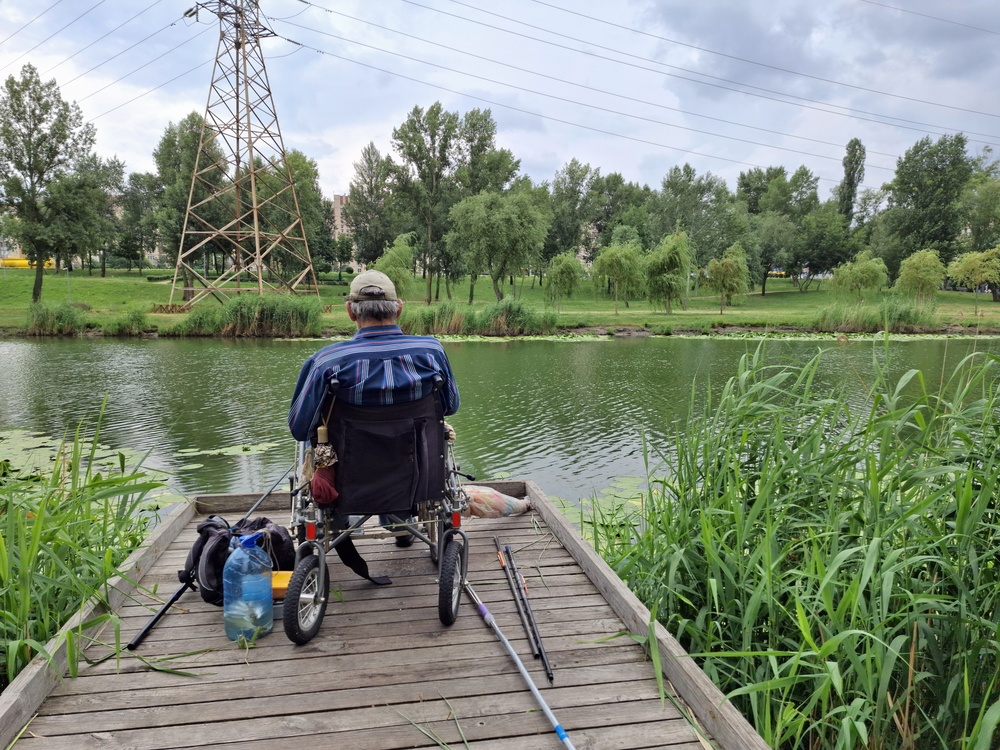
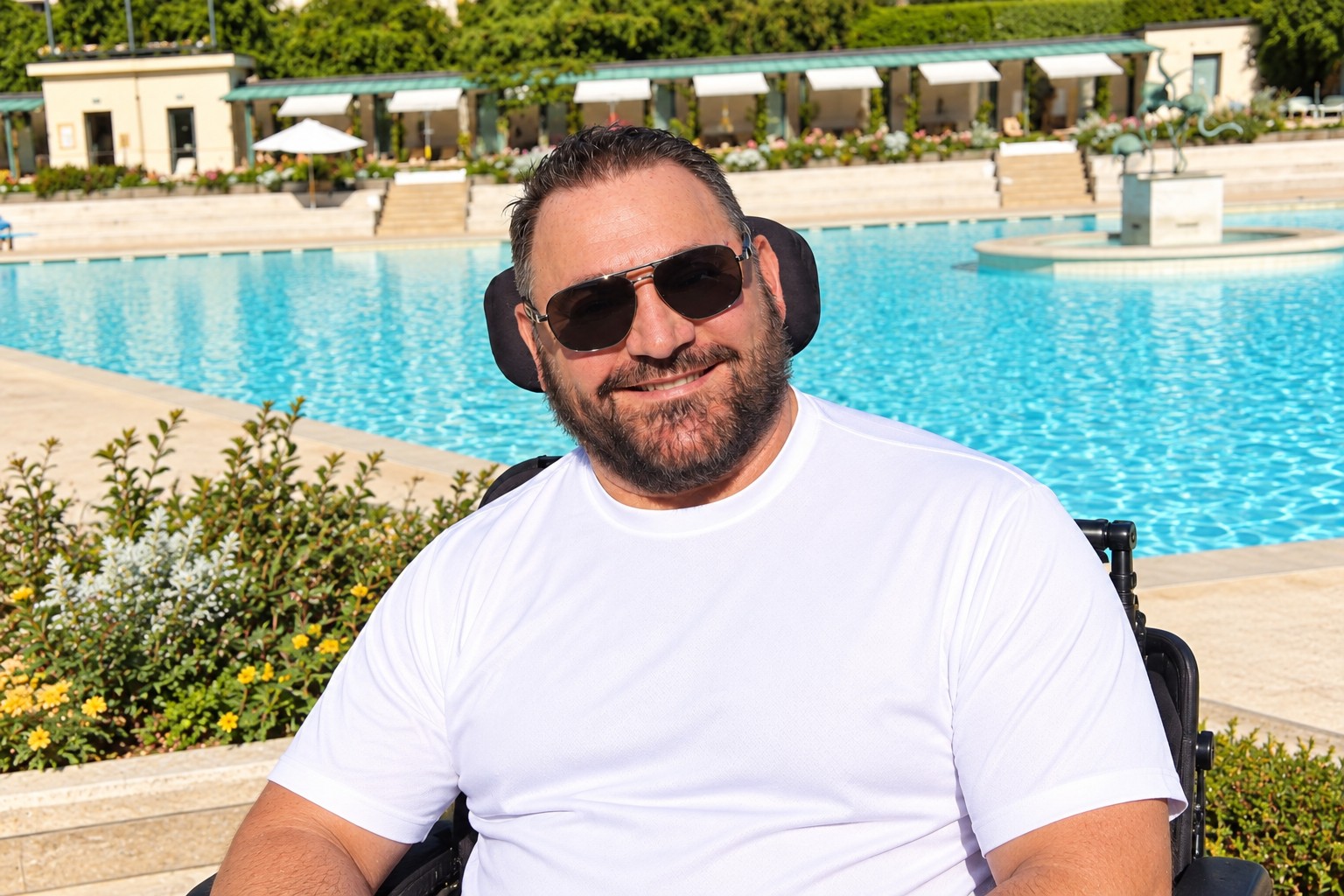

I was 17 when a dive into the sea in Rimini, Italy, changed the way my body would move for the rest of my life. I am 55 now. That means I have spent far more of my life living with tetraplegia than without it.
For professionals in aging services, that timeline matters.
When we talk about disability, we often picture a person at the moment a disability begins. When we talk about aging, we often picture someone reaching later life and beginning to need support. But many people live for decades with significant physical disability and then grow older within that reality. Their needs do not suddenly become “aging needs” at a certain birthday. They evolve continuously.
What worked for me at 25 does not automatically work at 55. My body has changed. The people around me have changed. Technology has changed. Services have changed. The people who help me are aging too. A support system that treats disability and aging as two separate stages can miss the most important fact: there is only one life.
A support system that treats disability and aging as two separate stages can miss the most important fact: there is only one life.
That is why I believe aging with long-term disability should be approached as a longitudinal support question, not as a late-life add-on.
Start with the life course, not the service category
A professional meeting someone like me at 55 may see a wheelchair, personal assistance, home adaptations, respiratory support, transportation needs, and a family network. But those things have histories.
Some were solutions created decades ago. Some were improvised because nothing better existed. Some became obsolete. Some placed more responsibility on family members over time. Others restored autonomy because new technology finally made an old problem easier.
Aging-services professionals can learn a great deal by asking not only, “What do you need now?” but also, “How have you been managing this for the last 10, 20, or 30 years?”
That question can reveal where a person is resilient, but also where a system has quietly depended on arrangements that may no longer be sustainable.
A spouse may have provided physical assistance for years but now have health limitations of their own. Parents who once helped may be elderly or gone. An accessible home may no longer fit new equipment. A wheelchair that once provided independence may no longer meet changing postural or medical needs. A transportation routine that was manageable at 35 may become exhausting at 55.
None of these changes means the person has suddenly become “an aging case.” They mean the same life is entering a new phase.
Do not confuse support with loss of agency
I depend on other people for many physical tasks. That does not mean I want other people to make my decisions.
This distinction has followed me for decades, and it becomes even more important with age. When someone needs more assistance, professionals and families can easily begin to substitute protection for choice. The intention may be good, but the effect can be a gradual narrowing of the person’s control over ordinary life.
For me, autonomy has never meant doing everything alone. It means being able to decide, to express preferences, to take reasonable risks, to say yes or no, and to direct the help I receive.
Aging services already speak about person-centered care. For people aging with long-term disability, person-centered practice also means recognizing that many have spent decades developing expertise in their own support. They may know exactly which routines work, which technologies matter, which forms of assistance feel respectful, and which apparently minor changes can make daily life far harder.
That knowledge should be treated as a professional asset, not as resistance to change.
Plan before the arrangement breaks
One of the greatest risks in long-term support is waiting for a crisis.
If a family caregiver becomes ill, if a personal assistant leaves, if equipment fails, if housing becomes unsuitable, or if new health needs emerge, the person can suddenly fall between systems that were never designed to coordinate.
The better question is not only whether support is adequate today. It is whether the current arrangement is robust enough for the next stage of life.
That requires anticipatory planning.
Who is providing essential assistance now? Which parts of the routine depend on one person? What happens if that person is unavailable? Is the home still appropriate? Are transportation and community access sustainable? Is assistive technology up to date? Are services flexible enough to respond before a problem becomes an emergency?
These questions are relevant to many older adults. For someone who has already lived with disability for decades, however, the support system may be older than the professionals currently assessing it.
For me, autonomy has never meant doing everything alone. It means being able to decide, to express preferences, to take reasonable risks, to say yes or no, and to direct the help I receive.
Technology should expand choice, not merely efficiency
The technological change I have witnessed since 1988 has been enormous.
Today I can use voice control, environmental controls, advanced mobility technology, and other tools that were either unavailable or far less accessible when I was young. These technologies do not remove my need for human assistance, but they can reduce unnecessary dependence.
That distinction is important.
The goal of technology in aging and disability services should not simply be to save staff time or reduce costs. Its real value is often more personal: it can allow someone to make a phone call independently, control the environment, communicate, work, write, or decide when to perform an ordinary task without waiting for another person.
At its best, technology returns small pieces of everyday control. Those pieces accumulate into dignity.
Build bridges between aging and disability systems
Professionals do not need to erase the distinction between aging and disability services. The fields have different histories, expertise, funding structures, and responsibilities. But the person should not have to become the bridge between them.
As more people live longer with significant disabilities acquired earlier in life, the overlap will become increasingly visible. The challenge is not simply to add aging services on top of disability services. It is to create continuity.
That means better communication across sectors, earlier planning, respect for lived expertise, support for families without assuming they can absorb every gap, and an understanding that independence is not the same as doing everything alone.
I have lived with major physical limitations since I was 17. I have also built relationships, traveled, written, worked on projects, become a husband and father, experienced grief, adapted to new technologies, and continued making decisions about the direction of my life.
Aging did not begin when I entered a new service category.
It was there all along.
For professionals, that may be the most useful place to start: not with the boundary between disability and aging, but with the continuity of the person.
Massimo Lorusso is the author of “The Voice of Silence – What Words Do Not Say.”
Photo credit: Massimo Lorusso