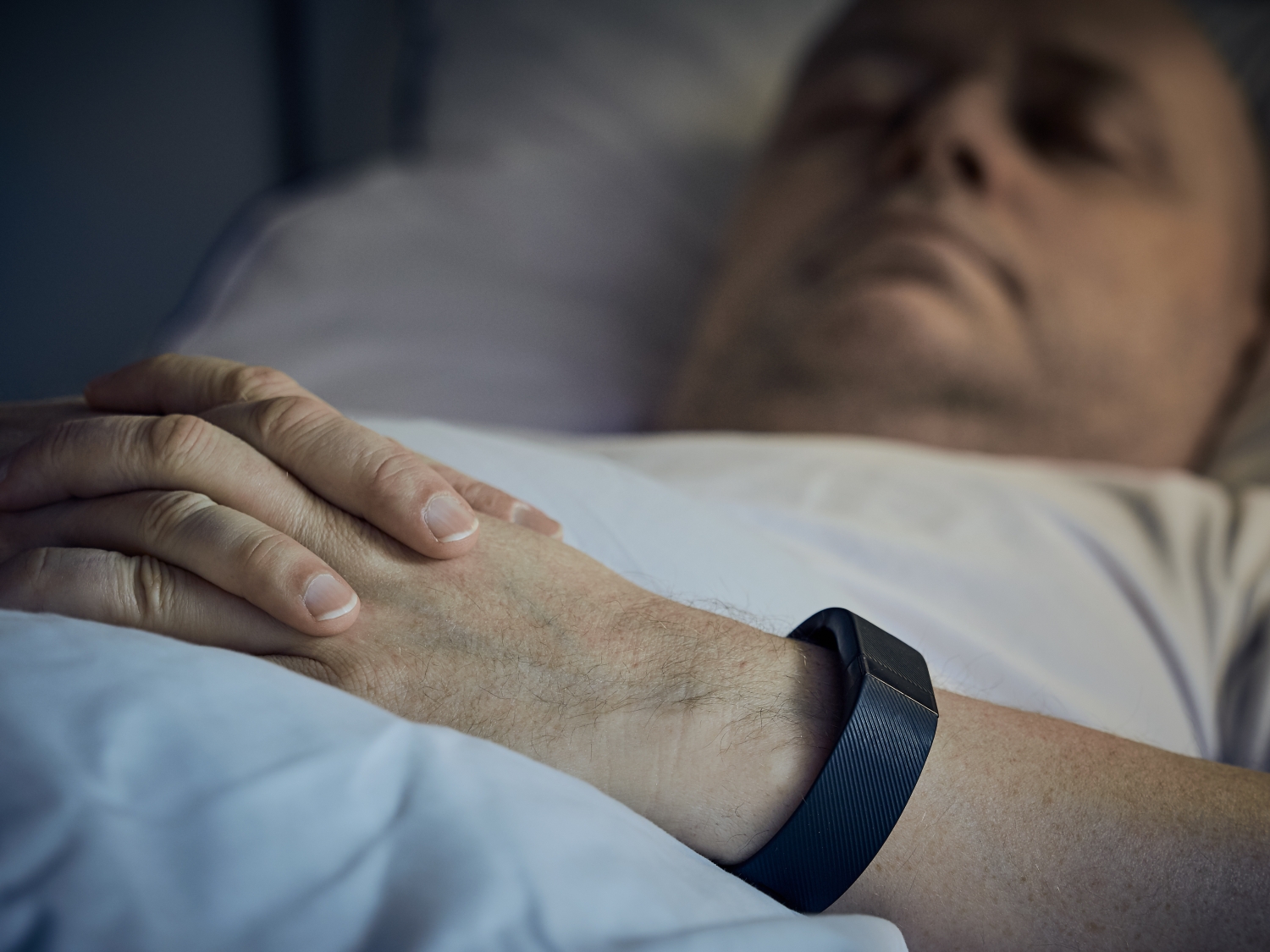

The first thing millions of older Americans do when they wake up is look at their wrist or app to see how they slept—how long, how deeply, and how restfully. For a growing number of adults ages 50 and older, sleep has become something that is quantified, analyzed, and discussed over coffee—“what was your sleep number last night?” This reflects a broader shift in how health and technology intersect.
According to AARP, one-third of Americans ages 50 or older report owning a wearable device. Wearables with dedicated sleep-tracking capabilities, such as the Fitbit, Apple Watch and Oura Ring, are increasingly being used to measure sleep parameters in older people, while also capturing other health metrics. These devices provide low-cost, unobtrusive and consumer-level insights into normal sleep patterns associated with advancing age, all without the need for clinical intervention.
So, what does it mean to track sleep later in life? As interest in these devices grows, so do questions about their usefulness, accuracy and impact on daily life. Manufacturers of sleep-tracking devices often claim these tools promote improved sleep health, but could sleep tracking inadvertently cause more harm than benefit?
Experiences, Perceptions and Sleep Hygiene Practices of Sleep-tracking Older Adults
To explore how older adults experience and interpret sleep-tracking wearables, we conducted a mixed-methods stakeholder analysis examining experiences, perceptions, sleep hygiene practices, and potential behavior changes associated with these devices.
The analysis integrated qualitative interviews with a vendor representing a well-known wrist-worn device; a board-certified sleep physician; and a research advocate who specializes in digital health and older adults via social listening, or scouring relevant comments in Amazon and online communities, to read what fans and critics of sleep-tracking devices said.
Expert perspectives and consumer experiences in combination provided insights into older adults’ experiences and perceptions of sleep-tracking, revealing how these tools fit into broader goals of health monitoring, including the goal of “aging in place.”
A focus on sleep scores and frequent interaction with technology may actually heighten sleep-related anxiety.
Not surprisingly, while many older adults gained increased awareness of sleep patterns and related health behaviors, their experiences varied widely depending upon usability, data interpretation, and applicability. The experts felt similarly, and while they saw the potential, they were keenly aware of the limitations related to accuracy and discordance with sleep hygiene principles. Specifically, consumer devices rely upon indirect physiological signals rather than gold-standard measures, which can lead to misclassification of sleep and wakefulness, inconsistent estimates of sleep stages, and varying results across competing devices.
Additionally, the focus on sleep scores and frequent interaction with technology may actually heighten sleep-related anxiety, and shift attention away from good sleep practices. Collectively, these findings suggest that sleep-tracking wearables play an influential but complex role in older adults’ health routines, offering increased awareness and engagement, while also presenting challenges to consumer satisfaction, appropriate interpretation, and long-term use.
Social listening showed that some people love it: “I bought it to find out how I was really sleeping … . It gives me so much information! Love it!” Others found devices hard to use, read, and interpret. The experts concurred, pointing out that older adults are heavier users of technology than many give them credit for, yet raised the question if sleep-tracking wearables, “provide any useful data” beyond a person’s subjective experience.
Arguably the most interesting question is how sleep-tracking works with sleep hygiene, which is defined as any behavior that promotes (or hinders) good sleep. There is a growing chasm between awareness of good sleep habits and actual bedtime behaviors, which tracking can increase awareness of, but rarely fixes. In fact, the sleep physician noted, “Going to the sleep doctor in a state of panic—that’s probably about the only behavioral change I see!”
Conclusion
Sleep hygiene recommendations include maintaining consistent times for going to bed and waking up, engaging in regular daytime physical activity, and obtaining adequate natural light exposure, all of which help regulate circadian rhythms as they change with age. Creating a sleep environment that is quiet, dark, cool and free of unnecessary stimulation also remains essential. These recommendations don’t include devices. In fact, instead of listening to the data, it’s important to first listen to our bodies, and to become consciously aware of “the spaces between wakefulness and rest.”
Still, sleep-tracking wearables occupy a supportive, though imperfect, role in the landscape of aging and health. While these devices have the potential to increase sleep awareness, they often intensify frustrations due to functionality and usability challenges among older adults. Accordingly, sleep-tracking wearables neither replace clinical judgment nor guarantee improved sleep outcomes; however, for many older adults they offer a meaningful sense of engagement, and a better understanding of how daily habits influence sleep.
Tom Hoffmann, RPSGT, CCSH, is clinical program manager of the Cedars-Sinai Medical Care Foundation sleep network in Los Angeles, Calif. He is completing his Master of Science in Health Systems at Cedars-Sinai Graduate School of Biomedical Sciences. Lisa Gualtieri, PhD, ScM, is deputy director of Innovation and an adjunct professor in the Master of Science in Health Systems at Cedars-Sinai Health Sciences University.
Photo credit: Shutterstock/Jari Hindstroem