
Editor’s Note: The John A. Hartford Foundation is collaborating with ASA RISE to advance equity through a series of blog posts in support of the development and dissemination of equity-related, partnership-based thought leadership through ASA’s Generation platform. This blog post is part of that series.
In 2016, my Instagram feed was full of beauty tutorials, perfectly styled homes, and recipe reels before recipe reels were even called that. Bloggers were building brands around skincare routines and capsule wardrobes.
Meanwhile, my family was navigating dementia.
I realized the Internet held space for flawless skin routines but not for dementia, caregiving, or aging without fear. As a young gerontological social worker, I felt the disconnect sharply. I had studied aging by day and watched it unfold in my family at night. I loved older adults, and I believed in the dignity of aging. Yet, the digital world treated these topics as nonexistent, too heavy, too sad, or too “niche” to deserve space.
So, I decided to take up space anyway. That decision became The Dementia Guru.
But this story did not begin online. Long before algorithms and blog posts, it began in my great-grandmother’s living room. My family’s caregiving journey started years before I had the language for systems and policy. I witnessed dementia up close at a young age. Six years old, to be exact. I saw the exhaustion, the love, and the confusion. I watched even the most compassionate caregivers fall silent because they did not know what they were dealing with. Those experiences shaped me long before I earned degrees and had a vision for a digital platform. They shaped how I listen and ultimately laid the foundation for everything I would build.
While the industry moved at rapid speed, my platform was being built slowly and with so much intention and care. I spent a year and a half writing blog posts, designing a website (I had no clue how to build one, by the way), proofreading late at night, and questioning whether anyone would actually read what felt so personal.
My mother read every single draft. She would say, “You have to put this out there, Ash! Caregivers need to feel seen.” Her words lit a fire in me. So, I continued building and preparing to launch it to the world: my lived experience and my professional expertise, on one landing page.
‘Caregivers do not want jargon. They want to feel seen and heard.’
Before I knew it, what had started as a passion project slowly became a trusted resource. Caregivers started reaching out, sharing their experiences, asking questions, and connecting over the realities that not many people were addressing online. These conversations eventually turned into visibility.
I found a natural connection with the American Society on Aging (ASA) and their principles to build an inclusive, equitable world for people of all ages. By that time, The Dementia Guru was reaching caregivers across the country, growing organically through dialogue, comment sections, and shared experiences.
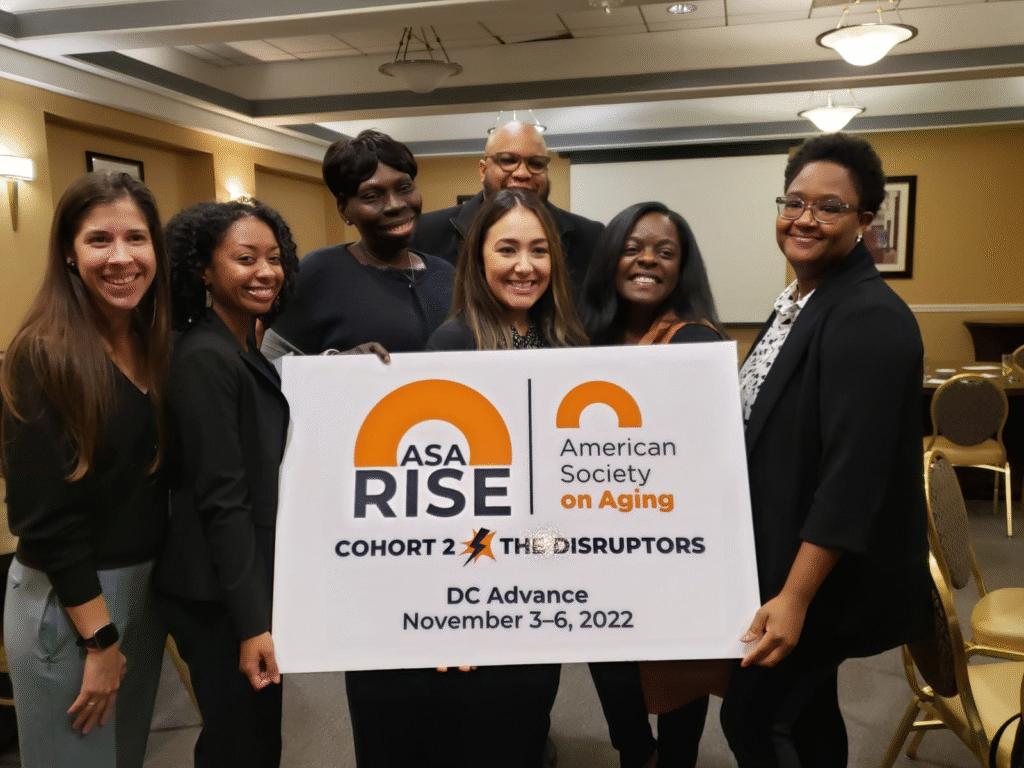
In 2022, I joined the ASA RISE Fellowship, and that experience deepened me in ways I cannot put into words. RISE created space to examine power, racism, leadership access, and the ways professionals of color navigate institutions in the aging field. We asked hard questions about who holds power, who gets the mic, who gets funded, and who is often left out of the room. The answers were not surprising.
For me, RISE was not just professional development. It was alignment with the work I was already building. I connected with other leaders of color in aging who were doing powerful work in their communities. We shared stories of barriers and blessings. We examined systems at an honest level. We also learned how to navigate institutions without losing our voice. It felt like home because it affirmed my lived experience and my professional expertise.
Since then, examining power and access has sharpened my perspective and clarified one thing: Caregivers do not want jargon. They want to feel seen and heard. They want to understand what to do after the diagnosis and not just what the diagnosis means. That was true for my family years ago, and it remains true now. That is precisely why digital spaces matter. And the beautiful thing about social media is that it collapses hierarchy. A caregiver can ask a question in the comment section and receive guidance in real time. That immediacy is powerful and disrupts historical gatekeeping. (And yes, sometimes ageism shows up in the comment section. But so does community.)
‘We are not waiting for permission; we are building it.’
What began as storytelling expanded beyond digital platforms into classrooms, community programs, and policy spaces. I serve as an adjunct in the gerontology and social work departments at the University of North Carolina at Charlotte, helping to shape the next generation of professionals in aging. In local government programming, I oversee respite funding for families caring for loved ones with dementia. I co-chair our local Dementia Friendly initiative, and I lead an Alzheimer’s Association support group that centers the experiences of Black caregivers. This is how digital advocacy translates into structural change. Now, the work lives both online and inside the institutions that shape aging and caregiving.
The Dementia Guru is the digital arm of all this advocacy and all the work I do. It is where education meets accessibility and where caregivers learn how to navigate systems that were not built with them in mind. I formally trademarked The Dementia Guru, signaling what had long been true. This was never a casual hobby. It has always been about heart, intention, and now infrastructure.
So where am I now? Still advocating, still storytelling online, and still sharing my caregiving experiences as a new mother because caregiving evolves across the lifespan. Everything I see on The Dementia Guru platform confirms what many in the field are just beginning to realize: the future of aging and caregiving education will not be decided solely in conference rooms anymore. It will be shaped in digital communities where caregivers are already gathering, asking questions, and demanding better. And together with caregivers and fellow aging advocates, we are not waiting for permission; we are building it.
Ashley Stevens, MSW, LCSW, is a gerontological social worker, educator, and founder of The Dementia Guru, a digital platform advancing dementia education and caregiver advocacy. She serves as adjunct faculty and oversees respite funding in local government for families impacted by dementia. Based in North Carolina, her work bridges digital advocacy, community leadership, and structural change in aging. Stevens may be contacted at info@thedementiaguru.com; and is on X at @thedementiaguru.
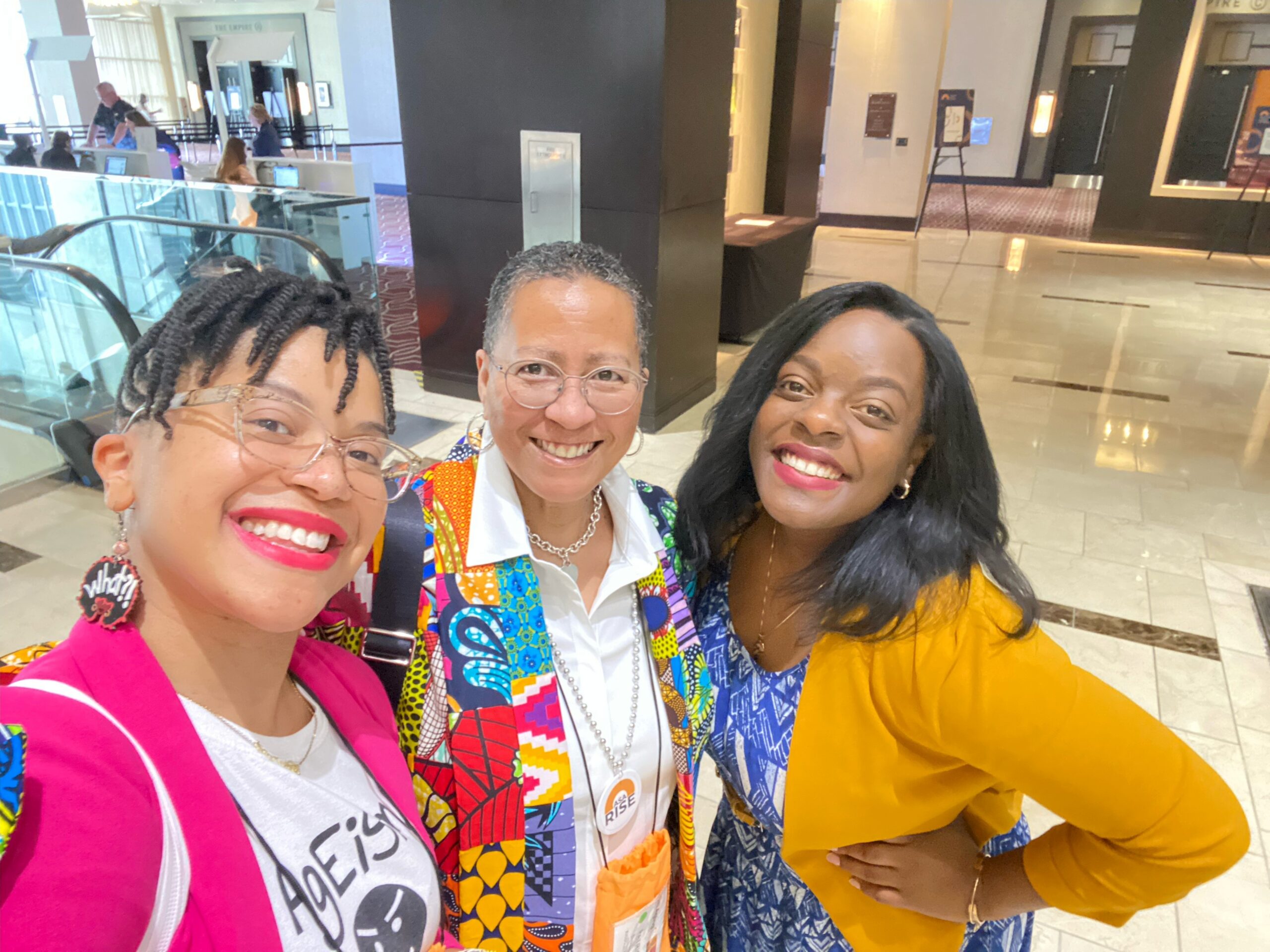
Photo caption: Ashley Stevens, right, at On Aging with gerontologist, advocate, educator and ASA RISE alum Christina Peoples, far left, and ASA’s Senior Equity Strategy Director Patrice Dickerson, middle, who also leads the ASA RISE program.