
More than 75% of older adults would like to age in place in their own homes. Doing so often requires help. At first, family members step into that role. A 2020 report from AARP estimated that nearly 48 million Americans provide unpaid assistance to an adult relative or friend. That figure represented an increase of about 8 million people compared to just five years earlier, and the economic value of this unpaid labor has been estimated at more than $500 billion each year.
But, as older adults’ health deteriorates and their functional and cognitive abilities decline, many families find they need more support at home. Many will turn to paid caregivers.
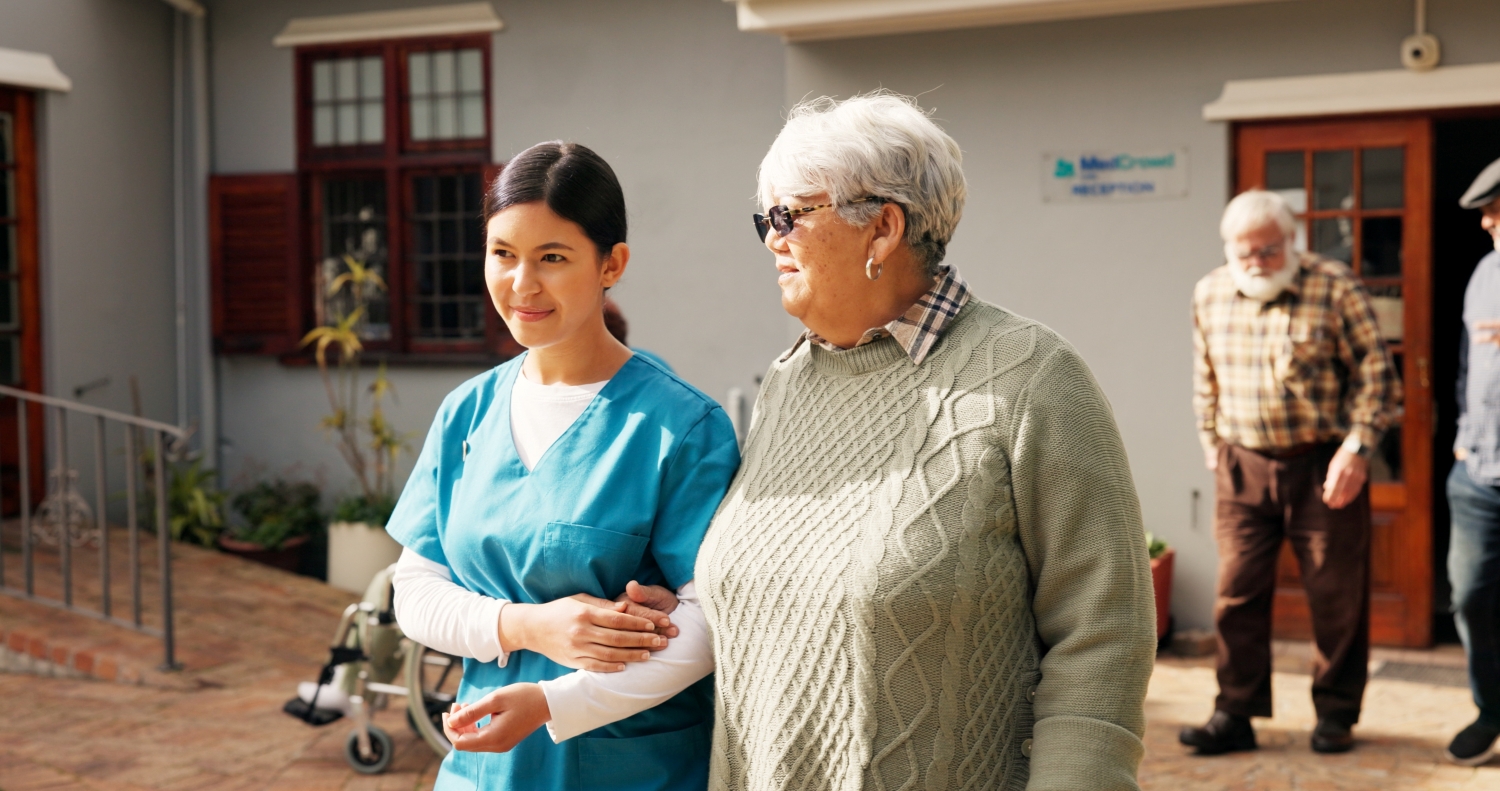
Paid caregivers, which can include home health aides and attendants (HHAs), personal care aides, and certified nursing assistants (hereafter called HHAs or home-care workers), are trained and certified professionals, employed through home-care agencies or hired privately, and financed through Medicaid, Medicare, directly out of families’ pockets, or other programs. They help with personal care (i.e., bathing, dressing, eating) and instrumental activities of daily living (i.e., cooking, cleaning and grocery shopping). Beyond this, they can help with medical care, including monitoring signs and symptoms of illnesses, taking vital signs, encouraging medication adherence, and escorting patients to doctor’s appointments. There are 3.4 million HHAs in the United States, a number projected to grow by 17% by 2034.
Our research with HHAs, home-care agencies, family caregivers and patients has found that HHAs are often the first to recognize changes in a patients’ health and respond to them in the home. This is especially true for older adults with complex chronic illnesses such as dementia or heart failure. Notably, in a survey of households in New York State, HHAs were of most value to families when they contributed more—meaning they provided medical and emotional support beyond assistance with personal care. Recent studies are beginning to acknowledge this, and demonstrating that HHAs meaningfully contribute to medical care at home. For example, in our recently completed clinical trial, we found that trained and integrated HHAs called 911 about their heart failure patients less often (vs. those who were less integrated into care teams) and their patients had fewer ED visits.
Despite their vital role, the HHA workforce has long been plagued with structural inequities. The workforce is made up primarily of women, and disproportionately women of color and immigrants. Wages are low (national median wage is $16/ hour), with one in six HHAs living below the poverty line and more than half earning wages that cannot sustain a decent standard of living.
‘If patients cannot pay for or receive the care they want at home, they may increase the burden on unpaid family caregivers or the need to go to nursing homes.’
Beyond this, HHAs work in a unique environment—the home—which is perceived to be non-medical and is often socially isolating, offering less team-based and structured support than other care settings. And although HHAs have high levels of job satisfaction when it comes to patient care, these factors, along with the physically and emotionally taxing nature of the work, can leave many HHAs vulnerable to burnout and turnover.
The consequences can ripple outward.
High turnover among HHAs may mean that families are forced to shoulder additional caregiving burdens. For the workers who remain, morale can be low, and their health and mood may suffer. A recent study found that one out of five HHAs report poor mental health, with rates worsening after COVID-19. This is not just a workforce issue. Poor worker health may spillover to the quality of the care they provide and, in turn, their care recipient’s health.
Recent policy decisions have only intensified these challenges. The One Big Beautiful Bill Act (OBBBA) aims to cut more than $1 trillion from health programs. Analysts estimate that up to 10 million people will lose health insurance. Cutbacks to Medicaid’s Home- and Community-Based Services (HCBS) waiver programs would squeeze the already thin wages of HHAs, while simultaneously making it harder for families to afford home care.
In parallel, if patients cannot pay for or receive the care they want at home, they may increase the burden on unpaid family caregivers or the need to go to nursing homes, which is more costly and may not align with their preferences.
Immigration policy looms large here as well. The HHA workforce, particularly in certain regions of the United States, comprises many foreign-born workers, as it is often their first foray into healthcare work when coming to the United States. Nationally, 42% of the HHA workforce is foreign-born.
The OBBBA will raise fees for asylum and visa applications, while funneling additional funds into detention and enforcement. Even immigrants with legal status describe a climate of fear. Restrictive rules not only deter new workers from entering the field but are likely to destabilize those already serving families across the country.
Additionally, a new rule proposed by the Department of Labor calls for the exclusion of home-care workers from the Fair Labor Standard Act’s (FLSA) minimum wage and overtime pay protections. Home-care workers were, for a long time, excluded from this provision, which led to further inequities for the workforce, but in 2015 were included following a decision from the federal court of appeals. The loss of minimum wage and overtime pay protections is likely to further deteriorate HHAs’ pay and benefits, which may prompt more to quit the profession, leaving older adults and family caregivers even more vulnerable. Workers who stay may struggle to meet their basic economic needs.
The stakes are clear. Our current system of caring for patients at home is broken and facing an existential crisis. If conditions deteriorate further for paid caregivers, more HHAs may leave the field and older adults, and their family members will have fewer options for in-home support.
So, What Can Be Done?
First, greater awareness is needed of HHAs and their contributions to people’s lives and health. Whether this is among families, healthcare providers or physicians, more knowledge of HHAs, what they do, and why it matters is necessary.
‘The caregiving crisis is not a distant future, it is here, now, in millions of American households.’
Second, additional evidence to demonstrate the value of this workforce, role within the care team, and impact on patient care is critical. Our team has several randomized controlled trials (RCTs) underway testing the effect of HHA- or home-care-nurse–delivered interventions on patient outcomes, such as reducing hospitalizations, readmissions and emergency department visits.
In addition to patient outcomes, understanding the impact HHAs can have on family caregivers will be key in the coming decades. For example: if an HHA is well supported, does a family caregiver (e.g., a daughter) return to work or spend more time with her kids because her mother has the care she needs at home?
We and others are launching novel peer coaching programs to provide HHAs with more support to navigate challenges on and off the job, including stress and their own health. Large-scale evaluations using national datasets also are helping to identify which working conditions impact HHAs’ employment attitudes, wages and benefits; such findings can offer clues to guide policy.
Advocacy matters, too, perhaps even the most. HHAs are rarely given a voice in healthcare decision-making, nor a seat in the room when health policies are written. Organizations that advocate for caregivers and workforce issues, including Caring Across Generations, unions such as SEIU that represent home-care workers, National Domestic Workers Alliance, PHI, and LeadingAge, are essential for elevating the voice of workers, their real-world perspectives, and pressing lawmakers to preserve fair wages and benefits is critical. Beyond wages, we must continue to advocate for a system that funds and supports training and upskilling alongside better working conditions, and a system that is not afraid to leverage new technology.
The caregiving crisis is not a distant future, it is here, now, in millions of American households.
As the population ages and as more people want to stay at home, it is likely that patients and families will turn to paid caregivers and HHAs. Ideally, they can become partners in supporting this generation of older adults. Families will need to depend upon these workers to make aging in place possible, and HHAs depend upon families and society at large to provide the respect and resources that allow them to thrive. Recognizing and supporting this relationship, and ways to maintain and grow this workforce, is key to ensuring that older adults can remain at home, and are cared for with dignity, in the years ahead.
Madeline R. Sterling, MD, MPH, is an associate professor of Medicine at Weill Cornell Medicine, director, Initiative on Home Care Work at the ILR School Center for Applied Research on Work, at Cornell University, and director, Paid Caregiving, Program for the Study and Support of Caregivers, at Weill Cornell Medicine. Maya Levinson, MS, is assistant research coordinator at Weill Cornell Medicine.
Photo credit: Shutterstock/PeopleImages