
My introduction to the world of caregiving happened in the early 2000s, when I worked at a local assisted-living facility, joining the waitstaff as a dining room server. It was my first job—a part-time role I held as a high school sophomore. Beyond serving meals to residents, I participated in their social activities, engaged with their families, and developed bonds I will never forget. That experience prepared me for my caregiving journey that lay ahead.
One fond memory from childhood was visiting family during our annual holiday visits to my hometown in Alabama. We had moved to Georgia when I was two, so I had no immediate family members living nearby. But I loved visiting my grandfather, Mr. Bob, who preferred his grandchildren to call him that name instead of “granddaddy.” Calling him granddaddy made him feel old, he said. Mr. Bob would always quietly give me pocket change, a memorable moment for any young child.
On one visit, something felt off. Mr. Bob had lost a lot of weight, he couldn’t remember my name, and he avoided answering questions. This behavior was outside of his character, and very unsettling to the family, so we took action. We packed up Mr. Bob and moved him to Georgia to live with us.
After unpacking and making a few home adjustments, Mr. Bob began to settle into his new home. My mother and I were his primary caregivers, taking turns caring for him. Imagine being a teenager in high school with a job, a car and an active social life. I was not enthusiastic about helping out. But that quickly changed when my mother reminded me of our “village”—both family and non-family members who’ve provided love and care to me at a very young age, so I felt compelled to do the same. I rolled up my sleeves and got to work.
Things were great for a while. Mr. Bob lived a life with joy, happiness and purpose, so there were cheerful moments. He was a builder and thinker, enjoying jigsaw puzzles and playing checkers. He would beat me every time.
‘There were no peer-to-peer support groups, support services, or respite care available.’
But over time, things started to change. Mr. Bob would yell, become aggressive, and he began to withdraw. He also showed signs of rapid cognitive decline, which was diagnosed as Alzheimer’s disease. The biggest scare was when he left the house and wandered off. We found him safe in a neighbor’s yard. Weeks later, that same incident repeated two more times.
We felt alone. We felt helpless. We were unprepared. In the age of dial-up internet and no social media, we could not find local resources to help support us: there were no peer-to-peer support groups, support services, or respite care available. We had to figure things out on our own.
We tried our best, but after facing some challenging moments, we made the tough decision to move Mr. Bob back to Alabama and into a nursing care facility. It felt like the longest drive ever, and when we arrived, Mr. Bob sat in the car for over an hour before entering the facility. The little life that was left in him was gone. The guilt following that decision was overwhelming. But we knew we could not care for him by ourselves; he needed around-the-clock care. Sadly, Mr. Bob passed away two years later at age 83.
After Mr. Bob’s passing, my mother and I wanted to dedicate our spare time to helping older adults and family caregivers. Over the years, we volunteered with nursing homes, churches and senior communities to support those in need. I was so inspired by those experiences that I started a 501 (c)(3) nonprofit organization called Aging 100. Our mission is to help older adults reach ages 100 and beyond. We also provide family caregivers with support services and resources.
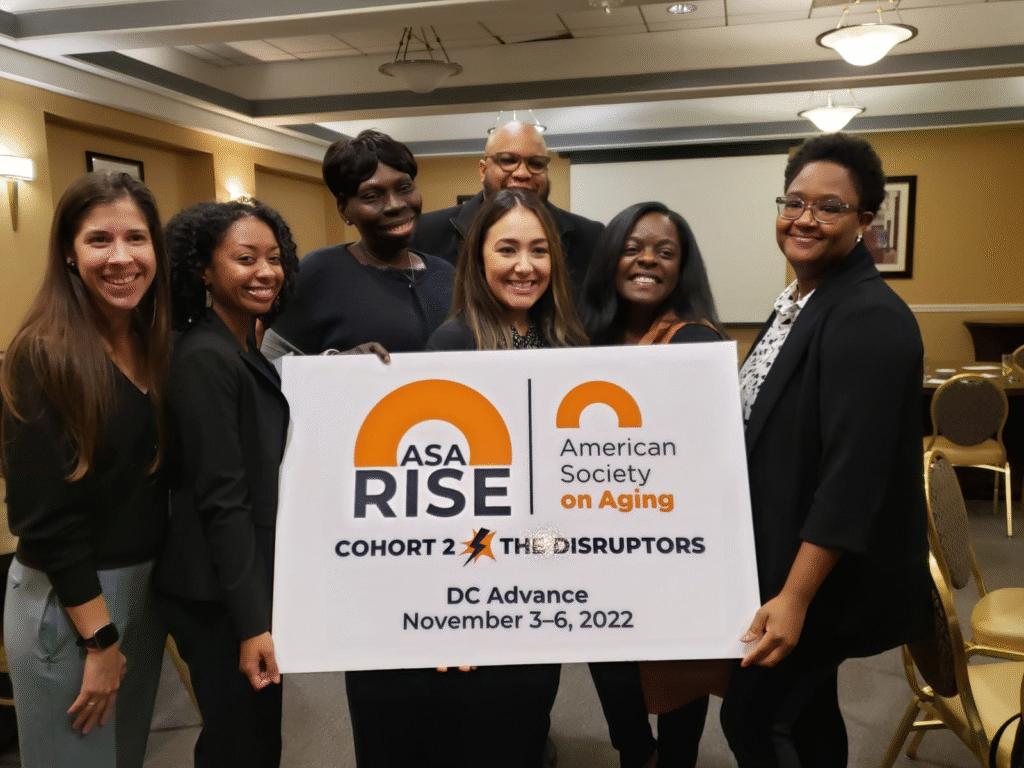
Starting Aging 100 was a challenge, but one I was eager to take on. To develop leadership skills, I explored fellowship programs that would offer training beyond technical skills and one that would focus on strategy, organizational change, and reshaping the field of aging. The ASA RISE Fellowship program fit the bill. I was thrilled to be selected for the second cohort of RISE Fellows, called “The Disruptors,” and I wore that badge proudly. The six-month, equity-centered leadership program was nothing short of amazing! It provided mentorship, community, and taught us how to lead transformative change across the aging ecosystem.
‘As a caregiver, it’s essential to find moments where you can add joy, happiness and purpose to your life.’
Upon graduation, Program Director Dr. Patrice Dickerson recommended that I apply to Caring Across Generations’ Care Fellowship program. I was ecstatic to be selected for their Georgia cohort. The four-month leadership program unites current and former family caregivers, and provides training on advocacy and policy change, storytelling, and shifting the way our society thinks about care.
In February 2025, Aging 100 was awarded a grant from the CareWorks Fund to provide resources to unpaid family caregivers. The CareWorks Fund deploys small, unrestricted grants to nonprofit organizations that provide support services and community-based care to family caregivers.In celebration of National Family Caregivers Month (November), we’ve partnered with Hilarity for Charity (HFC), a national nonprofit on a mission to care for families impacted by Alzheimer’s disease, to award family caregivers with respite care grants. We will use the remaining funds to support more family caregivers in the region.
Today, as a millennial who works with other millennial family caregivers, sadly I still see the lack of resources available to caregivers. Not to mention, many caregivers face challenges navigating social life, dating, and careers. One friend, a male millennial caregiver, said that because he cares for his mother and aunt, dating and maintaining a social life are tough. He’s also an entrepreneur, and launching his IT business has been a significant challenge. His story and others like it are why we need to collaborate with government and local communities to help build a resilient population of family caregivers through education, training, support services and policy reform.
Caring for a loved one can be challenging and gratifying. As a caregiver, it’s essential to find moments where you can add joy, happiness and purpose to your life.
Looking back, I realize my caregiving experience taught me how to live. How to observe the small details in life. How to listen attentively to storytellers. Paying attention to how my mother cares for her antiques, most of which are older than I am. But most importantly, I began living a fulfilling life, one that had purpose and meaning, helping to care for an aging population.
But the fruit of the Spirit is love, joy, peace, longsuffering, kindness, goodness, faithfulness, gentleness, self-control. Against such, there is no law.
—Galatians 5: 22–23 New Kings James Version
Angela Melissa King, MPA, is a certified nonprofit professional and the founder of Aging 100, nonprofit on a mission to help older adults reach the age of 100 and beyond.
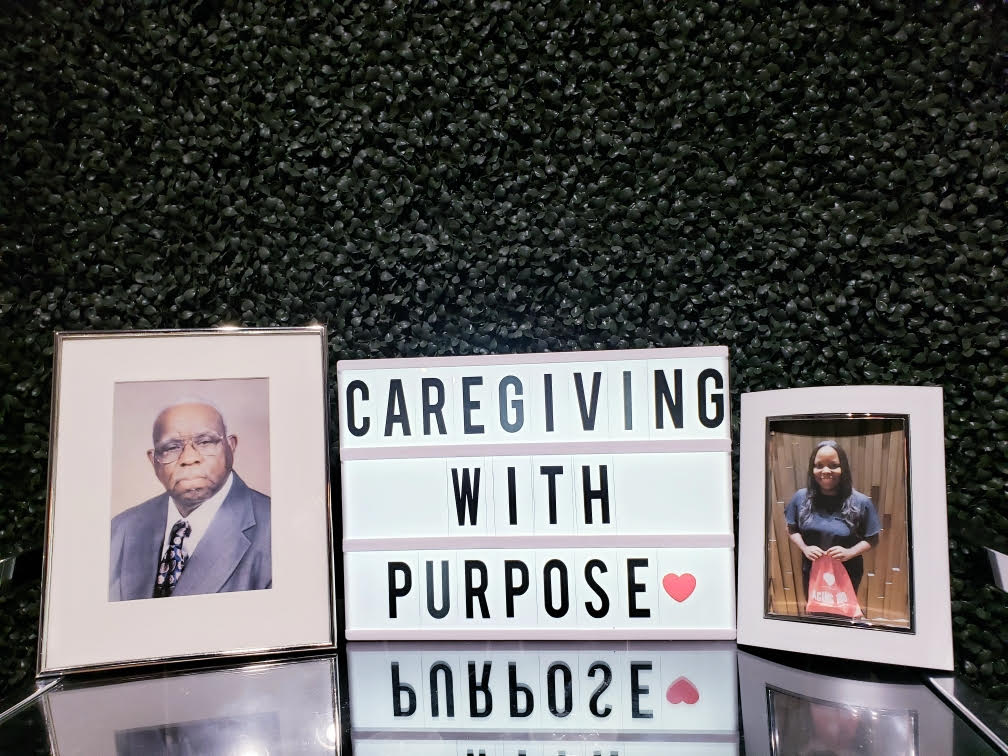
Photo caption: Angela Melissa King, right, pictured with her grandfather, Mr. Bob.
Photo credit: Courtesy Angela Melissa King.
Resources
These resources may be helpful to anyone who is caregiving: