
This article is one of four published in a collaboration between the American Society on Aging’s Generations Now blog and the Department of Journalism in Boston University’s College of Communication. The student journalists are members of Professor Deborah Fountain’s Online Journalism class for graduate students.
The first morning Don Kantor woke up retired, the quiet hit him harder than he expected.
Through the 42 years spent arranging flowers at Roberts Flowers in Hanover, NH, the shop’s bustle had been his rhythm. So when all of that fell away, Kantor said he found himself feeling “semi lost.”
“I was blessed to have a career that I loved. After retirement, there was a loss of being with people every day. I missed the people I worked with, I missed the customers,” said the 87-year-old New Hampshire resident.
Years later, Kantor lost his husband, Frank, which only deepened his feeling of isolation. “I was alone for a few years, I was very miserable,” Kantor said.
But Kantor wasn’t alone.
A 2025 survey from the Pew Research Center found that about 35% of Americans ages 65 and older reported feeling lonely or isolated from others at least sometimes, a reality many older adults feel most acutely in their first years after leaving the workforce.
For Kantor, the turning point came when he decided not to let isolation define his retirement. After moving to a condominium in 2017, he began hosting parties for all of his neighbors on the last Saturday of every month.
“The idea was just for people to get together. I provide the house, the drinks, dessert and all the trimmings,” he said. “Just being with people is such a gift.”
Today, Kantor says he’s more connected than ever. He even remarried, meeting his now-husband through an online group for older gay men.
“I never thought I would be so happy being retired,” said Kantor, who enjoys selling and collecting antiques, hosting neighbors and traveling with his husband.
Kantor’s experience reflects a broader trend of older adults rebuilding companionship in new ways.
Online dating, for example, has become a meaningful space for older adults seeking connection. In 2025, an eHarmony study found that 17% of adults ages 65 and older use online dating platforms.
That was how 83-year-old Tamara Szarka met her long-term partner, Bruno Kaiser. Szarka, who is from San Jose, Calif., and had retired in 2006, just shy of a decade after the death of her husband, Mike. Encouraged by friends, she casually signed up for Match.com, a dating website.
“I did remember thinking, ‘oh, it would be nice to have somebody to travel with,’ more than anything romantic, it wasn’t really about sex or anything like that,” Szarka said.
Although Szarka said she wanted companionship rather than a long-term relationship, meeting Kaiser changed that. Their bond deepened over time through small, thoughtful gestures, and the couple shared nearly 20 years before Kaiser died in 2023.
Szarka’s story is just one example of older adults finding love later in life. For some, professional matchmaking offers another path.
Ronnie Grossman, CEO of Elite Matchmaking, said her service is common among older adults actively seeking meaningful connections because matchmaking is a “more private, confidential space.”
“When they come to me at that age range, typically it’s because they’ve met new friends online, found that it hasn’t worked for them, and they’re in a place where they really value and miss partnership,” Grossman said.
She also said that most clients ages 65 or older are often divorced or widowed and that, “it’s really rare to find someone who’s never been married.”
Grossman added that client participation has tended to follow seasonal patterns in her more than19 years of matchmaking.
“Sometimes we have more men, then more women. Around the holidays, we tend to see an uptick in men, I think, because they realize how difficult it feels to be alone during that time.”
Grossman said the matchmaking process works best when expectations are realistic.
“We do a lot of pre-screening before we even consider matching someone. During that time, if they’re not realistic in their expectations and we see too many challenges, then we won’t work with them as a client. We don’t want to set them up for failure,” Grossman said.
Her oldest successful match was an 86-year-old man who found a partner in her late 70s.
While Pola said she enjoys her own company and doesn’t mind doing things alone, she still leaves the house every day and goes to events regularly.
But finding love isn’t the only way older adults combat isolation. Many turn to social activities at community centers.
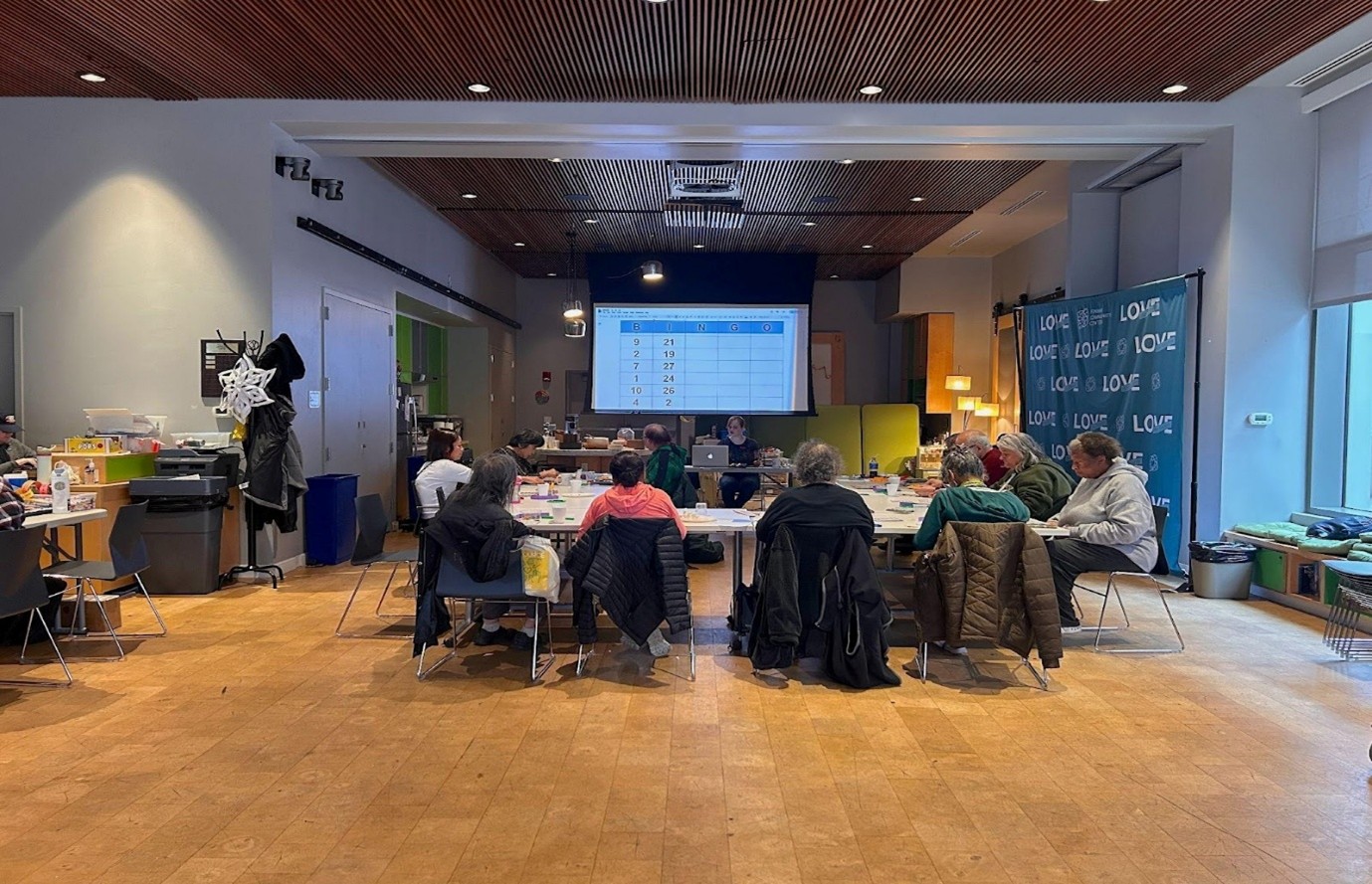
Bingo is a popular weekly event at the Fenway Community Center in Boston, Mass., where most attendees are retired. Renee Harmon attends every week and said there is “a tight sense of community.”
Harmon said attending the Fenway Community Center and the Peterborough Senior Center, both in Boston, helps her feel less isolated. She added that people at the community center “help each other out.”
Two other regular bingo attendees, Laura Kelley and Pola, who declined to share her last name, shared similar views.
Pola and her friend Kelley have been going to Fenway for about 10 years. They started going after Harmon introduced them to the center.
Kelley said that attending events at Fenway and Peterborough Senior Center prevents her from becoming isolated, and the activities help her learn new things and make friends.
While Pola said she enjoys her own company and doesn’t mind doing things alone, she still leaves the house every day and goes to events regularly.
The Beacon Hill Village is another way older adults in Boston find community. Program coordinator Sabrina Carter said the village offers three to four theater outings a month. Beacon Hill Village also partners with four to five theaters, so that members can attend most performances during the season.
The village hosts weekly exercise classes, guest speakers, and presentations on topics such as vision loss. Social events are popular, including quarterly wine-and-cheese nights, birthday parties and an annual holiday party.
Carter said most members live independently and attend events for social connection as much as services.
Outside community centers, some retirees find connection through volunteering. Boston resident Kiki Gross has volunteered with Planned Parenthood for 20 years. After retiring three years ago, 72-year-old Gross said her responsibilities at the clinic have increased. She assists about six times a month as a clinic escort, helping patients enter safely.
“We have biannual get-togethers, all of us volunteers do, and outside of that, a group of about five of us try to get together every couple of months just to socialize with each other,” Gross said.
Gross works with a team of about 20 volunteers from diverse backgrounds and ages.
“Not everybody is as old as I am; most are in their 50s and 60s, but with everybody, we have a nice intergenerational community,” Gross said
When it comes to advice for older adults wondering how to fill their time after retirement, Kantor said it involves keeping a full schedule.
“I think everybody within their heart has something that they have always kept down, kept quiet, and I think for the most part, people should just try it. Do something they were thinking about doing and just get involved,” Kantor said.
Jordan DeFiugo, Lily Jurman, and Kallejhay Terrelonge are studying for master’s degrees in Journalism at Boston University’s College of Communication.
Photo caption: Older adults gather for a weekly bingo game at the Fenway Community Center.
Photo credit: Lily Jurman