
OpEd
“We are called to build a movement to mend the social fabric of our nation,” U.S. Surgeon General Dr. Vivek Murthy wrote in his 2023 advisory on loneliness, warning that chronic social disconnection carries mortality risks akin to “smoking fifteen cigarettes a day.”
His message was clear: rebuilding communal life is a matter of public health infrastructure. Yet even as the nation’s top health official embraced the language of social connection, the systems governing aging in the United States have remained anchored in structures that recognize symptoms but not stories.
The Overlooked Science: Why Social Connection Is Foundational to Healthy Aging
Before turning to policy, it is worth noting how decisively the science behind loneliness and social interaction has shifted. In recent years, a broad interdisciplinary body of research, spanning social neuroscience to epidemiology, has reframed connection as a core physiological need. Studies consistently show that socially connected older adults experience slower rates of cognitive decline, better emotional regulation, greater resilience to stress, and enhanced functional health.
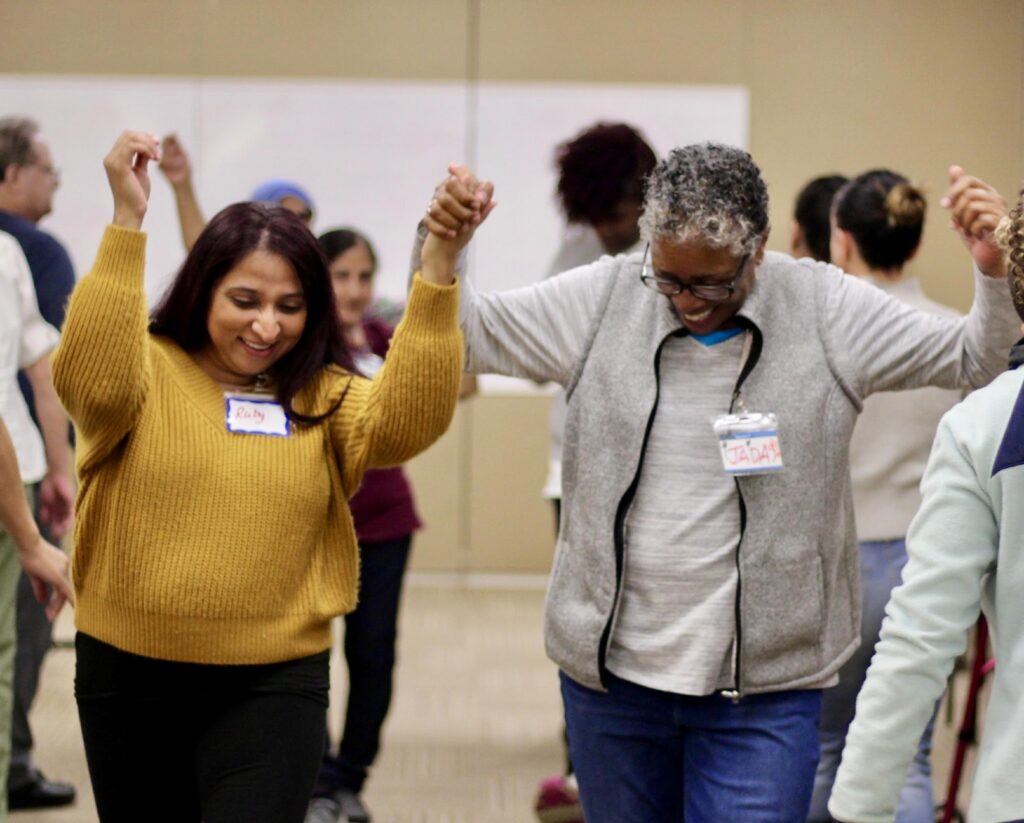
Importantly, much of this research highlights the harmful effects of loneliness and the active benefits of engagement. Social interaction strengthens neural networks involved in attention, memory retrieval, and executive functioning; it supports more efficient communication between brain regions; and it promotes behavioral patterns like regular movement, better sleep, and reduced depressive symptoms that protect long-term cognitive health.
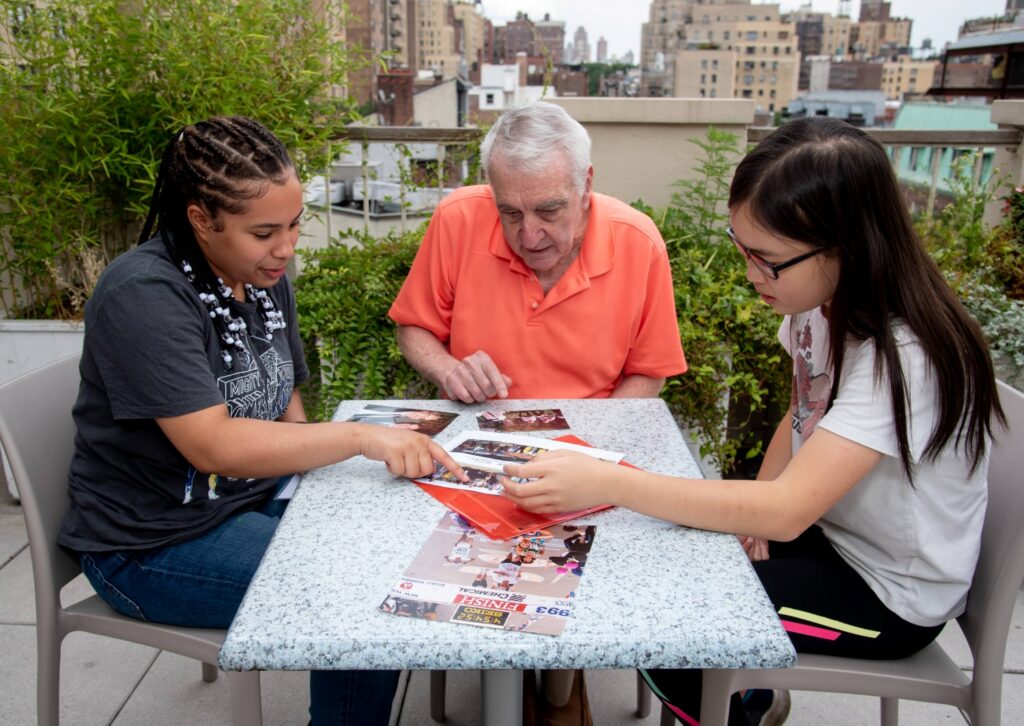
This evidence does not exist on the margins. It comes from large-scale longitudinal studies, neuroimaging research, and randomized trials demonstrating that structured social and creative programs measurably improve cognitive and emotional outcomes. Even modest, routine engagement like weekly conversation, collaborative art, and multigenerational interaction has been shown to reduce symptoms of isolation and improve overall well-being.
Social connection, then, is not a “soft” benefit or optional amenity. It is a modifiable determinant of healthy aging with clear empirical support. If something improves cognitive resilience, enhances mood, and reduces downstream medical costs, then omitting it from aging policy is neither neutral nor accidental. It is a structural choice.
A System Designed for Illness, Not Humanity
Despite these findings, federal aging policy remains overwhelmingly anchored in biomedical intervention. The scale of this imbalance is stark. In 2024, Medicare spent approximately $865 billion, part of a broader $1.5 trillion allocated to the Centers for Medicare & Medicaid Services (CMS), which comprises nearly 22% of all federal spending. These dollars overwhelmingly support hospitalizations, imaging, skilled nursing and pharmaceuticals.
‘Connection is not a “soft” benefit or optional amenity. It is a modifiable determinant of healthy aging with clear empirical support.’
By contrast, the Older Americans Act (OAA), reauthorized in 2020, allocates roughly $2.3 billion for community programs such as senior centers and caregiver support, but reaches fewer than one in four eligible older adults. And while Medicare Advantage plans can use rebates to fund supplemental nonmedical benefits, only a small fraction of the $60.5 billion in rebates goes toward programs addressing social needs. The rest fund dental, vision, or fitness benefits, leaving relational supports structurally marginalized.
In short, the United States invests extraordinary resources in managing the consequences of age-related decline, while dedicating comparatively little to the social conditions that help prevent such decline, or addressing the upstream circumstances that precipitate it.
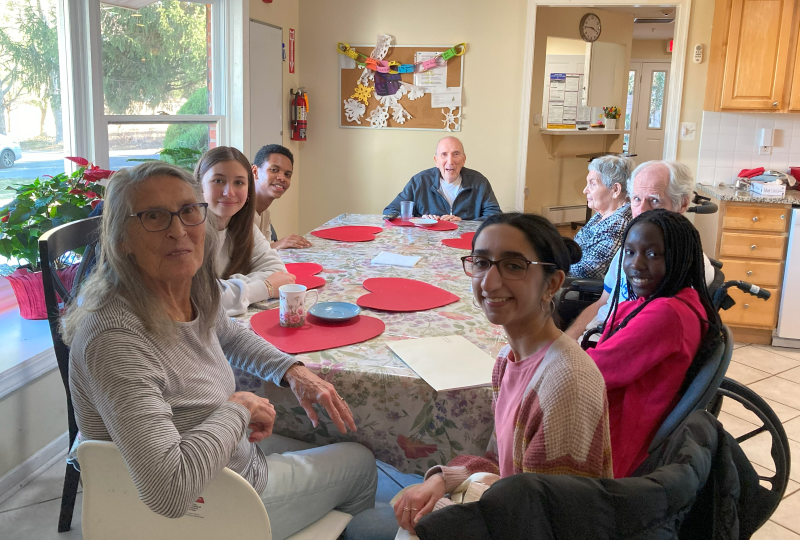
This structural imbalance reduces older adults to their clinical profiles. Staffing shortages, exacerbated by the loss of nearly 400,000 long-term care workers during the pandemic, push facilities to prioritize tasks that can be billed or documented. As a result, many residents of assisted living facilities have no social interaction integrated into their daily lives and routines.
But identity requires more than medical stabilization. It requires opportunities for self-expression, agency, and continuity. Creative engagement, in particular, activates systems involved in autobiographical memory and emotional meaning-making. Even among older adults with dementia, structured creative programs improve communication, attention, and mood.
In other words, the loss of identity often observed in long-term care is not inherent to aging. It is a byproduct of policy design.
Why Social and Creative Engagement Still Don’t “Count”
Despite robust scientific evidence, three interlocking forces continue to marginalize relational and creative programs:
- A Biomedical Bias That Defines Legitimacy
When compared to the cultural prestige of pharmaceutical innovation, social interaction-based interventions are negligible—less urgent, less “scientific,” and less worthy of investment than biomedical technology. This allows policymakers to mistake simplicity for insignificance, even as evidence demonstrates that social engagement exerts neuroprotective effects comparable to many clinical treatments.
- A Reimbursement System That Rewards Treatment, Not Prevention
Since its establishment by President Lyndon B. Johnson, Medicare investment in aging has focused on procedures, diagnostics, and pharmaceuticals, all of which are concrete, standardized, and technologically measurable. Fee-for-service Medicare does not cover social or creative care, even though loneliness drives an estimated $6.7 billion in Medicare spending due to increased hospitalizations and skilled nursing facility usage.
- Cultural Ageism
Older adults are often viewed as beyond the scope of investment, and cultural ageism has normalized loneliness as a feature of aging. These perceptions cultivate a landscape where loneliness is relegated to the periphery of policy priorities as an inevitable aspect of aging rather than a preventable risk factor. Because loneliness is often misread as a matter of personal disposition, it becomes easier for large institutions to dismiss it as outside their purview.
Together, these forces create a system that funds the consequences of relational deprivation but not the conditions required to prevent it.
Evidence-Based Programs Already Exist—They Just Aren’t Funded
Randomized controlled trials and meta-analyses consistently show that structured social engagement programs reduce loneliness, elevate mood, and strengthen cognitive performance among older adults. In the Experience Corps program, participation led to measurable improvements in executive functioning and memory, with benefits documented even in follow-up assessments. The widely replicated Circle of Friends intervention has reduced depressive symptoms and increased social activity through guided peer support.
Medicine, reimbursement and ageism create a system that funds the consequences of relational deprivation but not the conditions required to prevent it.
Across hundreds of studies, the National Academies of Sciences, Engineering, and Medicine identify relationship-centered programs fostering regular, meaningful interaction as among the most effective strategies for improving social health. This evidence demonstrates that the benefits of social connection are not incidental; they are predictable, measurable, and reproducible across diverse populations and settings.
The barrier is not evidence but the absence of structural support. Without reimbursement mechanisms, these interventions remain small-scale, volunteer-driven, and vulnerable to turnover.
What Would It Mean to Treat Social Connection as a Public Health Priority?
If aging policy reflected what science already shows, the United States could:
- Integrate social connection metrics into CMS quality measures.
- Reimburse community-based, creative, and intergenerational programs through Medicare Advantage and OAA expansion.
- Establish a federal Office of Social Connection to coordinate national strategy.
- Shift toward value-based models that reward improvements in social and cognitive well-being, not just reductions in clinical risk.
These reforms would not weaken clinical care. They would align aging policy with the realities of health, humanity and neuroscience.
The Future of Aging Depends on What We Choose to See
Dr. Murthy’s advisory called for reimagining the structures that shape connection. Yet in aging policy, we continue to behave as though relational well-being is optional, as though the erosion of identity in late life is natural rather than manufactured.
The crisis is not that older adults are disconnected. It is that we have built systems in which disconnection is the default. Personhood is not an extra. It is a form of care. And until policy treats it that way, we will continue to invest in decline while ignoring the conditions that allow people to age well.
Gemma Wang is a sophomore in high school at The Chapin School in New York City and the founder of The Melody Project, a nonprofit connecting high schoolers and residents of assisted living facilities through music, creative activities, and intergenerational connection.
Photo credit: Shutterstock/pablolealphoto