

Editor’s Note: ASA RISE is a program of the American Society on Aging (ASA), designed to strengthen the leadership pipeline and equity infrastructure of the aging field. Through partnership with philanthropy, aging services organizations and RISE Fellows, ASA stewards RISE as a field-building leadership model grounded in belonging, collective capacity and cross-sector learning. Archstone Foundation, a founding funder of ASA RISE, supports named fellowship slots for California-based Fellows as part of the Archstone JEDI in Aging series featured in Generations Now.
Philanthropy is often described as catalytic—able to seed innovation, scale promising models, and accelerate change. But the impact of philanthropy is never realized in isolation. It is shaped through partnership—with the organizations that steward programs, the leaders who participate and the broader field that ultimately carries the work forward.
Within leadership development, these partnerships shape something both practical and profound: the conditions for belonging.
Who is invited to lead.
Whose knowledge is resourced.
Which futures are imagined as possible.
In moments of rapid social, demographic and political change, these choices matter profoundly. They determine not only who enters leadership pipelines, but who stays, who thrives and who ultimately helps shape the future of a field.
Programs like ASA RISE offer an instructive example of what becomes possible when belonging is treated not as a downstream outcome, but as a design principle—especially in leadership development.
From Talent Pipelines to Belonging Infrastructure
Much leadership-focused philanthropy emphasizes pipelines: identifying high-potential individuals and helping them advance within existing systems. While these investments are important, pipelines alone do not produce belonging. Too often, leaders from historically marginalized communities are supported to enter systems that were never designed for them to lead authentically, remain connected or influence change without personal cost.
A belonging-centered approach asks programs to be designed using a different set of questions. Instead of focusing solely on individual advancement, it considers whether leadership investments are building collective leadership capacity—capacity grounded in relationships, trust-building across difference, and values-driven practice that strengthens the field.
‘Leadership rooted in difference, complexity and care is not supplemental to the field—it is central to its future.’
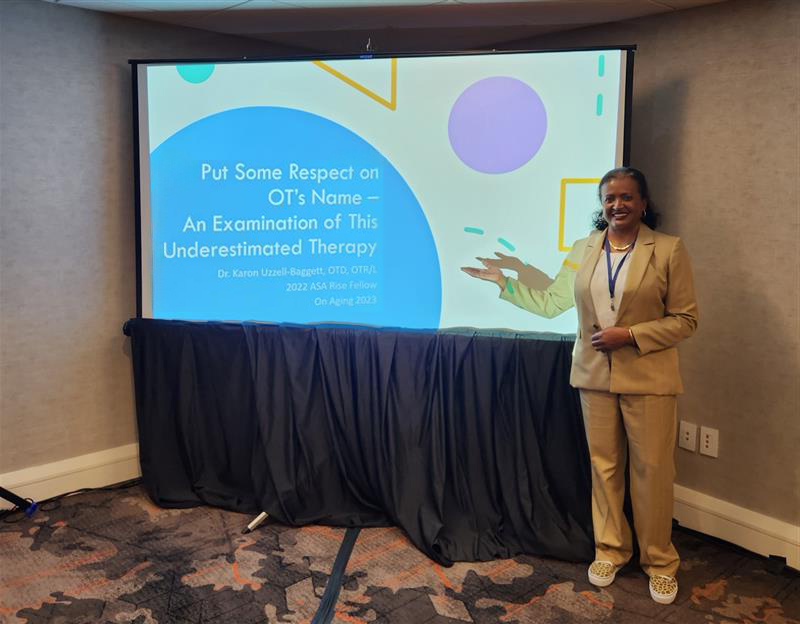
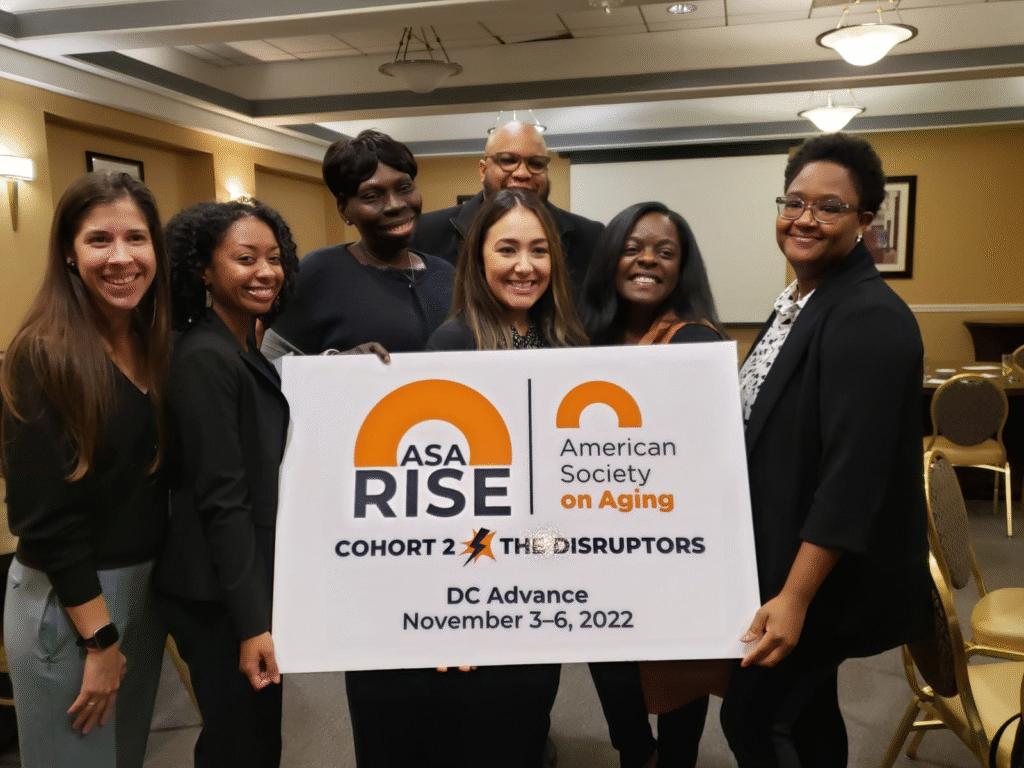
At ASA, this orientation has positioned RISE not simply as a program supporting individual mobility, but as leadership infrastructure—advancing collective resilience, shared purpose and cross-sector connection. Partnerships with funders such as the Archstone Foundation, The John A. Hartford Foundation, and the RRF Foundation for Aging make this design possible, enabling ASA to steward leadership development as field-building rather than episodic training.
ASA’s role in this work is operational and relational. As a nonprofit steward positioned between philanthropy, aging services organizations, and emerging leaders, ASA translates philanthropic investment into program design, learning environments and long-term field integration. In this way, belonging becomes not simply a value statement, but an outcome produced through coordinated partnership.
Funding for Legitimacy, Not Just Access
Belonging is shaped not only by who receives funding, but by what that funding signals. When philanthropy supports leadership programs grounded in lived experience, equity and community accountability—and when nonprofit stewards intentionally embed those values into program design—it confers legitimacy, not merely opportunity.
This distinction is critical. Access without legitimacy can be fleeting. Leaders may gain entry but lack the institutional validation needed to influence decisions, shape agendas or remain in the field long term.
Investments supporting ASA RISE communicate something more durable: that leadership rooted in difference, complexity and care is not supplemental to the field—it is central to its future.
At a time when equity-focused leadership is increasingly contested or under-resourced, this signal carries weight. It tells leaders that their ways of knowing, leading and connecting are not provisional.
They belong here.
Making Space for Complexity
Another defining feature of belonging-centered leadership development is permission—the permission to be unfinished, to ask difficult questions and to lead through uncertainty. This is especially important in fields like aging, where leaders are navigating demographic shifts, workforce strain, policy volatility and long-standing structural inequities all at once.
Philanthropic partnership makes this possible by buffering risk and allowing nonprofit stewards to design learning environments that prioritize reflection, relational practice and long-term field health over short-term outputs. In doing so, partnership does more than fund leadership development—it protects the space where leadership can grow honestly.
Belonging, in this sense, is not about comfort. It is about creating environments where leaders are supported to grapple with complexity without being penalized for it.
Why This Moment Matters for the Field
Across sectors, philanthropy is being asked to do more than fund promising programs; it is being asked to take responsibility for the conditions those programs create. Nonprofit stewards, in turn, are being called to translate those investments into learning environments that expand who can lead and how leadership is practiced.
Leadership development cannot be neutral. The structures that support leadership will either reinforce existing inequities or help transform them.
Belonging offers a powerful frame for shared decision-making:
- Are leadership investments expanding who is seen as a credible leader?
- Are we resourcing leadership models that reflect the communities most impacted by the issues at hand?
- Are we investing in systems that leaders will want—and be able—to steward?
Programs like ASA RISE suggest that when philanthropic partners answers yes to these questions, leadership development becomes a lever for durable, equitable systems change. Leaders emerge not only more skilled, but more connected—to one another, to community and to the broader purpose of the field.
Belonging is not incidental to impact.
It is infrastructure.
And its future will not be shaped by any single sector alone. It will be shaped through continued partnership—among philanthropy, nonprofit stewards and the leaders closest to the work. There is an opportunity ahead to deepen this conversation together, including shared thought leadership that reflects how philanthropic investment and program stewardship jointly produce belonging as a field outcome.
Patrice L. Dickerson is ASA’s Senior Equity Strategy Director, and co-leads the ASA RISE fellowship program.
Photo credit: Shutterstock/DezNook