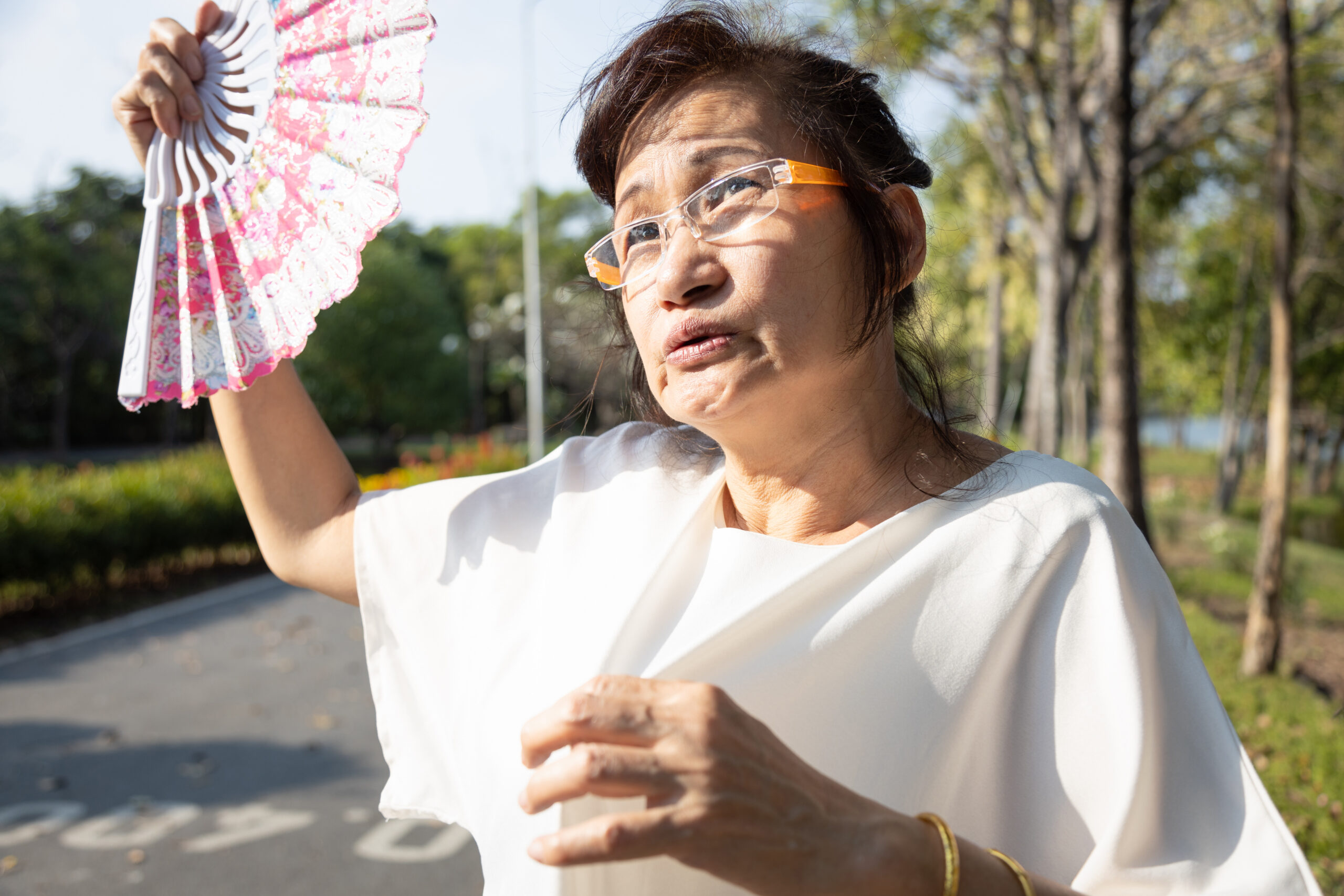

In the summer of 2003, a heat wave swept across Europe and killed an estimated 70,000 people in a matter of weeks. The deceased were, overwhelmingly, old. Twenty years later, the conditions that made that catastrophe possible have intensified. As global mean temperatures continue to rise, extreme heat events are becoming more frequent, prolonged, and lethal, with older adults remaining at the center of their human cost. The intersection of a rapidly aging global population with a warming climate presents one of the defining public health crises today, demanding attention not only to physiology but also to the social and structural conditions that determine survival.
Populations in urban settings are particularly vulnerable to heat due to the urban heat island effect. Global warming exacerbates the urban heat island effect and widens health inequalities in extreme heat preparedness. Recent data from New York City show that people over 60 years old and certain ethnic groups in the city are more vulnerable to extreme heat.
An Aging Population
The demographic backdrop against which this crisis unfolds is significant in scale. The number of Americans ages 65 and older is projected to increase from 58 million in 2022 to 82 million by 2050, with the 65-and-older age group’s share of the total population rising from 17% to 23%. This shift is already visible in census data: the U.S. population aged 65 and up grew by 13% between 2020 and 2024, while the number of those under 18 fell by 1.7%, and the U.S. median age reached a record high of 39.1 in 2024.
Researchers at the University of Southern California found that older adults living in areas with more frequent heat days showed signs of accelerated biological aging.
The global picture is similarly striking. By 2050, more than 23% of the global population aged 69 and older will live in areas whose 95th percentile of daily maximum temperature exceeds the critical threshold of 37.5°Cexposing around 200 million more older adults to dangerous acute heat. This demographic reality is unfolding now in cities and communities already struggling to manage the health consequences of rising temperatures.
The epidemiological evidence linking extreme heat to adverse health outcomes in older adults is robust and growing. A study published in The Lancet Planetary Health, drawing on Medicare records from over 73.7 million beneficiaries across nearly 28,000 ZIP codes between 2000 and 2018, found that heat waves led to approximately 9 extra deaths per heat wave per 10,000 people each year, adding up to roughly 17,600 excess deaths among older adults across the contiguous United States over the study period.
Beyond acute outcomes, emerging research points to a more insidious consequence: accelerated biological aging. Researchers at the University of Southern California found that older adults living in areas with more frequent heat days showed signs of accelerated biological aging as measured by epigenetic clocks, with participants in regions where heat days occur half the year experiencing up to 14 months of additional biological aging compared to those in cooler areas.
Heat-related health outcomes are largely influenced by social determinants. A study from Hong Kong shows that housing characteristics contribute to heat-related health outcomes among older adults, noting that frail individuals tend to report lower thermal comfort and more heat-related symptoms; frailty is also associated with living alone. The researchers suggest community-based interventions, especially for frail older adults, to address extreme heat.
Seeking Solutions
However, some researchers caution against interpreting the heat-mortality relationship as uniform across populations. More specifically, populations in historically hotter regions may develop adaptive capacities that partially buffer mortality risk. While these qualifications are meaningful, they do not undermine the core findings. Acclimatization provides partial and unequal protection at best, and the populations least able to adapt, those with functional impairments, chronic illness, social isolation, and inadequate housing, are precisely those most exposed to harm.
The evidence makes clear that extreme heat poses a disproportionate and escalating threat to older adults, one that is not distributed randomly but follows predictable lines of structural disadvantage.
The intersection of demographic aging and climate change is as clear as the sun on the bright summer day. It is a present emergency, measurable in excess deaths, hospital admissions, and the silent acceleration of biological decline at the cellular level. The evidence makes clear that extreme heat poses a disproportionate and escalating threat to older adults, one that is not distributed randomly but follows predictable lines of structural disadvantage.
That said, however, rhetoric rejecting claims of climate change and the ramifications of budget cuts can often make the situation feel incredibly dire and hopeless. Luckily, at the time of publication, several communities and governments have found innovative ways to improve the quality of life for older adults despite the beaming heat. Sustained investments in urban cooling infrastructure, equitable access to air conditioning, and heat-action plans designed specifically for older populations and their caregivers are just some examples of interventions that can be scaled.
At the end of day, the rising temperatures will also require recognizing that the question of who bears the burden of a warming world is, at its core, a question of justice.
Lois Angelo, MPH, graduated from the NYU School of Global Public Health with a master’s in public health and currently works as an associate for Bridge Social.
Yoko Nogami, MPH, MEng, is an experienced professional in the healthcare industry and urban design and a chartered engineer (urban and regional planning) in Japan.
Photo credit: Shutterstock/CGN089