

Abstract
Medicaid has played a vital role in supporting the U.S.’s older population for more than 60 years. It funds essential health and long-term care for nearly 80 million people, including millions of older adults and caregivers. As the primary funder of home- and community-based services (HCBS), Medicaid has shifted from a focus on institutional care to promoting community living. This article highlights Medicaid’s evolving role, as well as current challenges, disparities in access, and policy recommendations to strengthen the program. Ensuring Medicaid’s sustainability is crucial to providing equitable, quality care and supporting older adults’ independence and well-being for generations to come.
Key Words
Medicaid, long-term care, home- and community-based services
Over its 60-year history, the Medicaid program has significantly expanded and adapted to meet the evolving needs of America’s aging population. Today, nearly 80 million people, including 7 million older adults and 10 million people with disabilities, rely upon Medicaid for health and long-term care. Without Medicaid, most older adults who need help with daily activities would not be able to afford home-based or nursing facility care. Beyond funding caregiving, Medicaid also serves as the only source of healthcare coverage for many paid and unpaid caregivers supporting older adults. As our population continues to age and grow increasingly diverse, it is important to understand who Medicaid serves, and who is left underserved, as we explore ways to improve and strengthen the program for future generations of elders.
Medicaid Provides Essential Coverage for Millions of Older Adults and Their Caregivers
Medicare is the primary form of health insurance coverage for most older adults, yet it has notable coverage gaps. This is where Medicaid steps in, filling these gaps for 7 million older adults with low to moderate resources, and acting as a vital safety net to ensure access to necessary health and long-term care. Medicaid also makes Medicare affordable by paying for premiums and other out-of-pocket costs like co-insurance and deductibles. Without the financial assistance Medicaid provides, many older adults, despite being covered by Medicare, could not access care.
Medicaid’s support is especially vital for older adults of color, older women, and older adults with disabilities and complex care needs. Notably, more than 1 in 4 older adults of color ages 65 and older is enrolled in Medicaid, compared to 1 in 10 older white adults (UnidosUS, 2025). Similarly, 6 in 10 women enrolled in Medicare are also enrolled in Medicaid compared to 4 in 10 men (Centers for Medicare & Medicaid Services, 2020).
Medicaid is particularly essential for older adults with the highest and most complex healthcare needs. For example, 22% of people with Alzheimer’s and related dementias are dually enrolled in Medicare and Medicaid, compared to 9% enrolled in just Medicare (Centers for Medicare & Medicaid Services, 2020).
‘There is no overstating the role of Medicaid in providing long-term care for older adults.’
The 2010 expansion of Medicaid under the Affordable Care Act further broadened access, providing coverage to adults with low incomes, including many older adults and caregivers who previously had no access to affordable healthcare. Today, Medicaid covers 9 million adults ages 50–64 who do not qualify for Medicaid based on age or disability but are not yet eligible for Medicare. Research shows that within this age group, 87% of people have at least one chronic condition, with 48% having three or more chronic conditions that impact their ability to work (Sneed et al., 2024).
The expansion of Medicaid coverage to adults also has been instrumental in supporting paid and unpaid caregivers for older adults. Nearly 1 in 3 direct care workers (31%) are enrolled in Medicaid (Angell et al., 2024). Medicaid expansion also provides healthcare coverage to unpaid family caregivers, many of whom have to reduce work hours or leave the workforce entirely to provide care. Research shows that 12% of people younger than age 65 who are not working and on Medicaid are providing caregiving (Tolbert et al., 2025). Medicaid’s role of supporting caregivers’ health and well-being also enhances their capacity to support the health and well-being of the older adults they care for.
Medicaid Is the Foundation of America’s Long-Term Care System
There is no overstating the role of Medicaid in providing long-term care for older adults. While Medicare’s coverage of long-term care is limited to short stays in nursing facilities and at-home care for people with skilled care needs through the home health benefit, Medicaid is the main source of funding for long-term care. In 2022, Medicaid paid for more than half of all long-term care nationwide, including both institutional and at-home care, known as home- and community-based services (HCBS; Chidambaram & Burns, 2024). But this has not always been the case.
Historically, Medicaid primarily paid for long-term care in institutional settings, like nursing facilities. This institutional bias is enshrined in federal law, which mandates that states pay for care in institutional settings, leaving HCBS coverage optional. Nonetheless, the availability of HCBS has significantly expanded over the past several decades thanks to concerted advocacy efforts—including the passage of the Americans with Disabilities Act and the landmark 1999 Supreme Court ruling in Olmstead v. L.C., which affirmed the rights of individuals with disabilities to live in the community rather than be segregated in institutions. Just 1% of Medicaid’s long-term care funding was allocated to HCBS in 1982; that figure has grown to 65% in 2022, reflecting the ongoing shift toward community-based care (Murray et al., 2024).
Today, states have implemented more than 300 HCBS programs (Mohamed et al., 2025). These programs vary in the populations served—such as older adults, people with developmental disabilities, or those with Alzheimer’s—and in the number of people served, with some programs capping enrollment and employing waiting lists (Musumeci et al., 2020). The scope of benefits programs offer also varies, including coverage of personal care, case management, home modifications, support for family caregivers like respite, and more.
States also increasingly have started to cover costs for helping people transition from nursing facilities to the community through programs like Money Follows the Person. And they have begun to cover food and utility assistance, housing supports, and other services aimed at addressing health-related social needs. The role of managed care in delivering long-term care also has expanded, with more than half of states operating managed long-term services and supports programs.
Recognizing that there are few options for long-term-care coverage, states have expanded financial eligibility for Medicaid, allowing older adults and disabled people with higher incomes to access long-term care. Today, 41 states employ the special income rule that allows people with incomes up to 300% of the Supplemental Security Income threshold who need long-term care to qualify for Medicaid (KFF, 2025).
‘States have expanded financial eligibility for Medicaid, allowing older adults and disabled people with higher incomes to access long-term care.’
Despite substantial growth in HCBS offerings, access to these services remains uneven across states and populations, particularly for older adults. Today, just 36% of all HCBS users are people ages 65 and older, while 70% of institutional users are older adults (Chidambaram & Burns, 2024). Individuals with high needs, such as those with dementia or Alzheimer’s, are more likely to be in institutional care facilities—more than half of nursing facility residents ages 65 and older have a diagnosis of dementia (Ne’eman et al., 2022).
Access to HCBS also varies depending upon where a person lives. In Minnesota, for example, 85% of the state’s spending on long-term care went to HCBS and just 15% to nursing facilities and other institutional settings. In contrast, Mississippi allocates just 34% long-term care spending to HCBS, with the majority—66%—going to institutional care (Murray et al., 2024).
Strengthening Medicaid for the Next 60 Years
As our nation’s population ages, it is crucial that we not only strengthen and expand Medicaid, but also reimagine a program that is more accessible, fairer, and more responsive to the needs of older adults.
However, the passage of the Budget Reconciliation Act of 2025 (H.R. 1), with the largest cuts to federal Medicaid funding in history, represents a significant setback (Public Law No. 119-21). These changes threaten to strip millions of older adults and their caregivers of vital healthcare coverage and jeopardize funding for essential services like HCBS (Justice in Aging, 2025).
This moment calls for bold action. Congress must repeal H.R. 1, restore federal funding, and roll back the harmful changes in the law. And beyond repeal, we must commit to building a Medicaid program that goes beyond the status quo.
The following recommendations, while not exhaustive, outline key steps to improve access, quality, and coordination of services in Medicaid. By implementing these recommendations, we can build a more sustainable, equitable, and compassionate Medicaid program that meets the evolving needs of older adults for generations to come.
Expand Access to Medicaid
While many states have adopted higher financial eligibility limits for people who have the highest care needs (nursing facility level of care), eligibility limits for older adults who have lower levels of care remain at or below federal poverty levels. Meanwhile, across states, asset limits are very low for older adults and people with disabilities, typically $2,000 for an individual, giving people little financial cushion in the event of an emergency. Raising eligibility limits for older adults with lower levels of care would allow people to access the care they need when they need it and enable them to stay healthier longer, reducing the risk of unnecessary and more expensive institutionalization.
Medicaid eligibility policies also should not bankrupt families or act to perpetuate poverty. For this reason, Congress should make spousal impoverishment protections permanent. These protections make it possible for an individual who needs nursing home level of care to qualify for Medicaid, while allowing their spouse to retain a modest amount of income and resources. These protections are set to expire September 30, 2027, unless Congress acts (Justice in Aging, 2022).
Similarly, Congress should eliminate estate recovery or, at a minimum, make it optional. Right now, federal law requires states to collect the costs of long-term care from the property of people who enrolled in Medicaid. This policy strips families of intergenerational wealth and disproportionately impacts families with few resources. States also can enact policies that mitigate the harm of recovery through more expansive protections like hardship exemptions (Diamond, 2025).
Expand Access to HCBS
Because HCBS is an optional benefit under federal law, the availability of HCBS is uneven across states and populations. Federal lawmakers should make HCBS mandatory. Enacting legislation like the HCBS Access Act (HAA) would do just that by mandating states to cover HCBS, eradicating waiting lists and enrollment caps for HCBS programs, creating more uniform and more expansive income and functional eligibility criteria for HCBS, and investing in the direct care workforce. It would also make permanent the Money Follows the Person and Spousal Impoverishment Protections, helping individuals stay in their homes and transition from institutions to the community (Justice in Aging, 2023).
‘Right now, federal law requires states to collect the costs of long-term care from the property of people who enrolled in Medicaid.’
Importantly, the HAA also requires states to address disparities in HCBS access and utilization to receive enhanced federal funding. Even if Congress does not pass the HAA, states could still implement policies aligned with its goals, including employing an equity framework to ensure HCBS programs are designed and implemented in a way that ensures equal access to care (Christ & Kean, 2023).
Improve the Quality of HCBS
Much work remains for states to implement federal requirements that ensure HCBS settings are integrated in the community, programs are person-centered, Medicaid payments for direct care workers are adequate, and there is proper oversight of HCBS program quality. This includes establishing performance measures for evaluating HCBS programs, including HCBS made available by Medicaid managed care plans that focus on quality of care rather than administrative processes (Carlson, 2024).
Improve Coordination Between Medicare and Medicaid
Medicare and Medicaid often don’t work well together. As a result, older adults face barriers to accessing care. For example, when an older adult is hospitalized, it is Medicare that pays for the hospital stay. Meanwhile, when they need to transition back home, they may need HCBS, which Medicaid pays for. Yet no one is helping to coordinate this care and support a transition back to the community. Federal and state policymakers should continue to improve the coordination and integration of Medicare and Medicaid by ensuring that any integrated model includes robust consumer protections, provides person-centered care, and is subject to vigorous oversight and accountability (Justice in Aging, 2024).
Ensuring the strength and resilience of Medicaid is not only a matter of policy, but a moral imperative to support our older population. As the safety net for millions of older adults and their caregivers, Medicaid must be prioritized and protected to meet ongoing and future needs. By investing in and improving this vital program, we reaffirm our commitment to healthier, more connected, and more just communities where all individuals can age with independence and dignity.
Amber Christ is managing director of Health Advocacy at Justice in Aging, leading its team of health attorneys and policy advocates in developing and implementing initiatives to improve equitable access to healthcare and long-term care services and supports for low-income and marginalized older adults across the country.
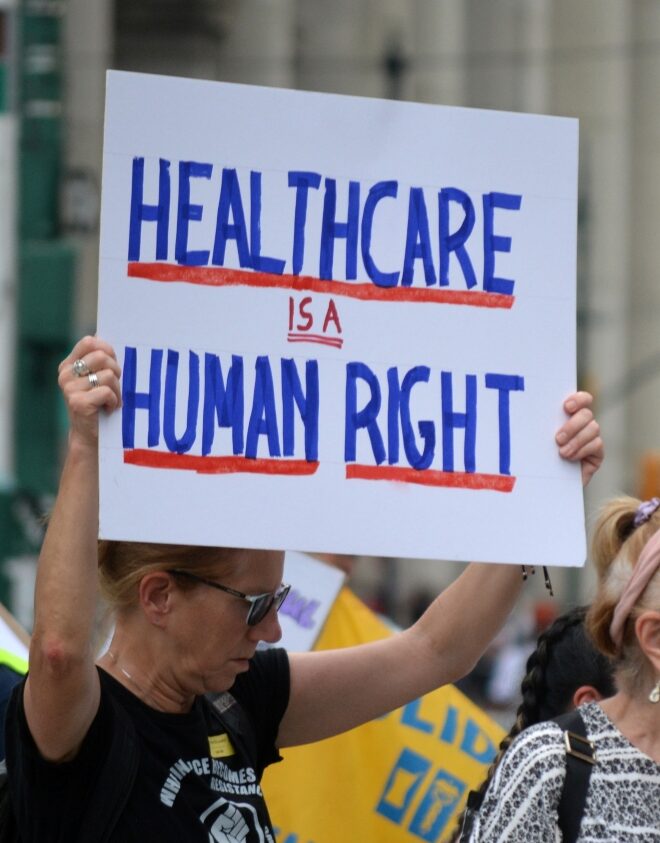
Photo caption: July 30, 2025: Rally marking the 60th anniversary of Medicare and Medicaid and speaking out against proposed cuts to the programs in Lower Manhattan.
Photo credit: Shutterstock/Christopher Penler
References
Angell, S., Stepick, L., & Scales, K. (2024). Direct care workforce state index: Mapping workforce policies and outcomes. PHI. https://www.phinational.org/resource/direct-care-workforce-state-index-mapping-workforce-policies-and-outcomes/
Carlson, E. (2024). An illusion of protection: Meaningless federal “quality measures” endanger assisted living residents. Justice in Aging. https://justiceinaging.org/federal-quality-measures-endanger-assisted-living-residents/
Centers for Medicare & Medicaid Services. (2020). MMLEADS public use file version 2.0. U.S. Department of Health and Human Services. https://www.cms.gov/files/document/mmleadspufv2.xlsx
Chidambaram, P., & Burns, A. (2024). 10 things about long-term services and supports (LTSS). KFF. https://www.kff.org/medicaid/issue-brief/10-things-about-long-term-services-and-supports-ltss/
Christ, A., & Kean, N. (2023). An equity framework for evaluating and improving Medicaid home and community-based services. Justice in Aging. https://justiceinaging.org/wp-content/uploads/2023/06/An-Equity-Framework-for-Evaluating-and-Improving-Medicaid-HCBS.pdf
Diamond, H. (2025). Mitigating the harmful effects of Medicaid estate recovery: Strategies for state advocates. Justice in Aging. https://justiceinaging.org/mitigating-the-harmful-effects-of-medicaid-estate-recovery-strategies/
Justice in Aging. (2022). Make the expanded spousal impoverishment protection permanent. https://www.justiceinaging.org/wp-content/uploads/2019/01/Justice-in-Aging-Federal-Spousal-Impoverishment-Fact-Sheet-11-8-18.pdf
Justice in Aging. (2023). The HCBS Access Act. https://justiceinaging.org/wp-content/uploads/2023/06/HCBS-Access-Act-Fact-Sheet.pdf
Justice in Aging. (2024). Guiding principles for designing and implementing integrated models for individuals dually eligible for Medicare and Medicaid. https://justiceinaging.org/guiding-principles-for-designing-and-implementing-integrated-models-for-dual-eligibles/
Justice in Aging. (2025). Budget Reconciliation Act of 2025: Medicaid and Medicare provisions impacting low-income older adults. https://justiceinaging.org/budget-reconciliation-2025-medicaid-and-medicare-provisions-impacting-older-adults/
KFF. (2025). Medicaid eligibility for Katie Beckett children with significant disabilities and special income rule. https://www.kff.org/other/state-indicator/medicaid-eligibility-for-long-term-care-through-the-special-income-rule/
Mohamed, M., Burns, A., & Watts, M. (2025). What is Medicaid home care (HCBS)? KFF. https://www.kff.org/medicaid/issue-brief/what-is-medicaid-home-care-hcbs/
Murray, C., Stephanczuk, C., Carpenter, A., & Wysocki, A. (2024). Trends in users and expenditures for home and community-based services as share of total Medicaid LTSS users and expenditures, 2022. U.S. Department of Health and Human Services, Centers for Medicare and Medicaid Services. https://www.mathematica.org/publications/trends-in-users-and-expenditures-for-hcbss-as-a-share-of-total-medicaid-ltss-users
Musumeci, M., Watts, M., & Chidambaram, P. (2020). Key state policy choices about Medicaid home and community-based services. KFF. https://www.kff.org/medicaid/issue-brief/key-state-policy-choices-about-medicaid-home-and-community-based-services/
Ne’eman, A., Stein, M., & Grabowski, D. (2022). Nursing home residents younger than age sixty-five are unique and would benefit from targeted policy making. Health Affairs, 40, 10. https://www.healthaffairs.org/doi/10.1377/hlthaff.2022.00548
Public Law No. 119-21 (2025). https://www.congress.gov/bill/119th-congress/house-bill/1/text
Sneed, R., Stubblefield, A., Gardner, G., Jordan, T. & Mezuk, B. (2024). Chronic disease, functional limitations, and workforce participation among Medicaid enrollees over 50: The potential impact of Medicaid work requirements post-COVID-19. Journal of Aging & Social Policy, 36(3), 380–398. https://www.tandfonline.com/doi/full/10.1080/08959420.2023.2226291
Tolbert, J., Cervantes, S., Rudowitz, R., & Burns, A. (2025). Understanding the intersection of Medicaid and work: An update. KFF. https://www.kff.org/medicaid/issue-brief/understanding-the-intersection-of-medicaid-and-work-an-update/
UnidosUS. (2025). Medicaid cuts would rip away health coverage from millions of Americans, disproportionately harming people of color. https://unidosus.org/wp-content/uploads/2025/03/medicaidcutswouldripawayhealthcoverage.pdf