
This article is one of four published in a collaboration between the American Society on Aging’s Generations Now blog and the Department of Journalism in Boston University’s College of Communication. The student journalists are members of Professor Deborah Fountain’s Online Journalism class for graduate students.
Gretchen Van Ness speaks about The Pryde with warmth and dignity, framing the project not as a development but as a promise of visibility, pride and community. What does aging as an LGBTQ+ person look like? Who will take care of them? Where do they go when the world grows smaller? Do they have someone to share a Saturday morning coffee with, or to call when they feel unwell?
As younger generations dominate social media feeds, rallies and parades, generational visibility has faded with age. Meanwhile, the generation that marched first for their rights now watches from the sidelines, unseen, and too often, alone. Elders’ losses are quieter, and their needs are far more practical.
“In my time, you couldn’t just walk down the street wearing a rainbow pride shirt or holding hands with someone of the same sex. It’s really my generation that made a lot of those things possible,” said Rob Quinn, a 66-year-old gay man, sitting in one of The Pryde’s classrooms.
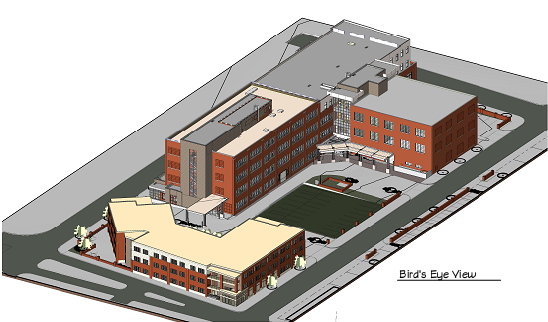
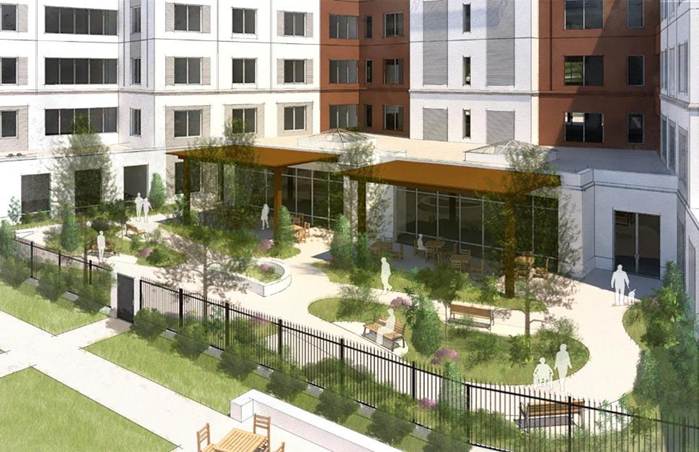
The Pryde, a 74-unit LGBTQ+-friendly senior housing development in the Hyde Park neighborhood of Boston, responds to this trend of growing social invisibility and isolation of LGBTQ+ older adults. Opened to residents in 2024, The Pryde offers apartments at a reduced rate for adults ages 62 and older.
“We designed The Pryde as a place where people can age openly, safely, and with dignity,” said Van Ness, executive director of LGBTQ Senior Housing, Inc.
Aging in the LGBTQ+ community
According to a May 2025 SAGE National LGBTQ+ Elder Housing initiative, older LGBTQ+ adults are twice as likely to live alone and four times less likely to have children, leaving many without traditional caregiving networks.
Nearly half (45%) of LGBTQ+ older people report experiencing discrimination in housing and/or employment, according to the Initiative.
Van Ness links this reality to decades of discrimination, losses during the AIDS epidemic and the fact that the generation, which is now in their 60s to 90s, grew up during a time with no legal protection.
“Social isolation and economic insecurity are huge issues, and they literally shorten lives,” Van Ness said.
This isolation, combined with rising housing costs and a lack of inclusive care options, has pushed advocates to rethink what “aging with dignity” means.
‘Living here inspired me to finish [my book], and we even held the book launch right here this past weekend.’
For many older LGBT adults, those years left deep scars they carried alone for decades. To age without fear, surrounded by friends, feels like a long-overdue right.
“One of the things I really love is that every morning, when I look out my front window, I see a pride flag waving proudly. Never in my lifetime did I think I’d see something like that displayed so openly. It’s truly inspiring to wake up and see it,” Quinn said.
Across the United States, the movement for LGBTQ+-affirming housing for older adults is gaining visibility, but progress remains uneven.
Projects like Stonewall House in Brooklyn, Pride Place in Seattle, Triangle Square in Los Angeles, and The Pryde in Boston mark a national effort to create safe, affordable and affirming spaces.
“Hiding doesn’t make anyone safer,” Van Ness said.
While commitment to inclusion is increasing, implementation still lags. Nearly 99% of senior living operators now include sexual orientation and gender identity in their non-discrimination policies, which is up from just 18% in 2021, according to the Human Rights Campaign.
The national trend reflects progress and a sense of urgency. As the older LGBTQ+ population continues to grow, the United States faces a defining question: Will inclusive aging become a right, or remain a privilege available only in progressive states like Massachusetts?
A 2023 UCLA Williams Institute analysis of older LGBT adults found that during the COVID-19 pandemic in the United States, economic and social vulnerabilities remain pronounced, with about 20% of LGBT adults ages 50 and older having incomes below the federal poverty level.
What Is The Pryde?
The Pryde offers units across several income levels in a deliberate mix designed to maintain the building’s economic diversity without compromising its mission of affordability.
Unity is built into the brick building and its programming. Despite obstacles, Van Ness is proud of what the complex has accomplished.
“It was that rare combination of a clear community need, a volunteer-driven vision, and the right moment that made me say yes to this project,” Van Ness said.
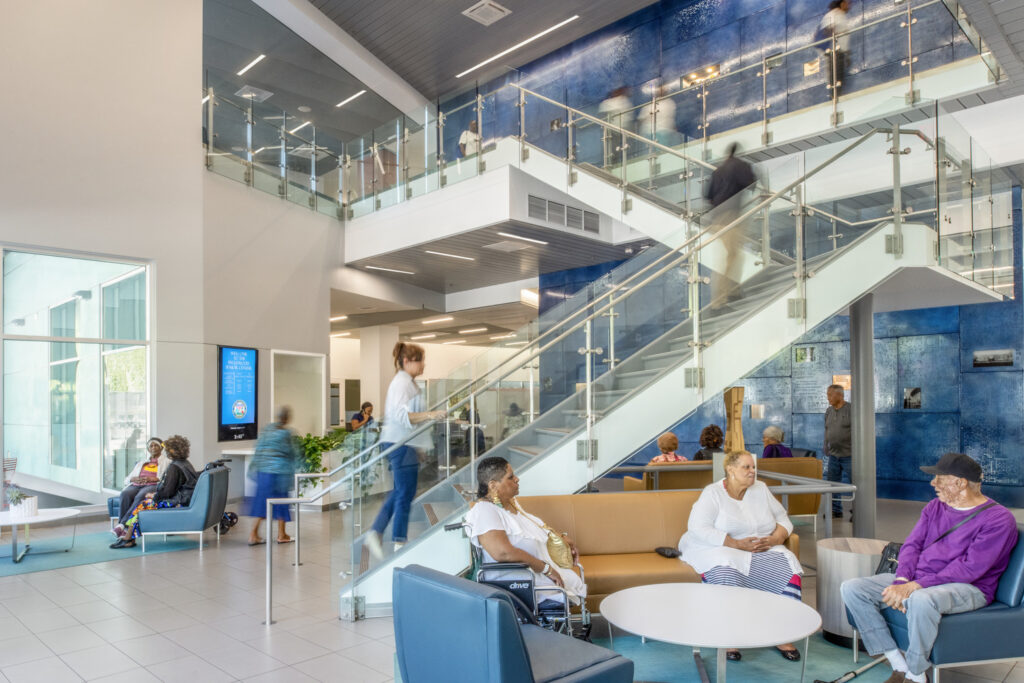
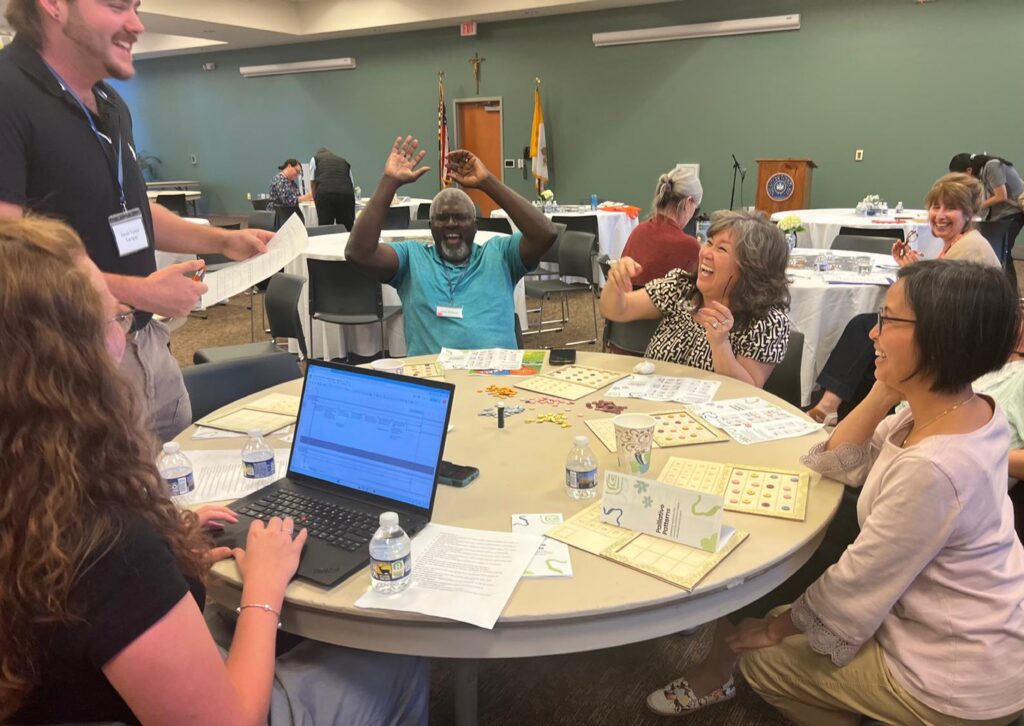
Inside, high ceilings and wide corridors frame a calendar of programs, including health clinics and art sessions. This summer, Mayor Michelle Wu and her newborn baby joined one of the coffee hours and even played the piano with residents.
Resident Experiences
Quinn has lived at The Pryde for a year and says the move has completely transformed his life.
“I recently released a book that had been sitting in a pile of papers for almost 10 years. Living here inspired me to finish it, and we even held the book launch right here this past weekend,” Quinn says.
Residents Shirley Riga and Thea Iberal describe the transition from living in a standard apartment to being part of a true community, where they quickly found support and connection.
To Riga and Iberal, everyday interactions such as borrowing a drill, joining a fitness class or sharing a meal feel genuinely welcoming when surrounded by people who truly care. “I knew we’d be taken care of, that we wouldn’t be isolated anymore,” Iberal said.
Eddie Whitman, another resident of The Pryde, emphasizes the importance of awareness and participation in community life.
“To care, you must first be aware,” Whitman said, highlighting the small acts of looking out for neighbors, whether helping with laundry, groceries or other day-to-day needs.
In a place like The Pryde, these moments of connection, big or small, are what turn a building into a home. A community that honors those who paved the way is measured not by its slogans, but by how its heroes age: with dignity, in community and at home.
“When you feel you belong, you feel your worth. And when you feel your worth, you contribute more,” Shirley Riga said.
Authors Kamilla C and Zere Amangeldinova are studying for master’s degrees in Journalism at Boston University’s College of Communication.
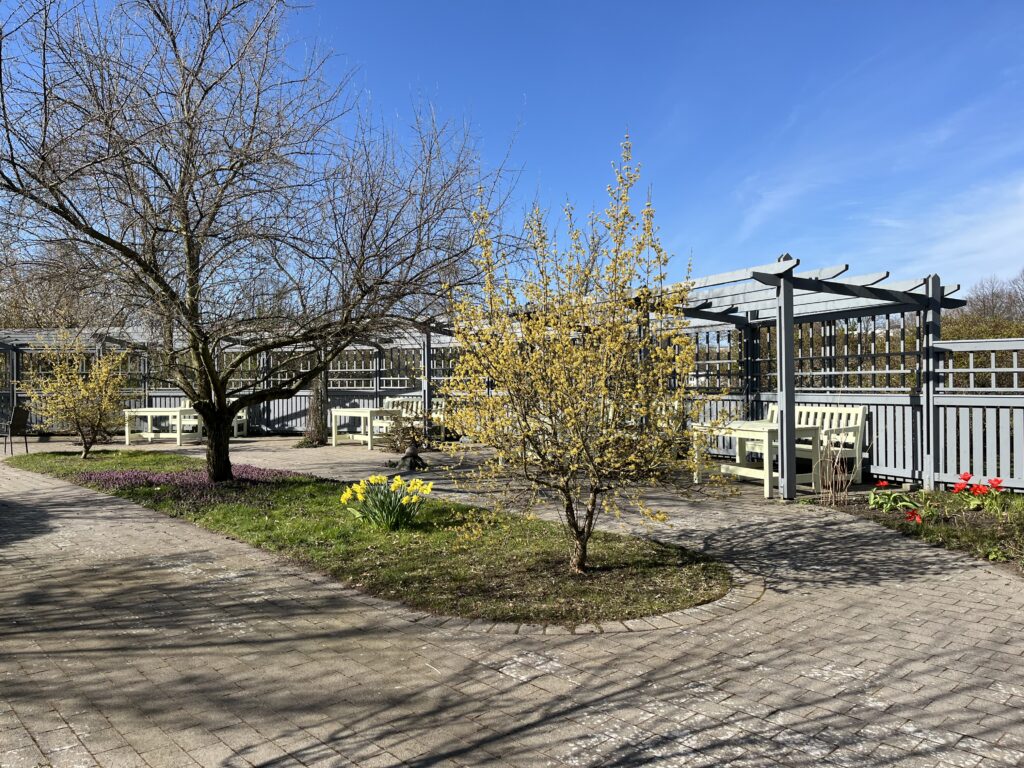
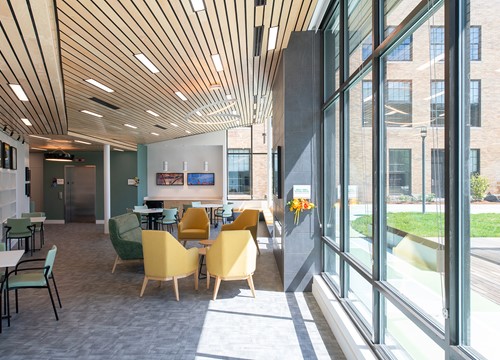
Photo caption: Sun dapples a gathering spot at The Pryde.
Photo credit: Courtesy The Pryde.