
Editor’s note: For National Ageism Awareness Day on Friday, Oct. 9, the American Society on Aging is highlighting research showing the impact of ageism, promoting age-inclusive communities and offering a toolkit of resources. This is a reprint of one of those tools, a communication guide.
What is ageism?
Ageism is how we think (stereotypes), feel (prejudice) and act (discrimination) toward people based on their age. It happens when we think and behave as if a person’s age tells enough about them for us to make a judgement.
Ageism can affect all ages, for example, when we assume an older person can’t use technology or a younger adult can. Another example is when we see older adults portrayed as greedy and youngers as lazy. In reality, individuals are far more complicated.
Despite our good intent, we’ve absorbed the culture around us and may be inadvertently promoting ageism. There are few hard and fast rules, but what follows are guidelines on age-inclusive communication. It is also important to note that what feels ageist or disrespectful varies with culture, and we must make an effort to understand the values and context of our audience when communicating.
Themes that reinforce ageism
Stereotypes about age abound in our everyday life. Here are some examples to avoid:
| Stereotype | Reality |
| Older adults are not in the workforce. | The number and percentage of older workers is increasing everywhere. |
| Older or younger adults are adorable or clueless. | All adults deserve respect and dignity and to not be infantilized. |
| Older adults can’t learn new things and become incompetent with age. | Older adults can and do learn new things— new skills, new ideas and new careers. |
| Older adults can’t use technology. | Older adults can and do use technology and have adapted to technological changes throughout their lives. |
| Framing successful aging as absence of | Lack of disability is not a sign of success |
| disability. | and can be part of life at any age. Avoid reinforcing ableism. |
| Equating disability with being disengaged or needy. | Disability doesn’t mean one is helpless or irrelevant. People with disabilities engage and contribute. Instead, talk about adapting, because bodies and minds change as a part of life. |
| Older adults no longer have interests and are withdrawn from life. | Adults of all ages are artists, athletes, travelers, workers and community leaders. |
| Older people are isolated and sad. | All people experience loneliness. It is not a natural attribute of aging. |
| Older people need our protection, e.g., “taking care of our poor elderly” (also known as compassionate ageism). | Older people have agency and are not a separate group to be overseen. Older adults are not burdens to be managed. |
| Older people stereotyped positively, e.g., as wise and all-knowing (benevolent ageism). | Older adults are diverse like all other adults and do not have all the answers. Avoid positive stereotypes as well as negative. |
| Younger people lack motivation, attention span or don’t care. | Adults of all ages are leading in their workplaces and communities and taking care of loved ones. |
| Age groups are in competition with one another. | We have more when we work together. Pitting age groups against each other diminishes what we can accomplish. |
| Older people are wealthy and retired. | Most older adults are not wealthy, and many cannot or do not want to retire. |
| Successful aging means accomplishing unusual feats like climbing a mountain or running a marathon. | Extreme examples suggest that people who cannot or do not want to do these things are less valuable. |
| Successful aging means not “looking your age.” | There is nothing unhealthy or wrong about looking older. |
Words matter
Research shows some commonly used terms can reinforce negative stereotypes about older people. But there are other ways to frame aging. For instance:
| Words & phrases to avoid | Alternatives |
| Senior, super senior, elderly, aged, old person | Use “older person,” “older adults” or descriptive language (e.g., age 60). Consider whether categorizing by age is necessary. |
| Grandmother/grandfather | Don’t use this unless the subject really is a grandparent and this is relevant in the context. |
| Frail, helpless, and vulnerable to describe older adults as a group | Don’t use this as a generalization. Older adults are not all frail, and health concerns and disabilities affect people of all ages. |
| Geriatric, when describing a person | This describes a healthcare field, not a person. |
| Young lady/man, young at heart, look good for your age, 60 is the new 40 | These imply that being old is bad and that people who look older are unattractive. |
| “Still” when talking about an activity, e.g., “She’s still working.” | This implies that older people don’t do the activity. Drop the word “still.” |
| Anti-aging | Don’t use. Aging is something we all do and we need not be ashamed of it. It can imply that there is nothing good about aging. |
| Silver tsunami, gray wave, demographic cliff | Don’t use. These terms associate aging with catastrophe and disaster. We can describe demographic change factually. |
| Patronizing language, e.g., “our seniors” | Speak about older adults as you would other adults. Use the first person—“I” or “we.” |
| Boomers, Millennials and other generational categories | Avoid these, as they often rely on over-generalization. Common experiences, like “mid-career” or “caregivers” can more |
| accurately describe what we have in common. |
Pictures tell a story, too
Ageism can show up in pictures, too. Note that stereotypes vary by culture and can change over time, so these are not meant to be permanent or exhaustive, but a good place to start. Context matters tremendously, so take a second look and see if your imagery portrays only some kinds of life experiences.
| Positive themes | Examples |
| Adults of all ages engage and are active in a range of recreational and social activities. | Adults of all ages and abilities taking part in common activities, e.g., on a date, at a concert, shopping, exercising. |
| Technical competency is not limited by age. | Include examples of all ages competently using technology, while working or as part of daily activities. |
| Adults of all ages contribute in many ways: working, starting businesses, volunteering, and participating in community activities. | Adults of all ages participating in the workplace, public spaces, and community activities as equals. |
| People of the same age do not all dress or look alike. | Older adults wear a range of styles, not just older styles. |
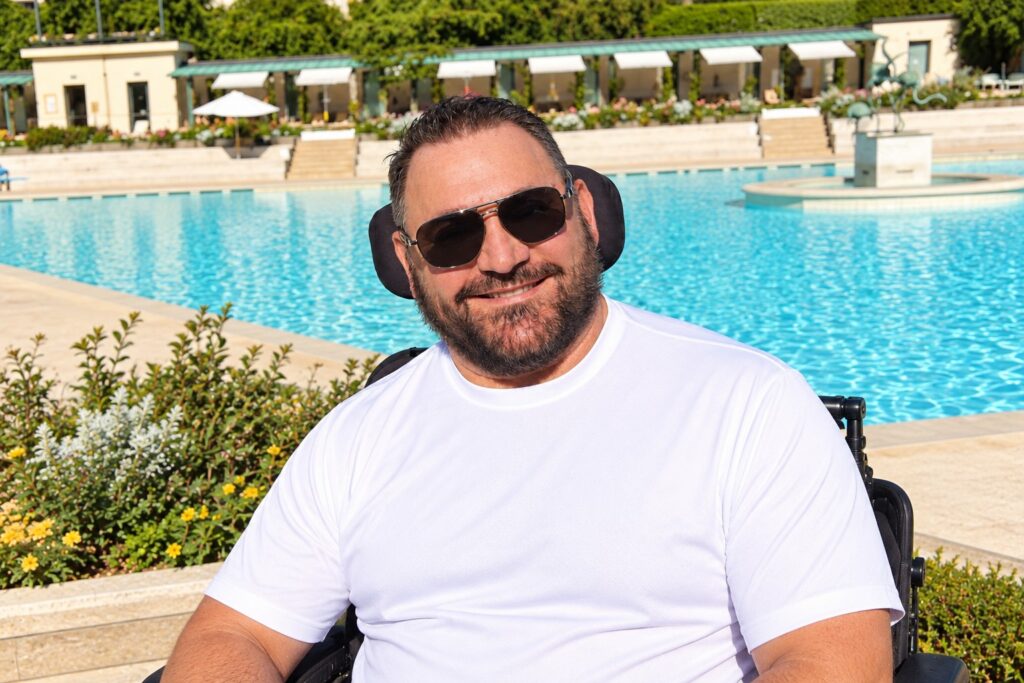
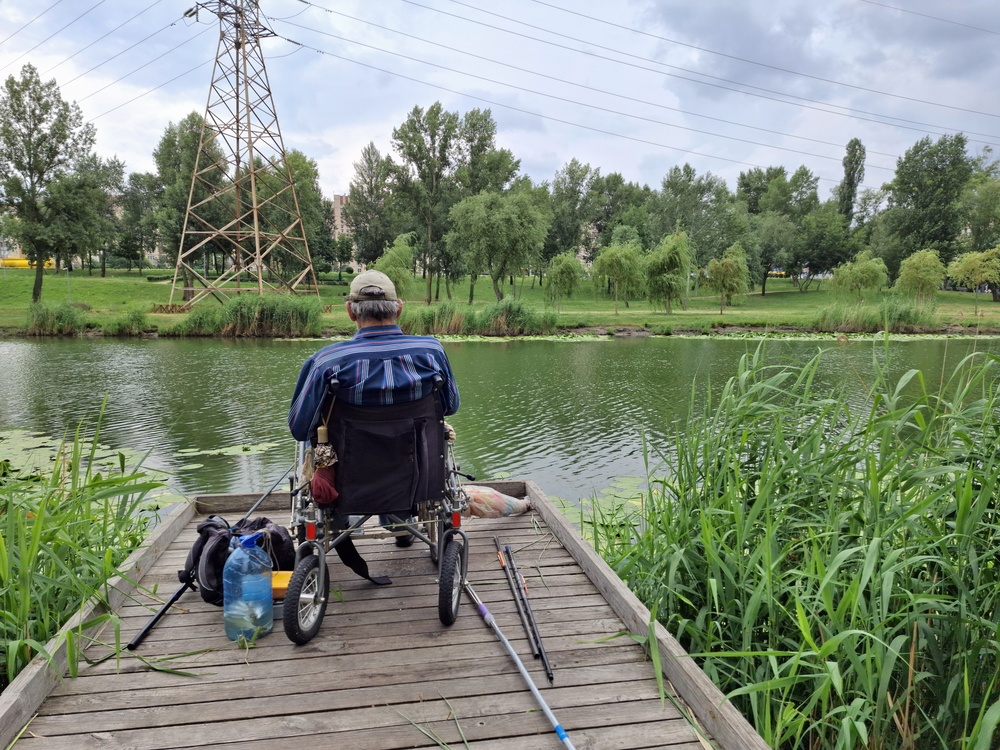
| People with limited mobility are actively engaged with others in all aspects of life. | People of all ages using assistive devices and engaging in the regular activities of life. |
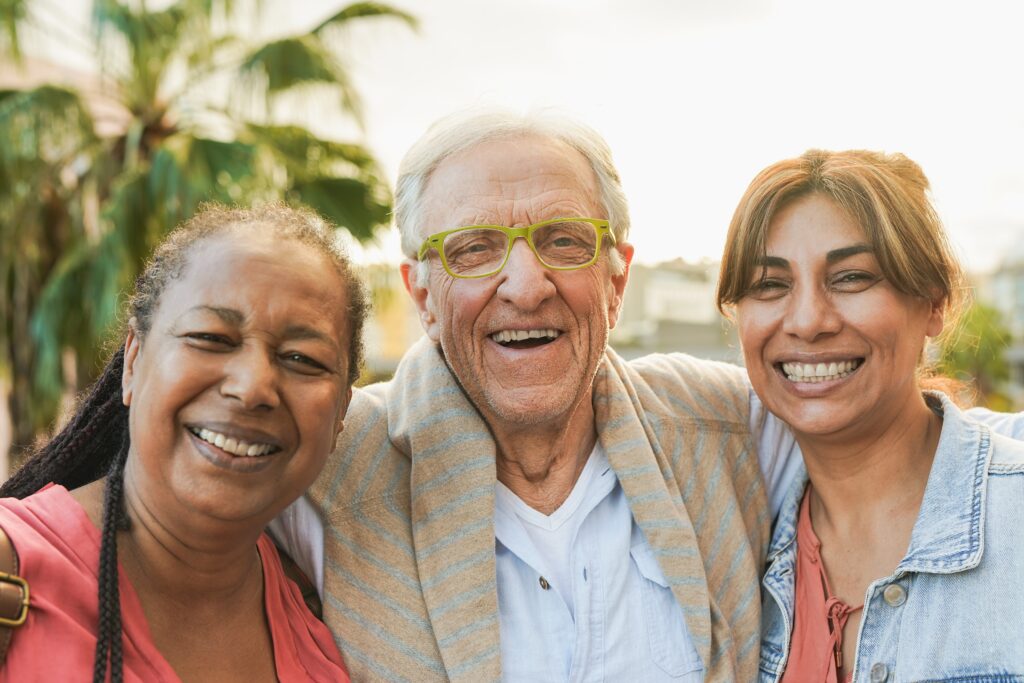
| People from every race, sexual orientation, gender orientation and identity are aging. | Include people from a variety of identities and backgrounds. |
An age-inclusive mindset: first person first
Want a quick guide? When in doubt, ask yourself questions such as:
- Is this a way I would like to be described?
- Am I talking about older adults or people of other ages as the “other”?
- Am I using stereotypes about people of a certain age?
- Have I represented the full experience of people of any age, including people with different cultures, beliefs and identities?
- Are the images I’m using reinforcing stereotypes about people of a particular age?
Try speaking in first person, e.g., instead of “the elderly need,” it could be “as we age, we need.” If it feels demeaning to think of yourself in the way you are describing others, reconsider how you are making your point.